For much of the year, my intention was to cycle the length of Italy during the summer; that is until a freak spring warm spell in Scotland caused me to pause for thought and decide that 3 weeks of cycling in 30°C+ temperatures might not be as fun as I had been thinking.
Luckily, I had been formulating a back up plan, one built upon the itineraries of fellow travellers I’d met on the road and one that might provide a nice change of dynamic, stunning vistas, long days and the low UV index that was now appealing. How about a ride that combined all three – and as it finished up in the Arctic circle and not too far away from the most northerly point in Europe – significant amounts of each.
When I spotted that Jenie and Pierre – who I had met while cycling in Iceland – were cycling in Italy, I thought I’d see what their recommendation would be, receiving a fairly strong signal when it transpired that their favourite place for cycling was Norway and that they’d been three times.
The route I had my eye on was a section of Eurovelo 1, the Atlantic Coast Route, the full route of which began at Nordkapp (the northernmost point of Norway, and Europe) and followed the coast south through Norway, Scotland, Ireland, France, Spain and Portugal.
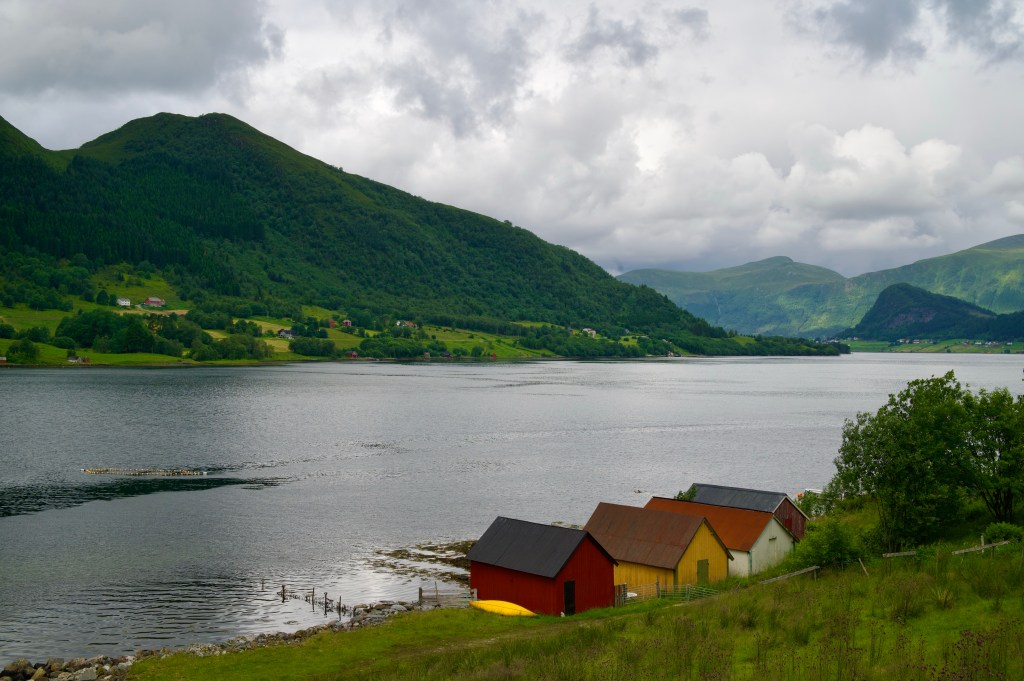
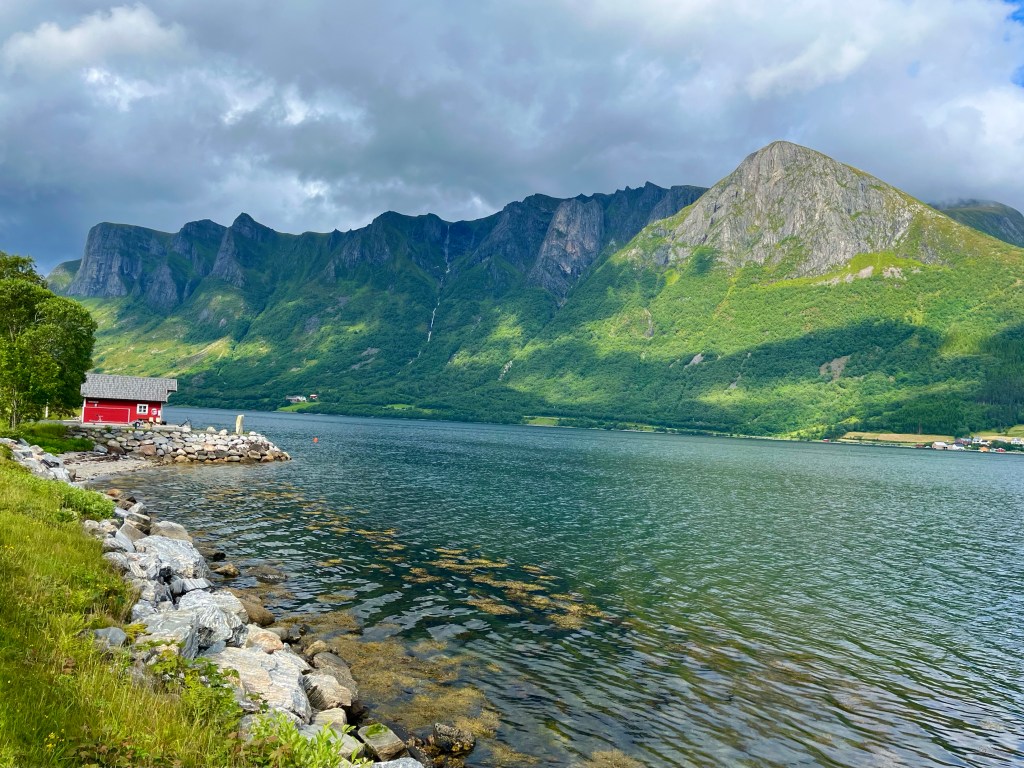
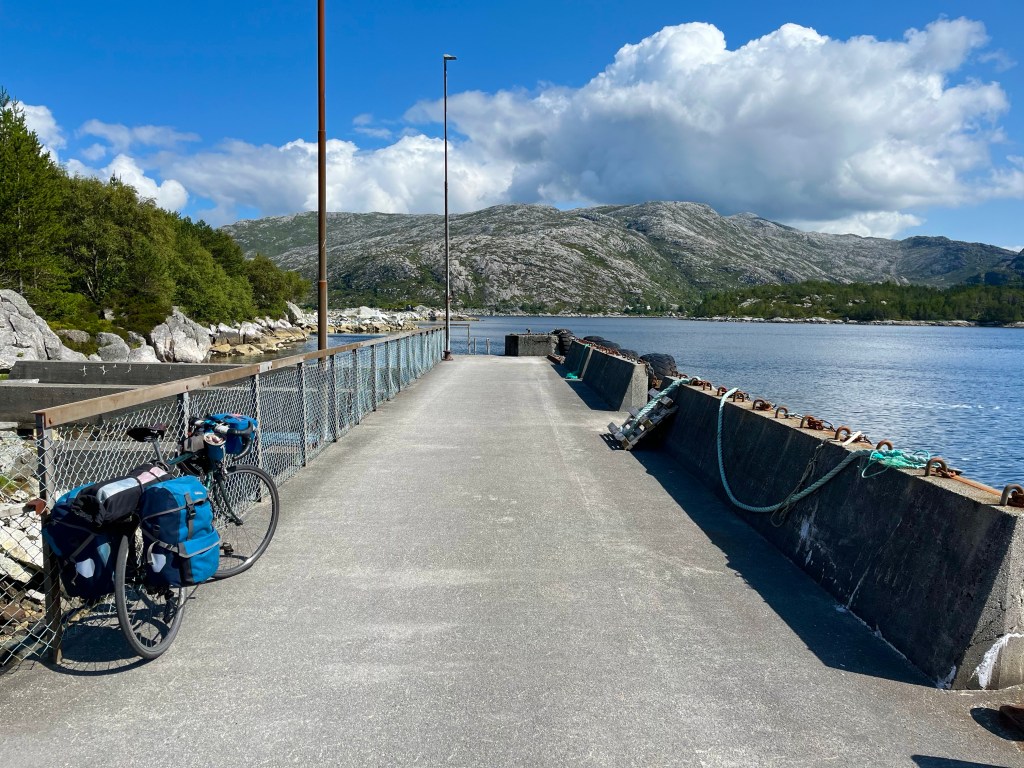
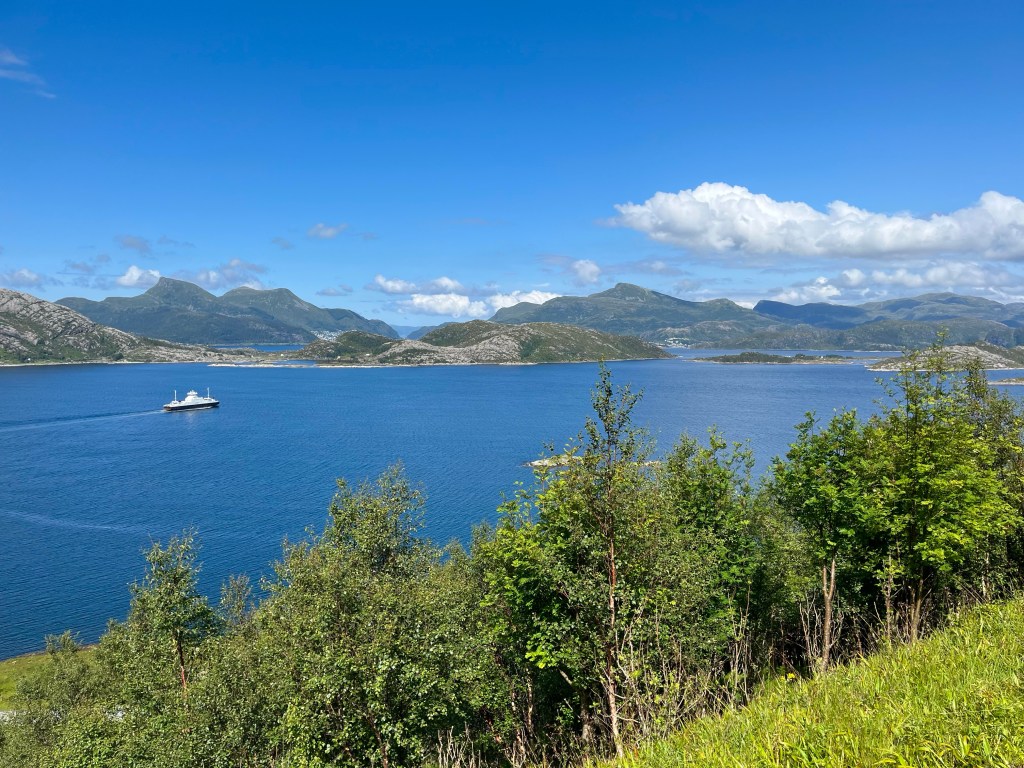
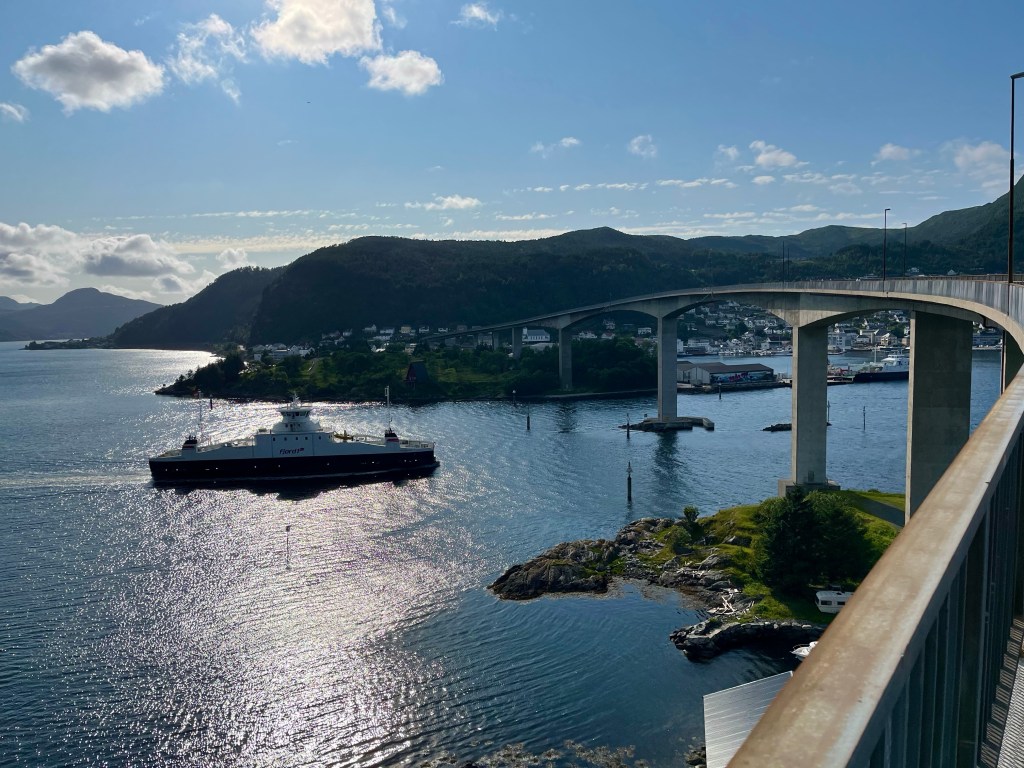
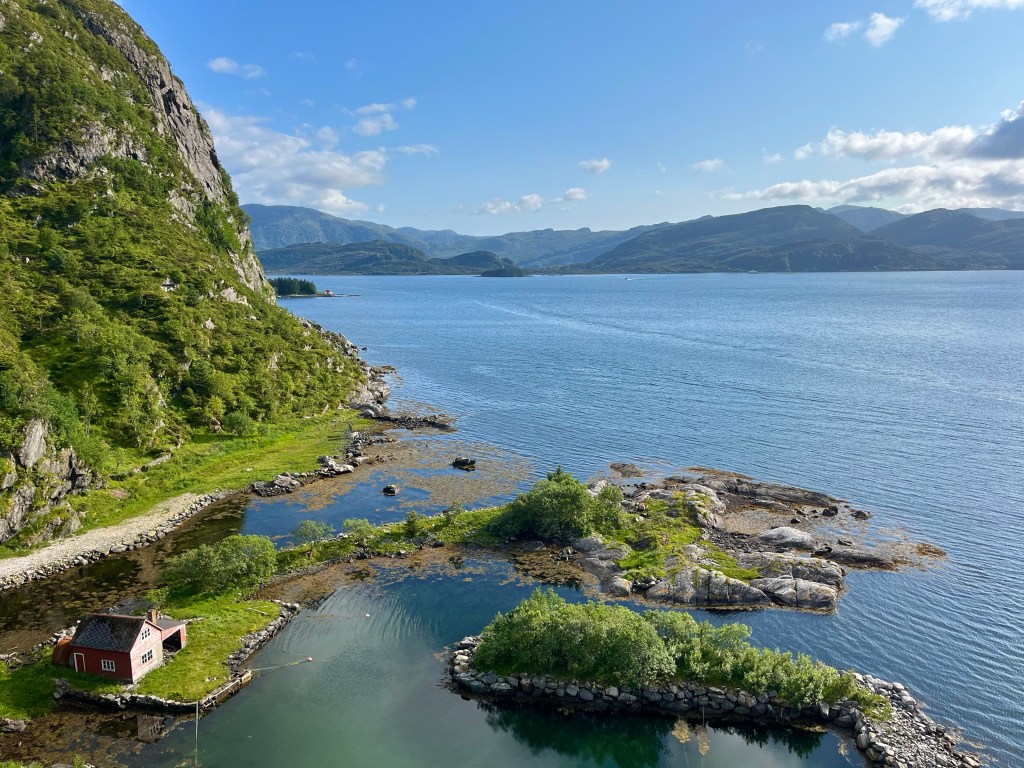
A significant undertaking, and one that I wouldn’t be able to complete in the 21 cycling days available to me, so I’ll be attempting a portion of it, 1200 miles down the Fjordlands of Norway, from Bergen, to Tromso in the Arctic Circle. With a whole lot of ferries and tunnels along the way, it might not be as straightforward as it seems…
To paraphrase the Beautiful South, it could be Rotterdam or anywhere, and for most of my route, I assumed it would be Rotterdam ferry terminal at which I’d finish my ride, but on getting the tram into Amsterdam, for a wander around, last night, it felt like this was where my route would finish. It could be Rotterdam or anywhere, but actually, it had to be Amsterdam. Copenhagen – Amsterdam, great capital cities of bikes, canals, culture, and gateways to the world.
Besides, Amsterdam was a ferry port from which I could take a ferry back to the UK, I just wasn’t, because of the additional cost. To all intents and purposes, my cycle would end in Amsterdam.
But there was the small matter of completing an international parkrun to contend with, and for that, there was only one contender. Zuiderpark parkrun in Den Haag – very popular with those chasing a parkrun ‘alphabet’. So, I was heading for the train.
It was a cold wet day on the campsite, I was hopeful that the rain might stop before I packed up my things, eventually giving in just in time for the campsite’s 2 o’clock check out time, then setting off in the direction of the Van Gogh museum.
Having gone to the trouble of locking up my bike, removing my sodden waterproofs and swapping my socks and shoes, I made to queue up outside, only to find that the Gallery was sold out for the day. I wasn’t too disappointed as I’d been before, so continued on my way to the station, passing Anne Frank’s house – the exterior now invisible because of a new museum facade built around it in 2018 – and Mannekin Pis for, allegedly, the ‘No.1 Holland Fries’, en route.
It was still raining when I arrived in The Hague, exiting the station and heading across town to the hotel, finding the typical maze of cycle paths, I tried not to block the way whenever I stopped to get my bearings – not something I have to worry about when using cycle paths back home.
I was staying at the Hoevevoorde Hotel, a bit out of town, but only 1 mile from the start of the Zuiderpark parkrun. Hopefully, I could make that distance by 9 o’clock the next morning.
Cycling over, it was easy to find the start area, close to a large sports centre. The course itself was an extremely flat and almost round two loop course, it would have been a perfect course for a parkrun personal best, had it not been for the almost 600 miles of cycling my legs had endured during the past two weeks.
As it was, I set off near the front of the 125 runners, setting a pace that felt tough but sustainable, before picking it up a little on the second lap and finishing in 20:54, in 16th place. I was very satisfied with that and glad to have finally ticked off my first international parkrun!
Afterwards, I chatted to a local man, Michel, who had just run his first parkrun, achieving 20:09, which he was very happy with, and another, Rob, from Clapham who was a serial parkrunner, and had just finished cycling from the Netherlands to Czechia the week before. It had been his first tour, but he had been with his partner – from The Netherlands – who he had met whilst he was working at a hostel near Loch Ness and she was cycling the, 7000 km, North Sea cycle route. A route she was still to finish.
Having checked out of my hotel, I visited the Mauritshuis museum in town, which contained fine works by a long list of Dutch masters including: Rembrandt, Rubens, Anthony van Dyck and, famously, Johannes Vermeer.
After that, I was back on the bike, and left with twenty miles or so to reach my final destination, the Rotterdam ferry terminal, where I hoped to catch the overnight boat to Hull from where it would be a few short train journeys home.
Dawdling through Delft, where its 1679 windmill was in operation as I passed, I was soon counting the minutes as I realised that there was another ferry standing in my way, between Maassluis and Rozenburg, on the way to the port.
Now needing to push on to make it to port with the allotted 1.5 hours before the crossing, it was one last 12 km time trial to go, before arriving to join the back of a long queue of cars and campervans waiting to board. There had probably been less of a rush than I’d thought.
Finally through passport control, all that was left was for me to board the ship, up on deck 7, and necessitating an 11 % gradient ramp, an actual climb, and the first time on the entire trip that I’d needed to change down to my smallest chainring.
Having checked into the campsite, I quickly had a shower and pedalled into town, it was England versus the Netherlands this evening, so I’d find a quiet restaurant that was showing the football and watch on with interest. But Lelystad had other ideas: were there any restaurants, were there any shops, were there any people? It was like a Scottish new town, miles of cycle paths, and nowhere to go.
But then, I squirrelled out a bar, wildly raucous and filled with orange, I steeled myself to take a look inside. The visitor’s welcome was ready in this bustling, metropolis, it was cash only at the bar, and I hadn’t seen an ATM in weeks.
Eventually, I found a centre of sorts, buried deep amongst the apartment blocks and the roundabouts. Finding a spot, the empty beer terrace of the bar across from the – already full – place to be, grateful to be able to see part of the screen through their windows. I adopted my stoniest expression when – as full time beckoned – England scored, did they know I wasn’t English, did they think that I was?
It was another lovely day as I enjoyed the sheltered surroundings of the campsite, preparing the classic Dutch breakfast of Lidl packet noodles, using up my remaining food stores before the last camping night of the trip.
Striking out into the lawless environs of the Lelystad cycle paths, I remembered that there were some rules: mopeds were only allowed to go very fast, but number plated e-bike dirt bike users with passengers and no helmets were allowed to go extremely fast. The rest of the path’s inhabitants seemed to be ambling along on grinding rust-buckets, probably in use daily, and maintained, never.
I pressed on along the canal, before turning onto a long single track road through the fields, it offered a rare opportunity for interaction with motor traffic, causing me to clear off the road when a tractor came along the other way.
Soon I started on the long convoluted route around the houses of Almere – only some with their own jetties – before crossing the large Weerwater lake on a lovely new cycle-friendly bridge.
The bridge was designed using the green principles that the new city held dear, for users to cross under their own steam, to be constructed using recyclable materials, and to interconnect green spaces, promoting health and wellbeing.
Just across the bridge I was excited to see the, solar panel clad, University of Applied Sciences building: an institution focussed on keeping ever-expanding residential areas sustainable. Nearby, even McDonald’s had got in on the act, providing my Stroopwaffel McFlurry in a reusable cup…
The last port of call – as I navigated the complex waterways on my way to the outskirts of the Dutch capital of Amsterdam – was the pretty little town of Muiden, where its ‘Great Sea Lock’ complex, dating back to 1673, connected the river Vecht and the large IJmeer lake. I’d only just crossed the impressive swing bridge when it was pressed into service.
The campsite, further around the edge of the IJmeer, was compact and busy. The large tent camping area was sectioned up into small square pitches, there was a two-tiered facilities block, and, in the tiny kitchen space, 3 kettles. It was, undoubtedly, the busiest campsite I’d seen since T in the Park, 2011.
Sitting eating dinner at a picnic table, outside the barn in the campsite, one of the site’s other inhabitants sat down on a chair behind me – at the doorway to the barn – smoking tobacco, and tried to engage me in conversation, in Dutch. With me having little to offer in that regard, the man seemed to get frustrated and walked off, before returning shortly after to try again.
Eventually, with communication proving problematic, he pointed to the wispy grey clouds overhead and gave his head a little shake, before heading off in the direction of his tent. Wait a minute, what about the clouds?! I found out soon enough.
Two hours later the two of us were cowering in the barn, as a torrential downpour battered off the corrugated roofing, bright flashes of lightning bursting through the skylights.
The man pointed at my watch, wanting to know the time. Flashing the screen in front of him, I could see it read 22:30. A puzzled look came over the man’s face, half twaalf, he said, before quickly correcting himself, half elf, he said with an air of satisfaction. It was my turn to look puzzled, in German elf was 11, surely it would be the same here? A quick Google search furnished me with the surprising conclusion, in Dutch it was half elf, half before 11.
The storm having blown through during the night, the new day brought with it blue skies, and a stiff breeze restored to antagonistic status.
I made the short journey along to the local Co’op to pick up some milk to have with the remains of the granola that I’d been carrying for the last few days, before getting back underway on the silky smooth cycle-path, past the Lutten water tower, and through the trees at Stegeren, before crossing the Vechte river, in Ommen, and turning down the lovely riverside path, past De Konijnenbelt windmill, and beautifully positioned campgrounds – across the river from the town.
With optimism, I left Ommen, hoping to make it the 17 miles to Zwolle, before stopping again. So much for that, when not 4 miles gone by, ominous clouds formed in the sky. The rain came down quickly, and hastened me in, to Herberg De Klomp, in Vilsteren, for lunch on a whim.
Sated by the ham and cheese crepe with sugar syrup on top, I pushed on, making it through Zwolle as quickly as I could, despite the super-complicated cycle network trying to throw me off track: deliberating at the bottom of a bridge, as to whether I was to cycle over the bridge or go through the tunnel – which started alongside – I finally decided on taking the bridge before realising that they both finished at the same spot, anyway.
Once over the Katerveer II bridge, I took the road to Oldebroek, before turning north towards the lovely little town of Elburg, with its moat and city walls dating back to the 13th century.
If I would have been satisfied with 50 miles for the day, I’d surely have turned back to the campsite that I’d just seen outside the town and wandered into one of these bustling bars on these old cobbled streets, but the forecast was rain, and now the sun shone, so I supposed I’d better make hay, before the rain came along.
Luckily, the campsite in Lelystad had had the courtesy to provide the reception opening hours on their website, so I had until 8 o’clock, it was 10 past 6 now, and it was 17 miles to go. A 66 mile day, with a headwind to boot, that would do nicely, and even better, because I’d now be within 40 miles of Amsterdam. I’d have cycled from one great city of bikes, to another.