Tag: brooks b17

Day 10: Villa Mañihuales – Coyhaique


Distance: 58.35 miles

Time: 6:54

Elevation Gain: 3,599 feet
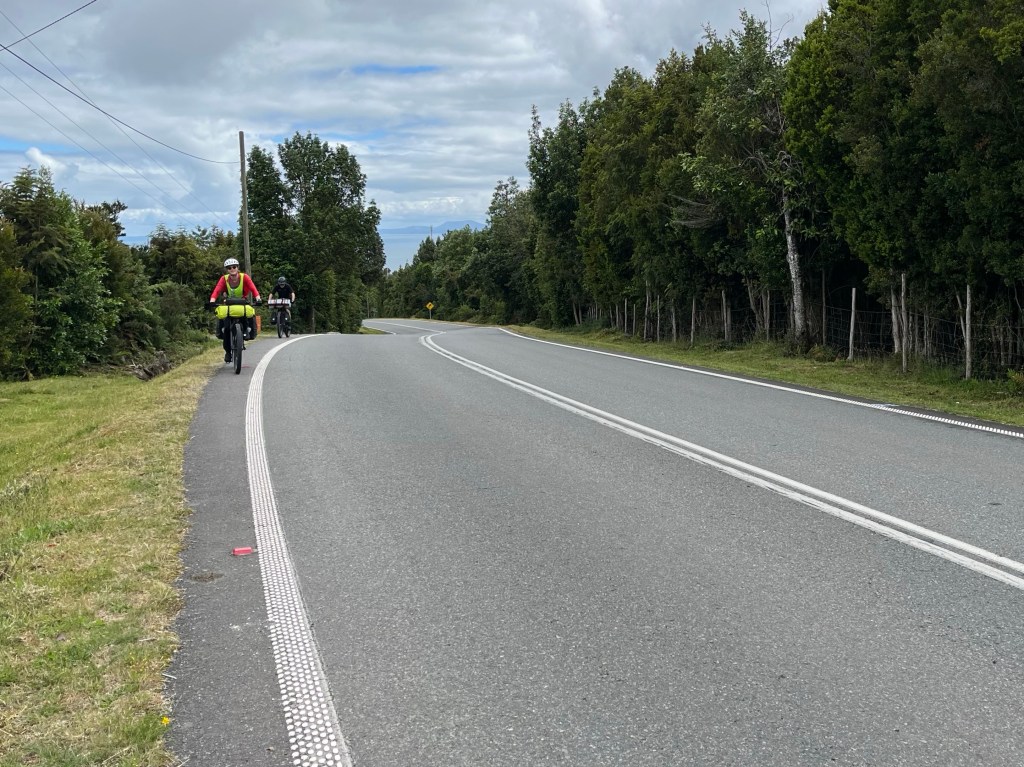
On exiting the campground, I rolled back down to the main road, seeing the German couple whizz past just as I was reaching it.
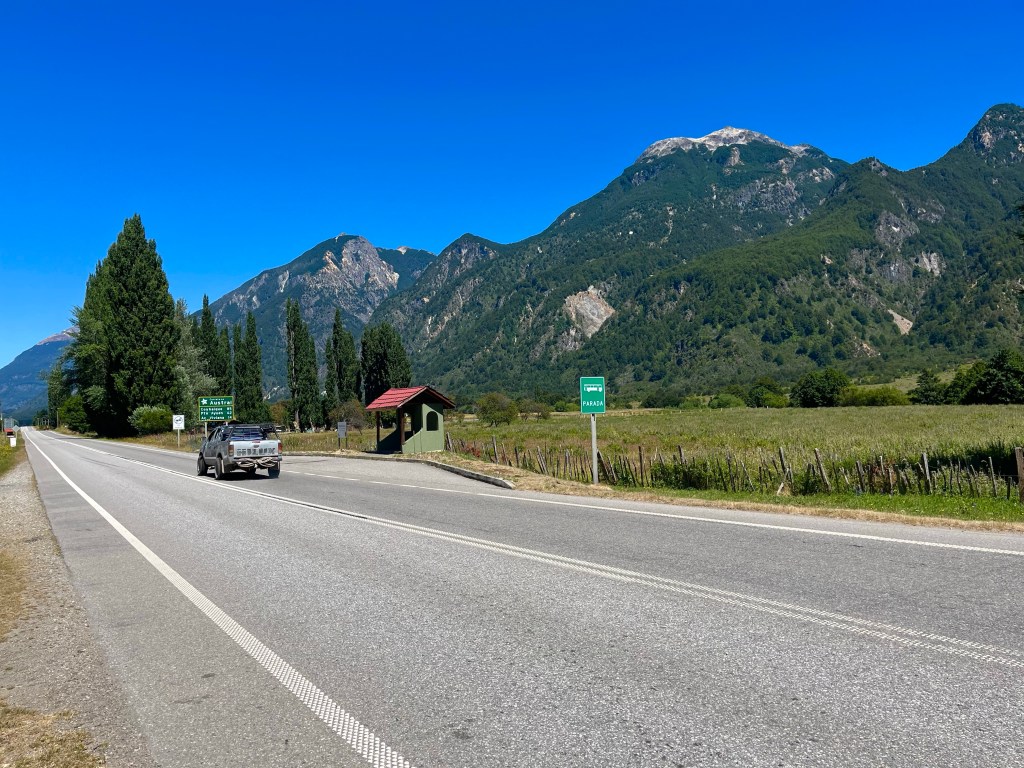
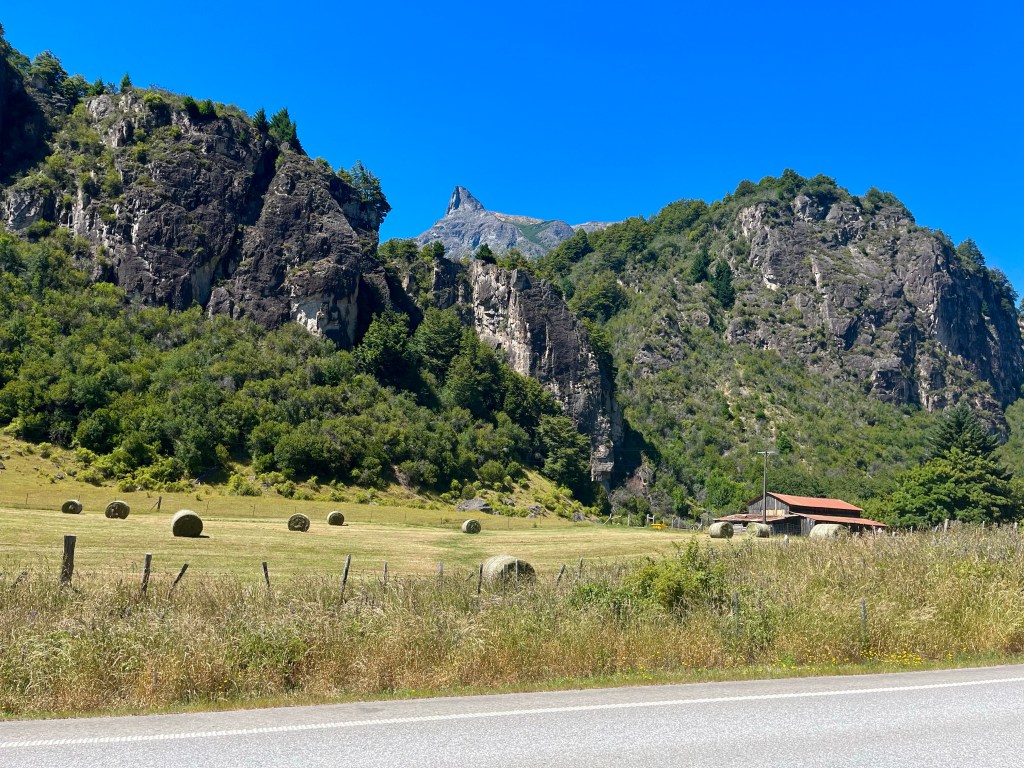
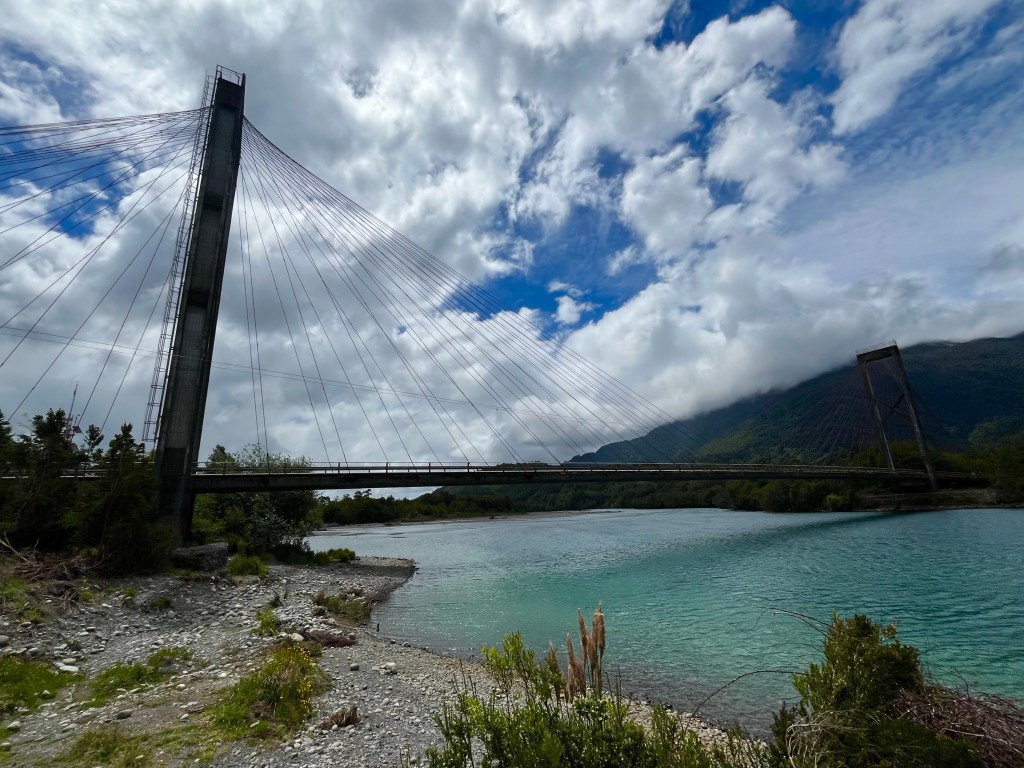
Setting off along Ruta 7, I’d only gone a couple of miles when I saw the couple again, down off the road, exploring a fine-looking pedestrian suspension bridge, and as I slowed to a stop, I discovered the large group of cyclists from yesterday, gathered at a bus stop.

One of the Australians was needing a 10mm Allen key, as his crank had worked itself loose, so I checked my multitool, but as expected 8mm was the largest I had.

Two of the group, stepped forward to introduce themselves, Connor and Gregor, from Glenrothes, and as they pointed out to the others, we only lived half an hour apart. They were over here for a 5 month trip, and it seemed to be going quite well.
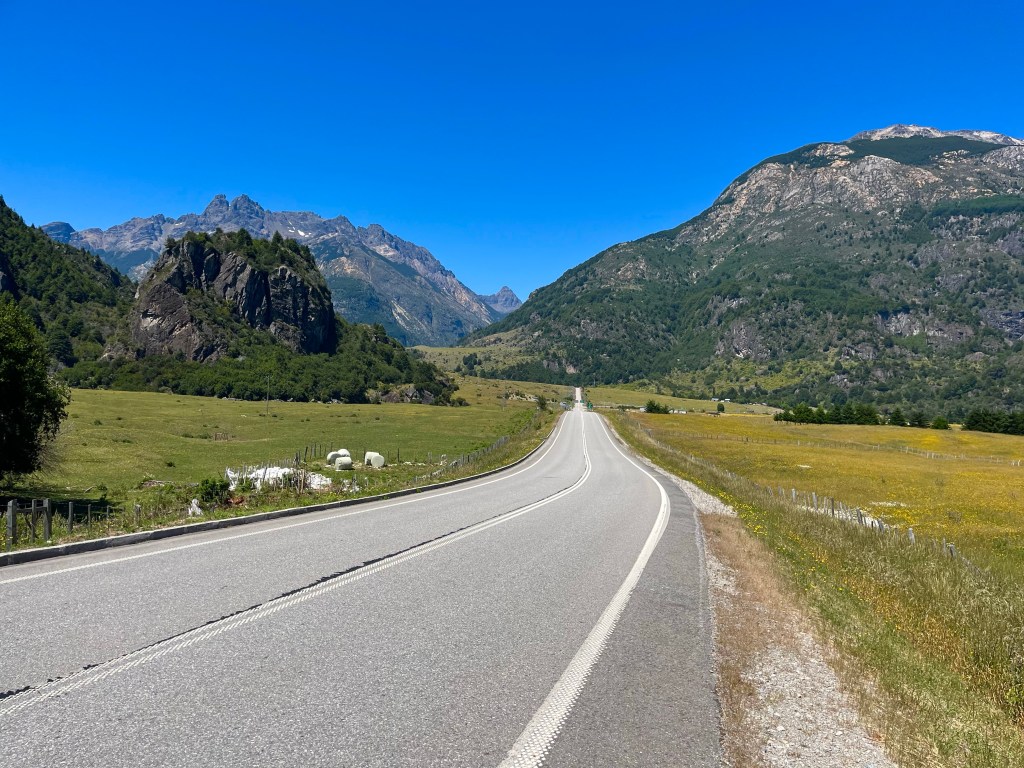
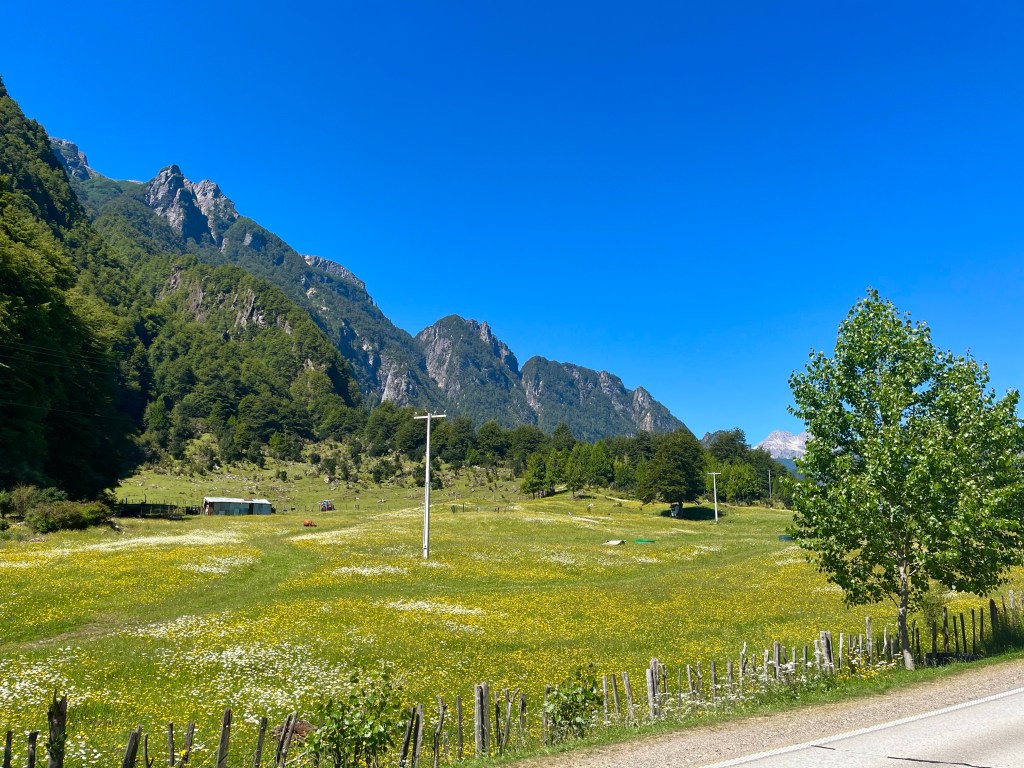
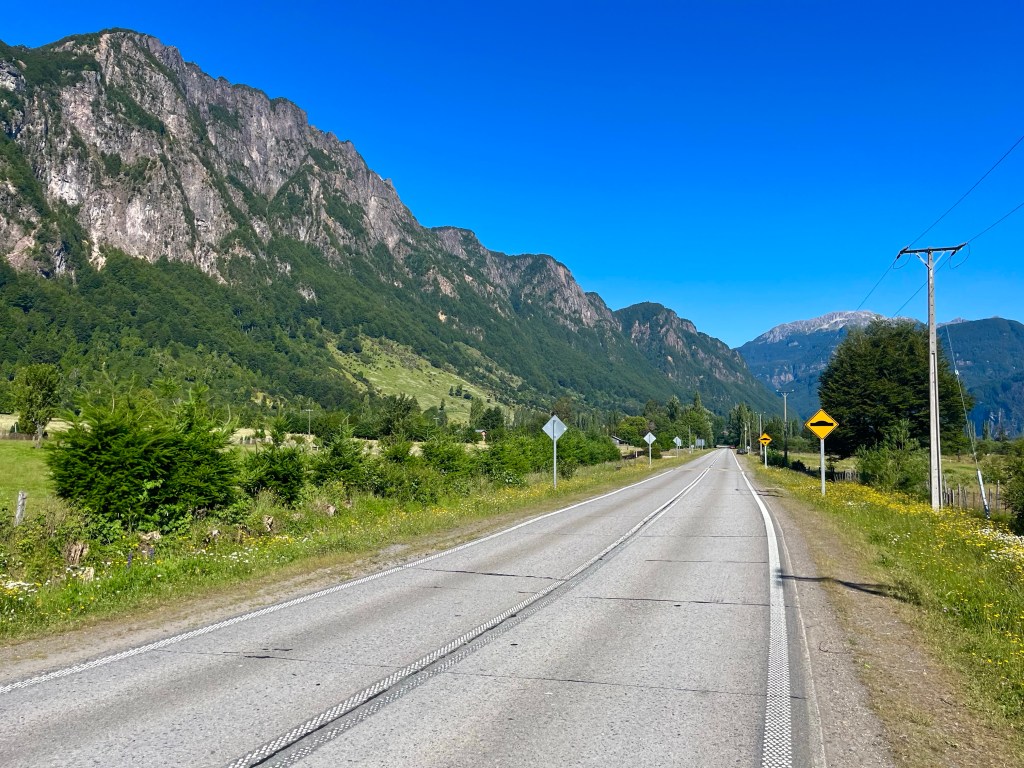
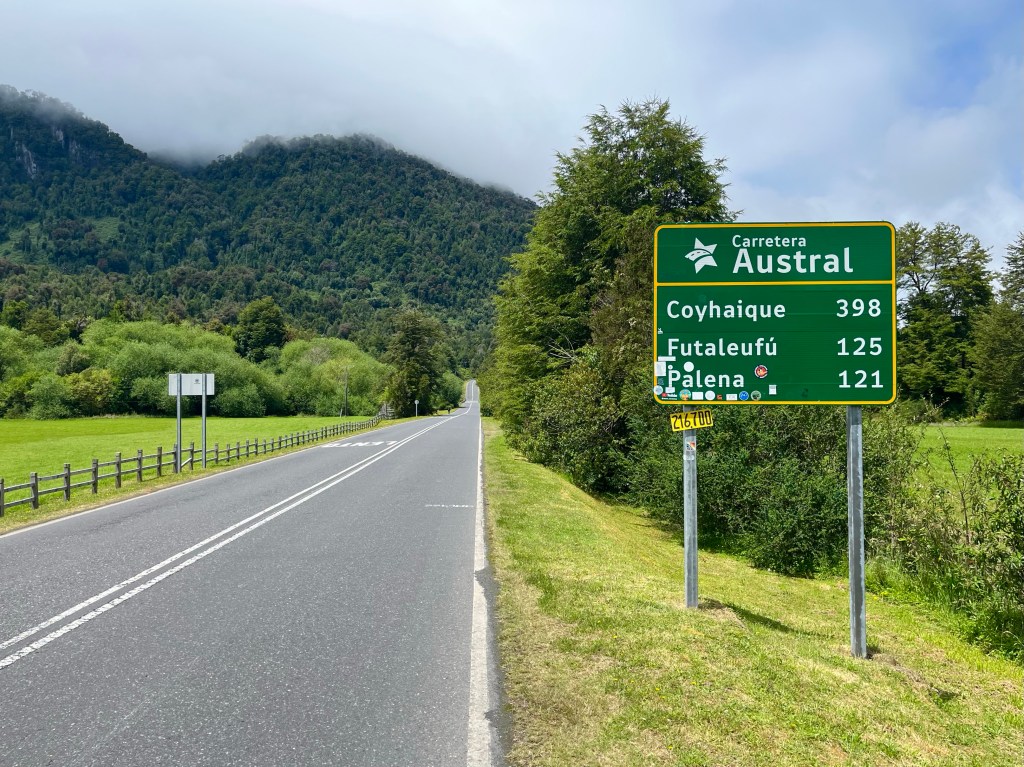
Soon afterwards, I reached a major junction, and one of the few places where there was a choice of routes. Ruta 7 took a more direct route towards Coyhaique, but featured a large climb, and the road surface was ripio, or gravel. The alternative route, following highways X-500 and 240, took a pronounced dogleg in the direction of the coastal resort of Puerto Aysén, but was tarmac and flatter, and like many of the cyclists I met, was the choice I made.
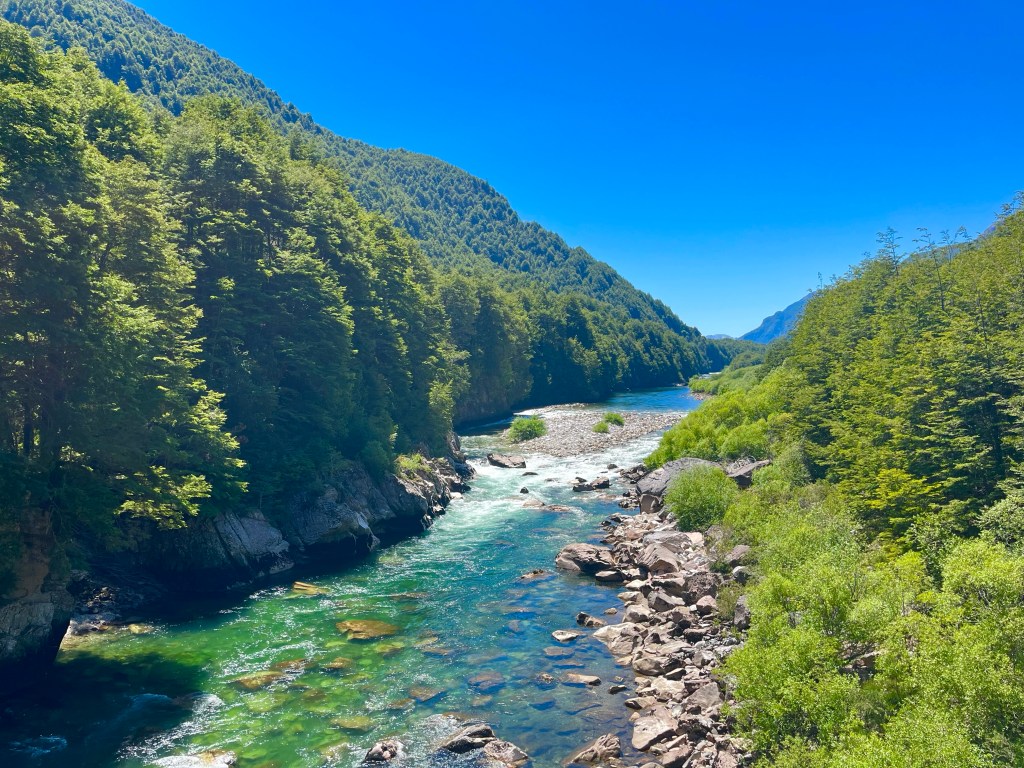
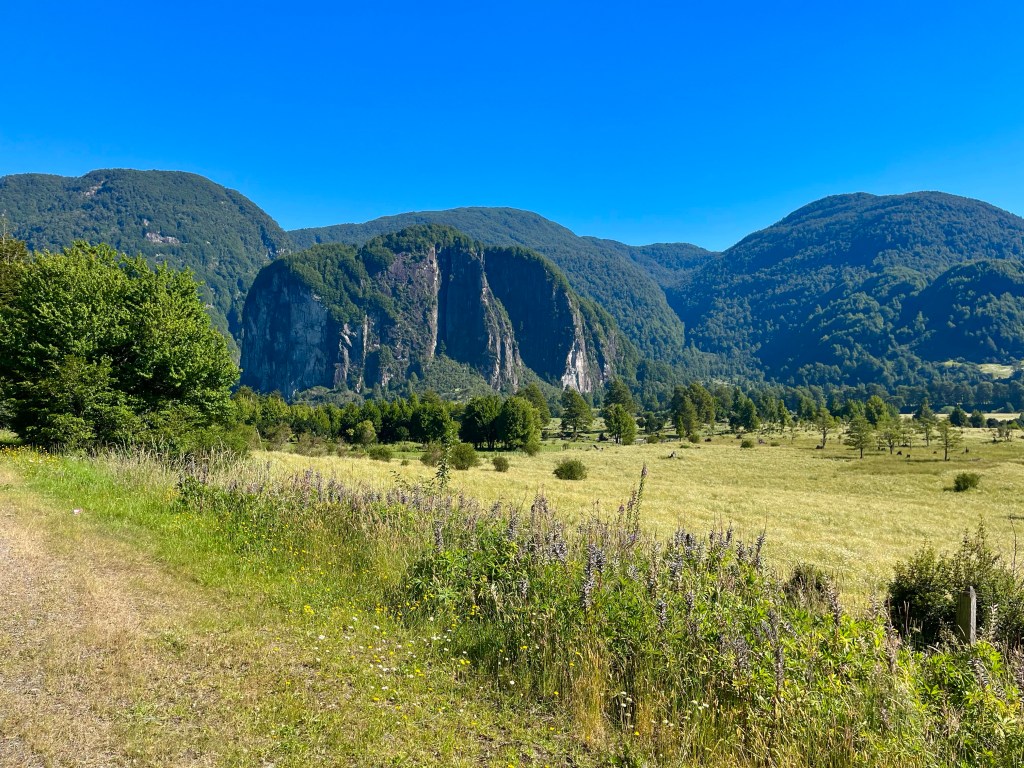
As I pedalled along a picturesque but long-drawn out valley, I was listening to a podcast featuring the women’s winner of the 2025 West Highland Way race, and was amused by the fact that she waited until the last few moments of the podcast to share her real opinion on the race, that it wasn’t her favourite race in the world and that sections of it were dull and monotonous. Probably not a popular response in a podcast promoting the race, but after I’d spent the last 30 miles following the Río Mañihuales in the same direction, I could sympathise a little.

Eventually, I reached the junction with the road to Puerto Aysén and started to head upriver alongside the Río Simpson, a point of interest for any of my readers named Simpson, no doubt. From the sudden increase in the amount of traffic, it was clear that Puerto Aysén must be a busy town, and traffic-wise, this was the busiest stretch of road so far.
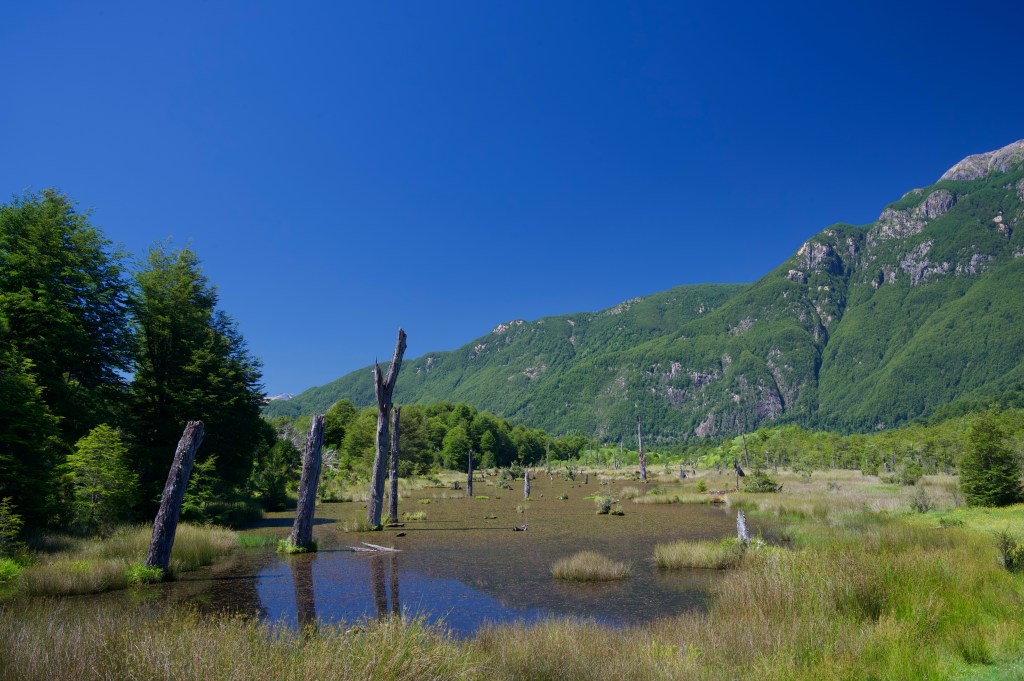
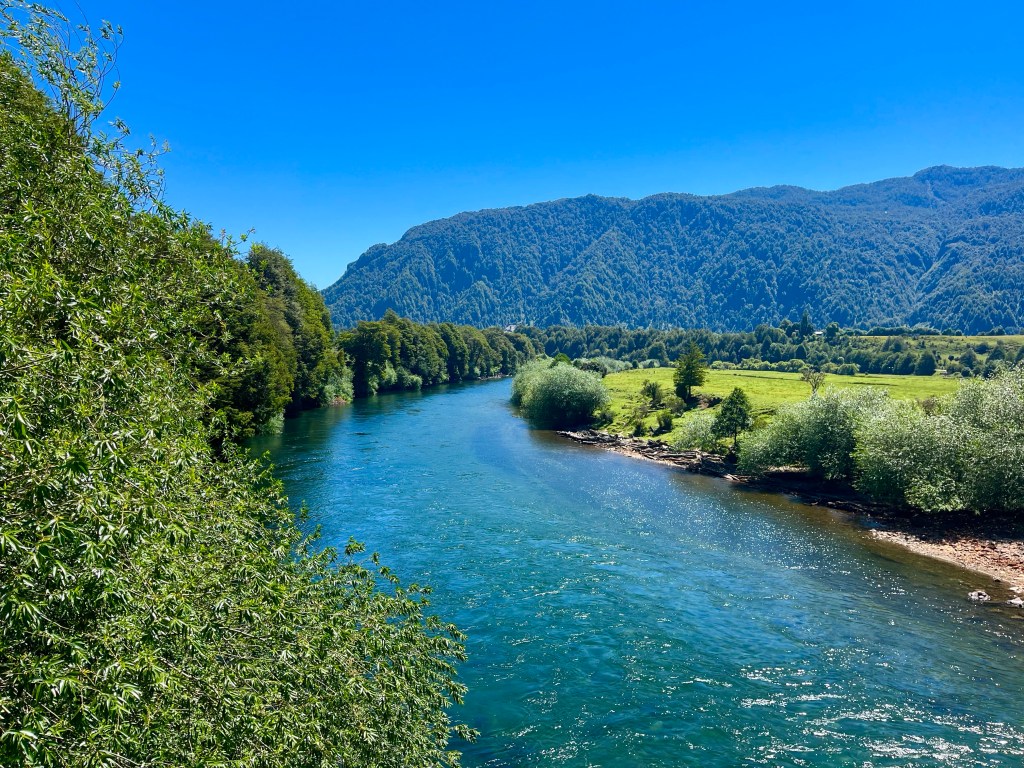
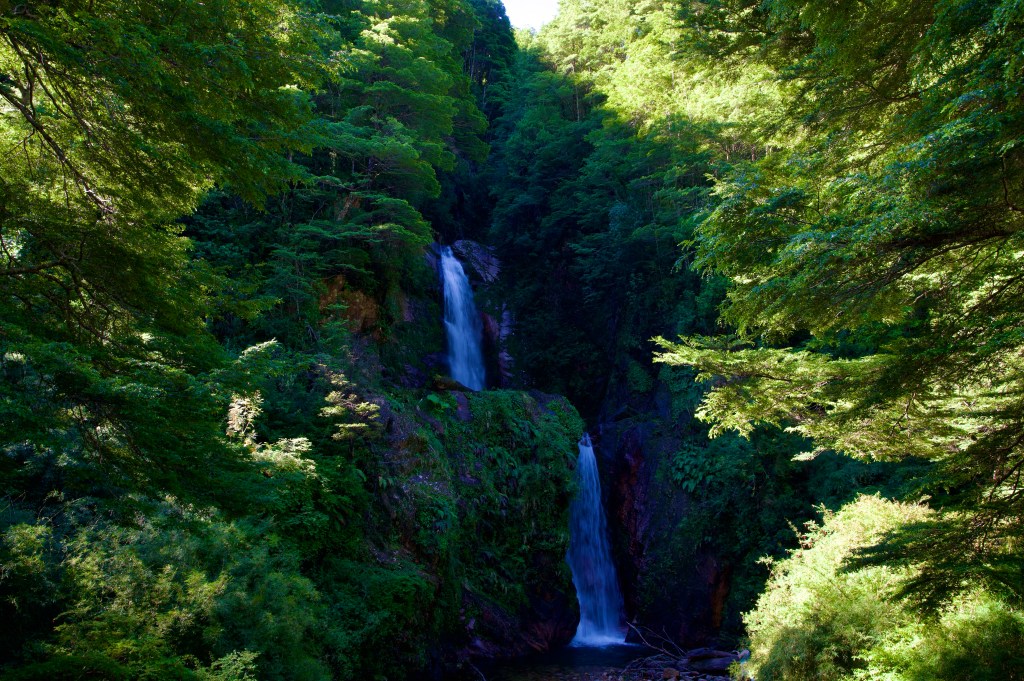
Luckily, the road had a shoulder for the most part, but I was still pleased to take opportunities to get off the bike, to stop for a late lunch in Villa Los Torreones, and to scope out, the cascada la virgen, waterfall.
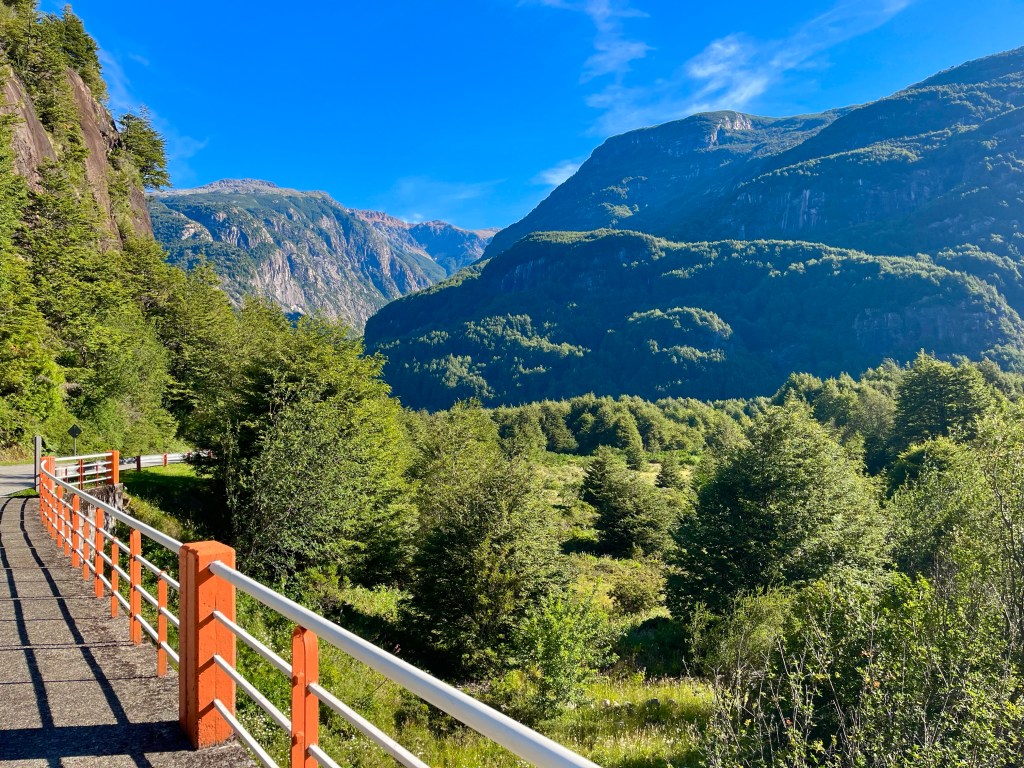
On approaching 50 miles for the day, I knew there was still a climb ahead, so was dismayed when a sign at the bottom warned of ‘pavimento mal’ for 12 km, not what I was hoping to see.

The climb started steeply, before disappearing into first an open tunnel, and then an enclosed tunnel, for which I stopped and put on my lights. As I exited the tunnel at the top, the views down over the Río Simpson were fantastic in the early evening light, and as I continued to force my way up the ever busier road, the surface turned into a sort of poorly-laid monoblock, the sort of surface that the phrase rolling resistance was invented for.
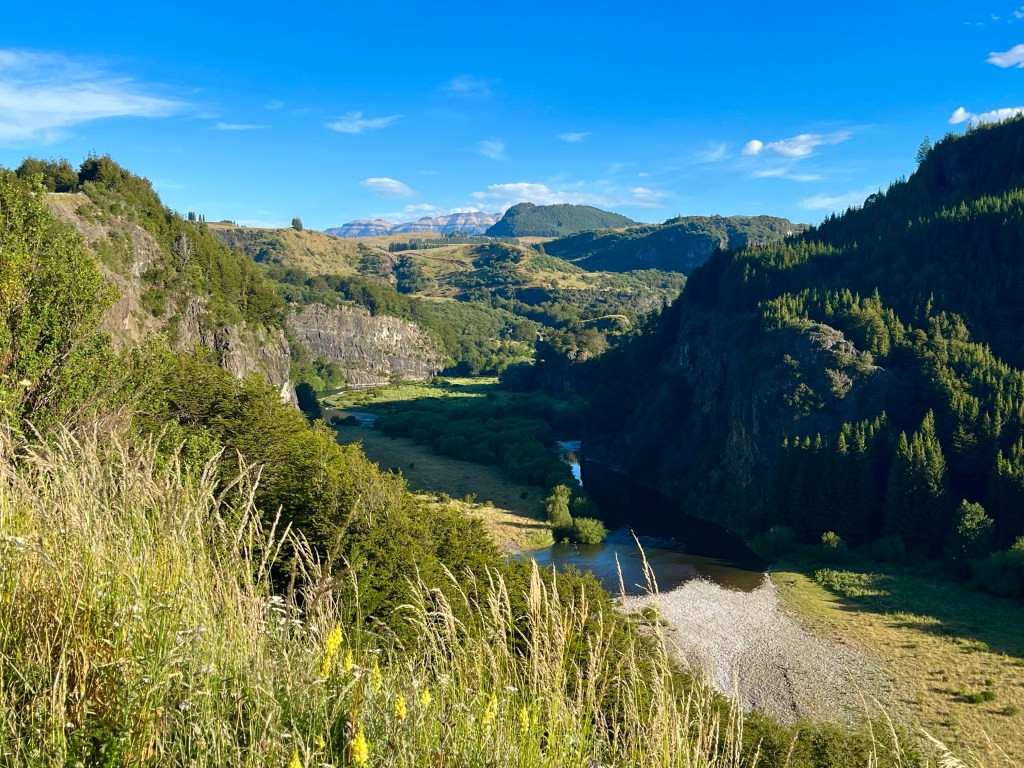
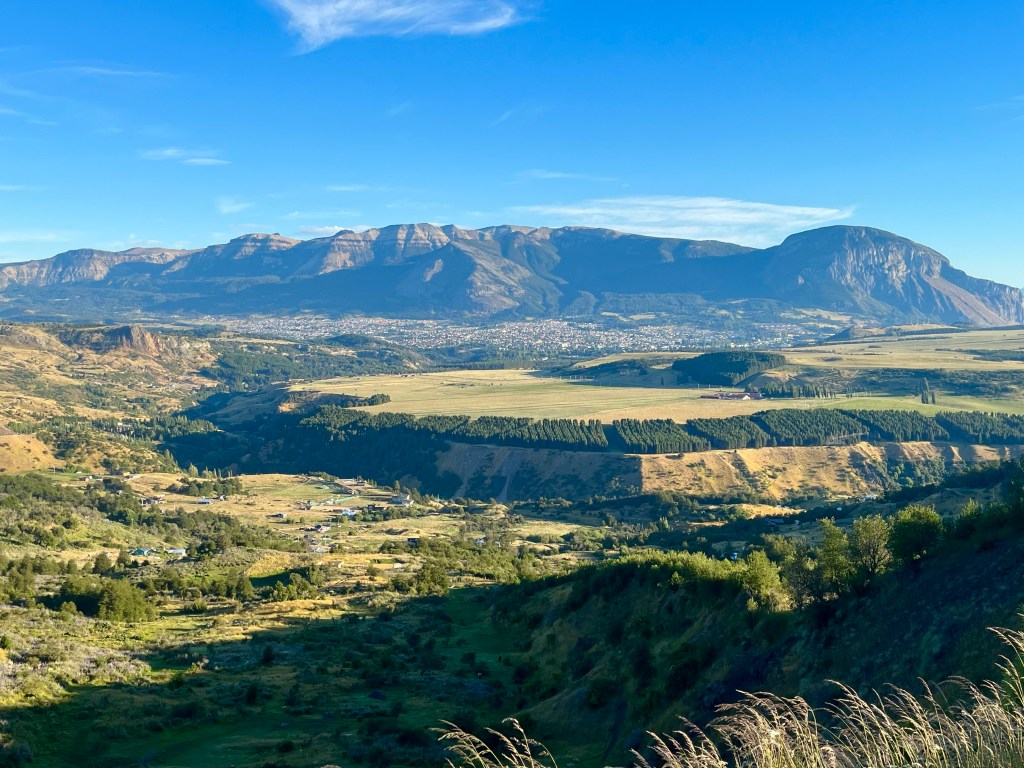
Over the top of the climb Coyhaique came into view, situated across the valley it looked very much like progress would be of the down then up nature, with the road plummeting down into the valley, before climbing steeply up the other side, into the town.
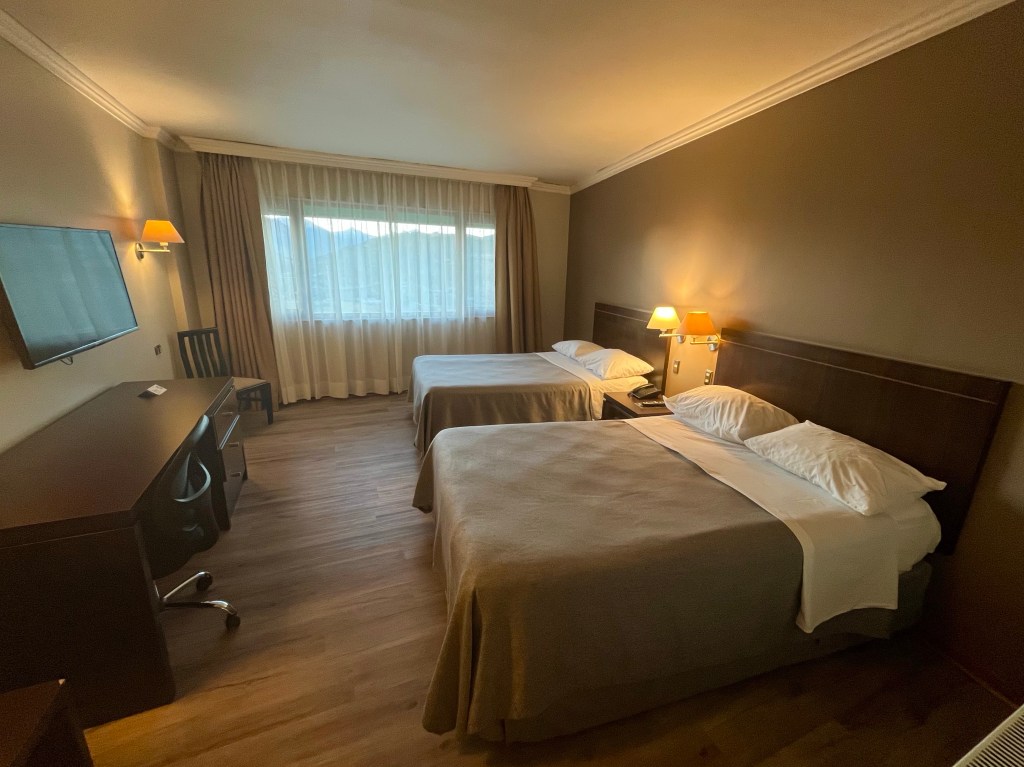
I had booked a nice looking hotel, the Hotel Diego de Almagro, but by the time I arrived, it was after 9 o’clock, and I still needed to pop out for dinner, so I wouldn’t have long to enjoy it.
Day 6: Villa Santa Lucía – La Junta

Distance: 42.52 miles

Time: 4:19:33

Elevation Gain: 2,717 feet

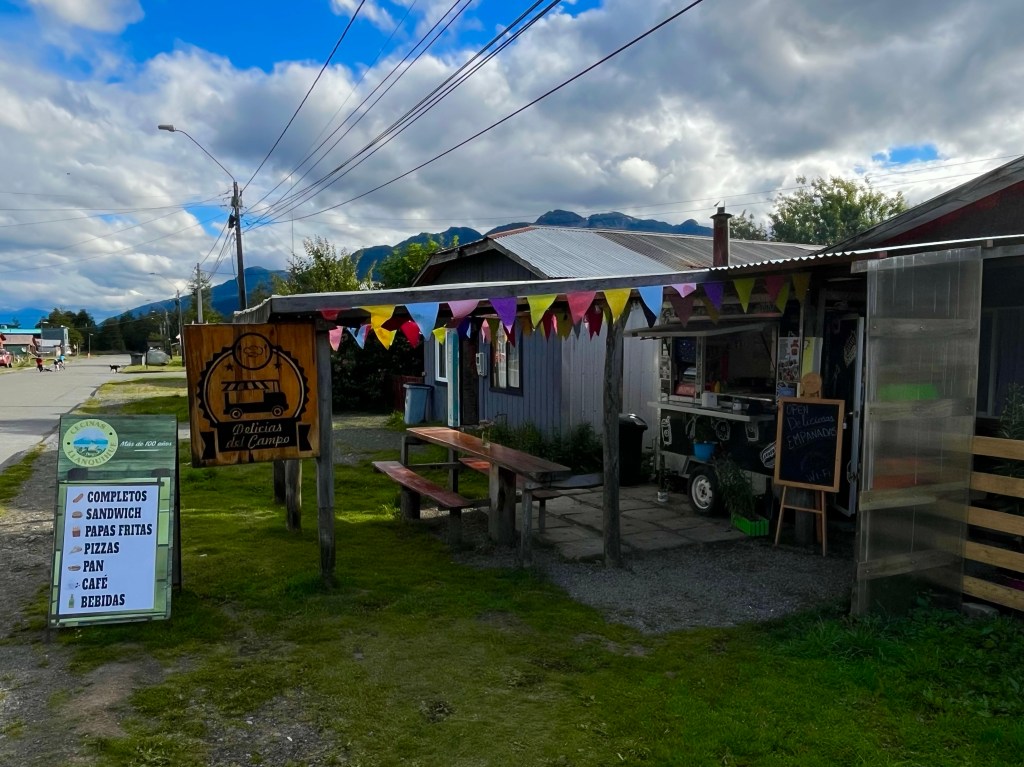
On leaving the hostel, I made my way over to the shop at the campsite, buying a few items before being told that they didn’t have any bread and to try the Empanadas stall across the road. So back I went to the scene of last night’s dinner, picking up a few bread rolls and 2 empanadas de manzana (apple pastries).

Just as I was about to head out of town, I spotted Andrew sitting outside a cafe on the main road, so stopped to thank him for his hostel recommendation. We got talking about all things cycle-touring, something he was new to after many years of hiking, most notably completing the Pacific Crest trail in the United States.

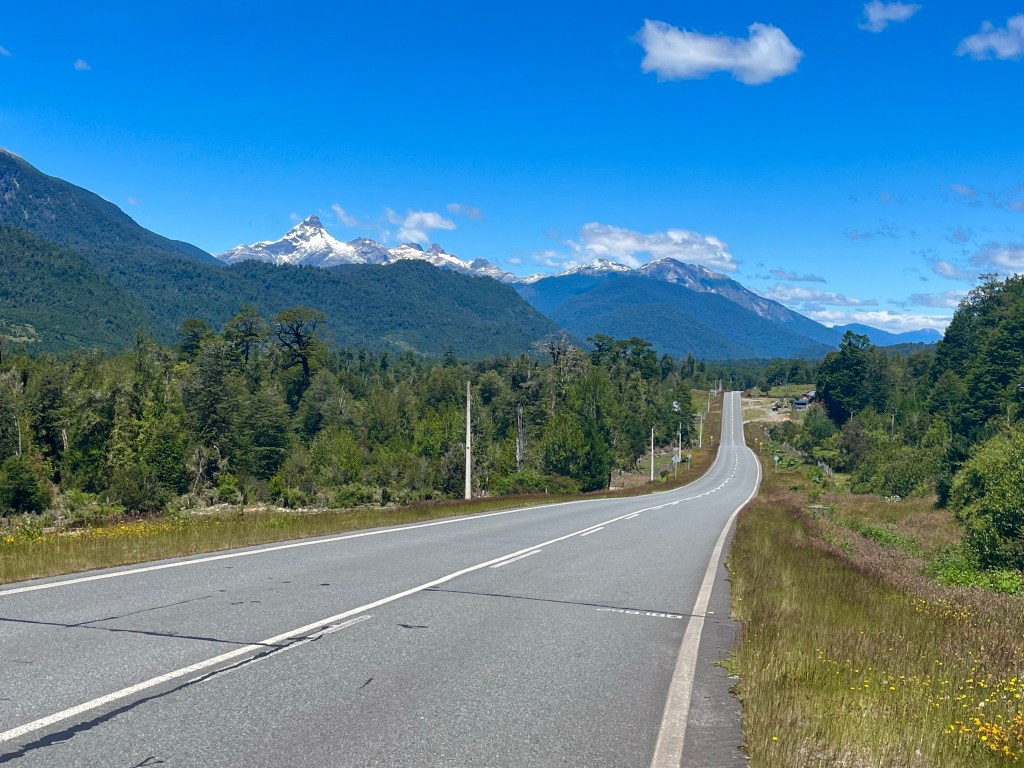
It was a stunning day, around 20°, with a stiff breeze, and I was surrounded by highly-vegetated mountains with snowcaps, it reminded me strongly of Norway.
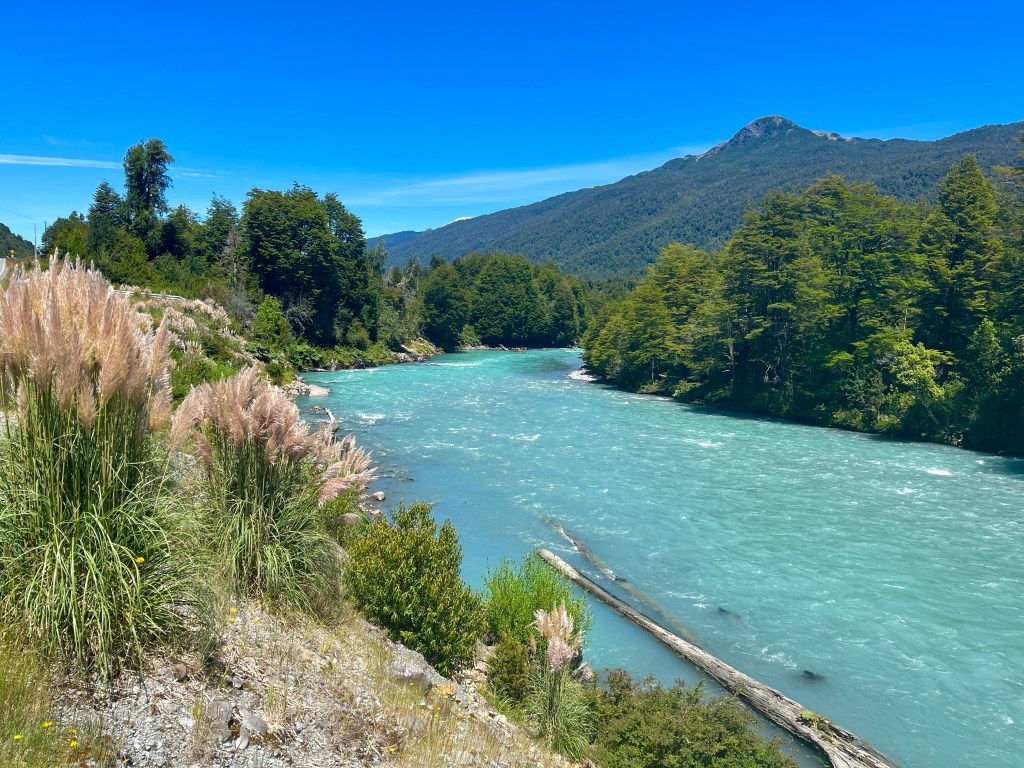
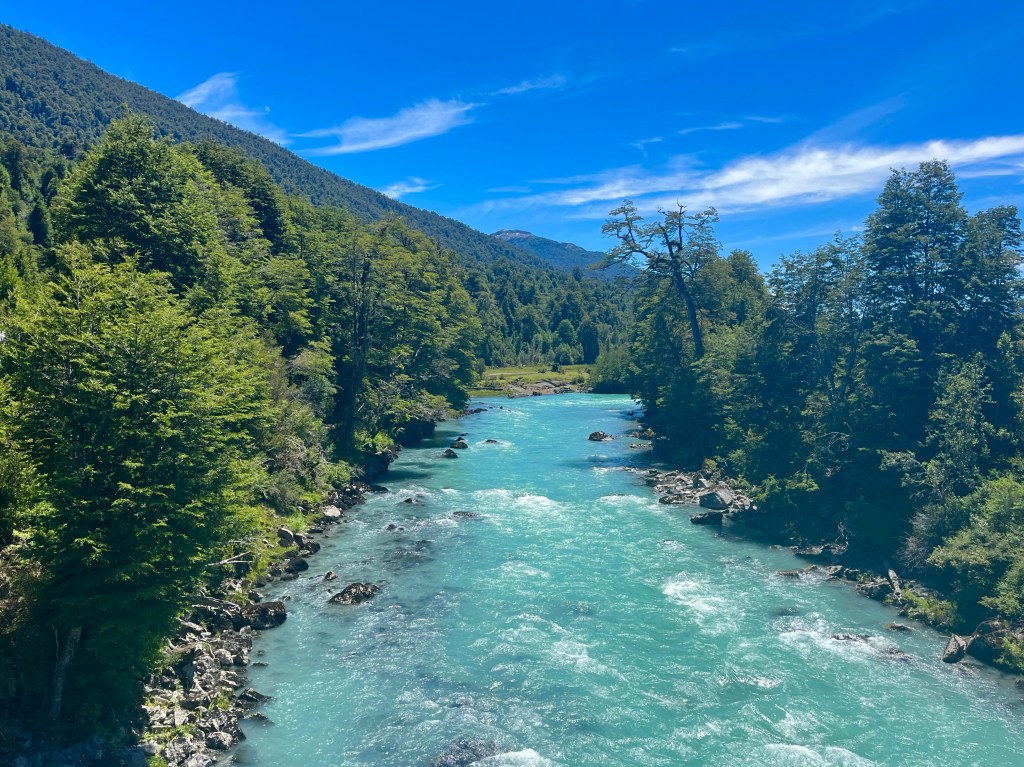
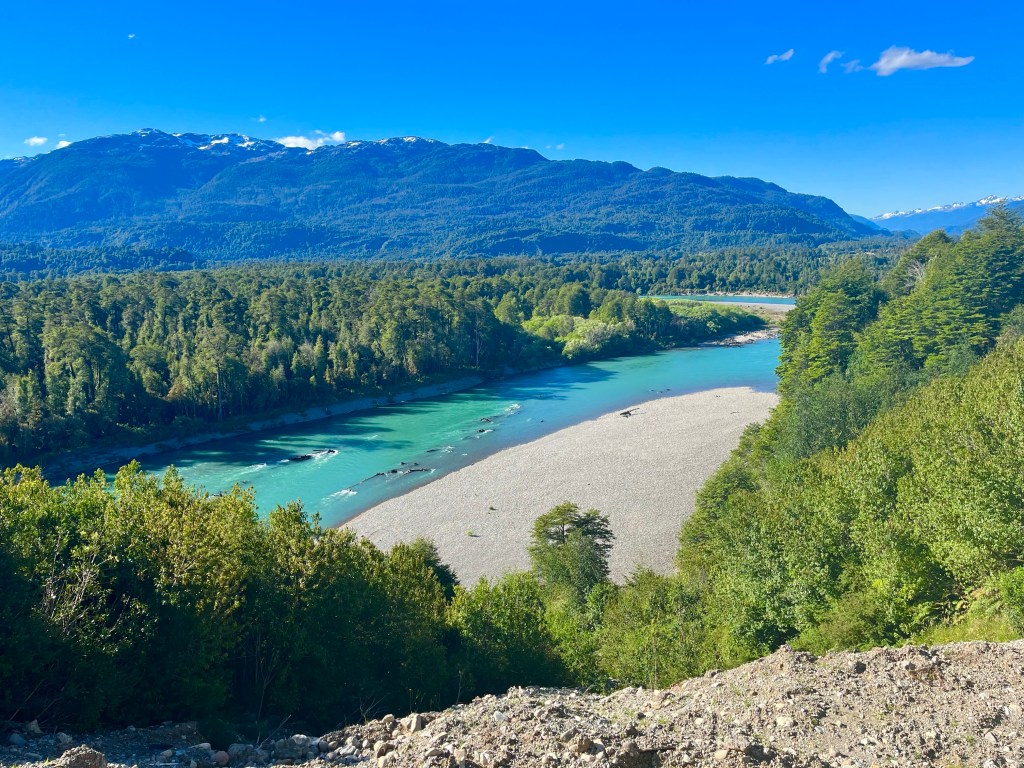
I set off into the wind, and soon began to closely track the river, captivated by its startling turquoise hue.

After 10 miles, I lowered myself down to the drops on the handlebars, to combat the effects of the wind, and felt a swift change of mindset as the motivation for the trip switched from sightseeing and travel, to a desire to push through the miles on the bike.

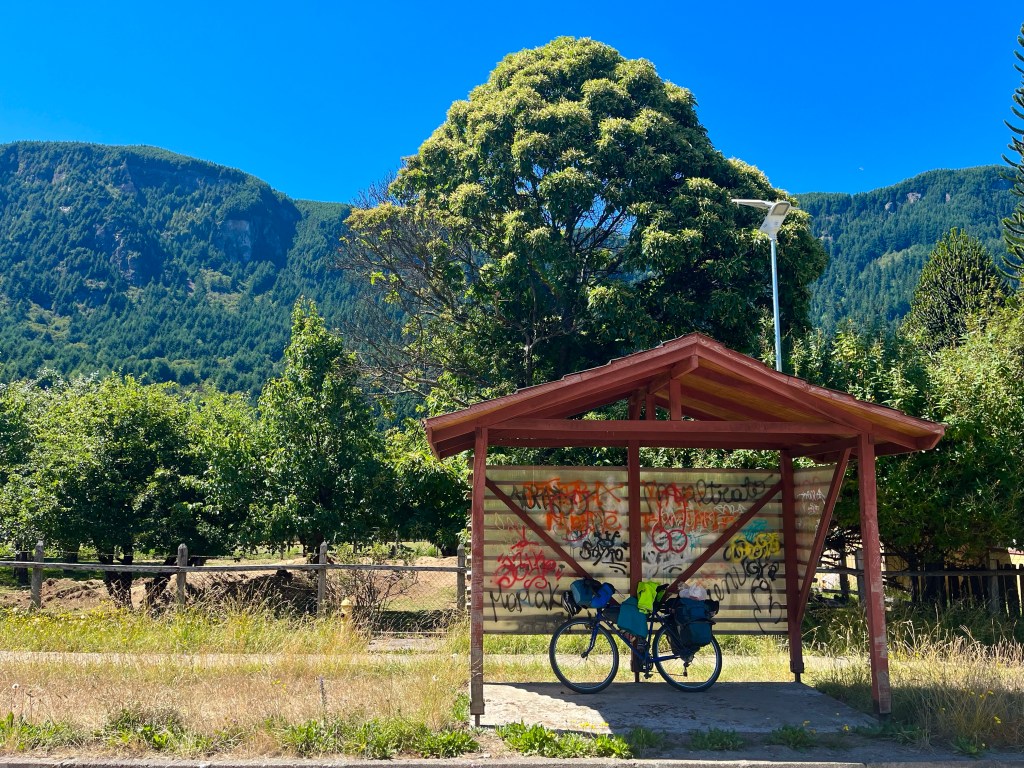
Spotting a bus stop up ahead, I took the opportunity to escape the wind and restore some energy, and not long afterwards, another cyclist stopped to do the same. His name was Steve, and he was a school teacher from Melbourne, who had previously completed an end to end of Japan. He was originally from Manchester, which might explain why we were able to understand each other much more easily than with some of the other conversations I’d had on the road.

He was travelling fast and light, on a carbon gravel bike, with an aerodynamic set up of bikepacking bags, and rather neatly a 3 litre triangular water vessel that fitted within the triangle of the bike frame. He was pushing some big miles, hoping for 200 km a day, but there was obvious wear and tear on himself and the bike, which wasn’t helped when the bike toppled from its perch onto the road while we were talking. It seemed sturdy enough, maybe there was something to be said for a light carbon set up for this kind of ride, instead of the bombproof steel frame that I was lugging up the climbs?

Speaking of climbs, the rode undulated a few more times, climbing high above the river, before I dropped down to a bridge just outside La Junta, my eyes drawn to the sign for Camping Agua Vida. Reviews suggested it was the best around, so I rolled through the gate.

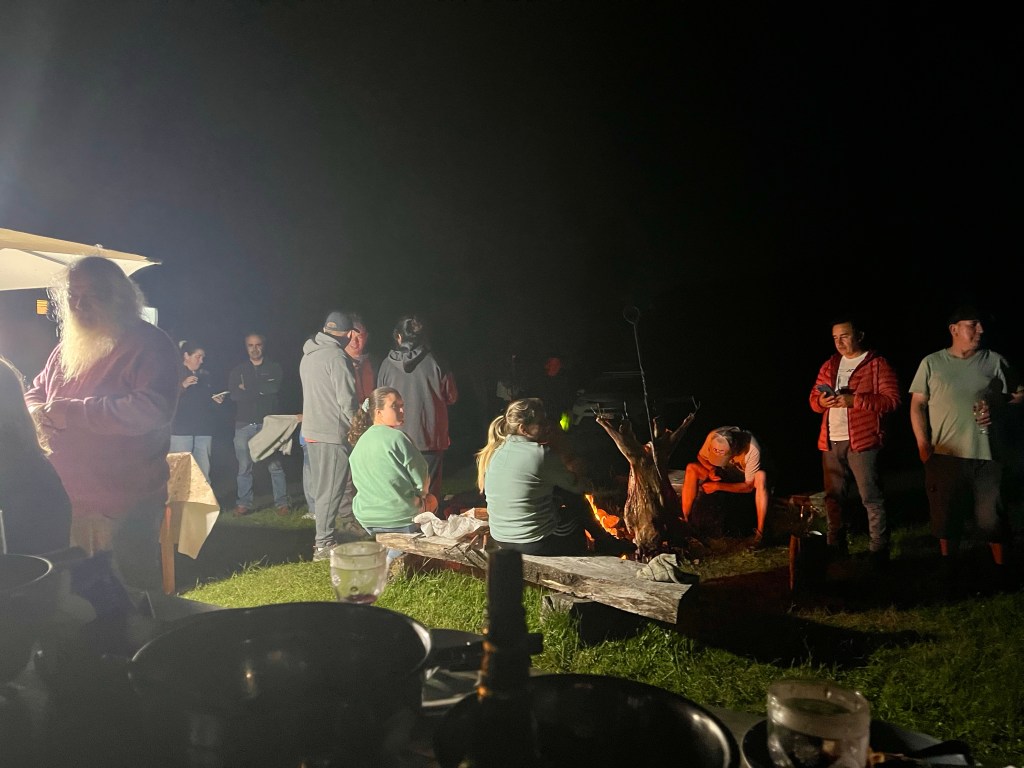
As I looked for a camping spot in the pleasant looking site, I passed a man with a flowing white beard stoking the fire underneath two large sheep carcasses. ‘Carne?’ It seemed like the man was offering me meat, but I wasn’t quite sure how to respond.

Later in the evening, as I was sitting at the picnic bench beside my tent, having just consumed a large pan of pasta, the man came over and repeated his question, at which point I turned and realised that everyone in the site was in the midst of a huge feast, with the meat the focal point and large bowls of salad and potatoes being passed around. Cutlery was thrust in my hand, and I soon realised that the man with the flowing beard was the owner of the site, and they were hosting the party.

Fortuitously, I was sat beside an Italian, Daniele, who happened to speak English. He came from the Dolomites, but now worked here most of the year round, largely at one of the thermal baths along the road in Raúl Marín Balmaceda, but also as a rafting guide up river in Futaleufú.

During the summer he went back to Italy and worked there for two months as a rafting guide too. His long term plan was to build a house and cabañas here, which he already had the land for, with one hectare in the area costing as little as €12,000.

The party was tradition at Christmas and New Year. Clearly the owner was in his element and fortunately Daniele was able to translate some of the amusing things he was saying. One quote being, ‘in the summer we drink fine wine with rich people, and in the winter, we drink’, and also, while pouring me a large tumbler of wine, he had implied that it was so that I would stay for another 2 nights. He spent the evening calling me ‘Escocia’, that much I understood.

It was a late night, and certainly a much better New Year’s Eve than I was expecting, I could see why Daniele might want to live here!

Day 5: El Amarillo – Villa Santa Lucía


Distance: 36.27 miles

Time: 4:06

Elevation Gain: 2,920 feet

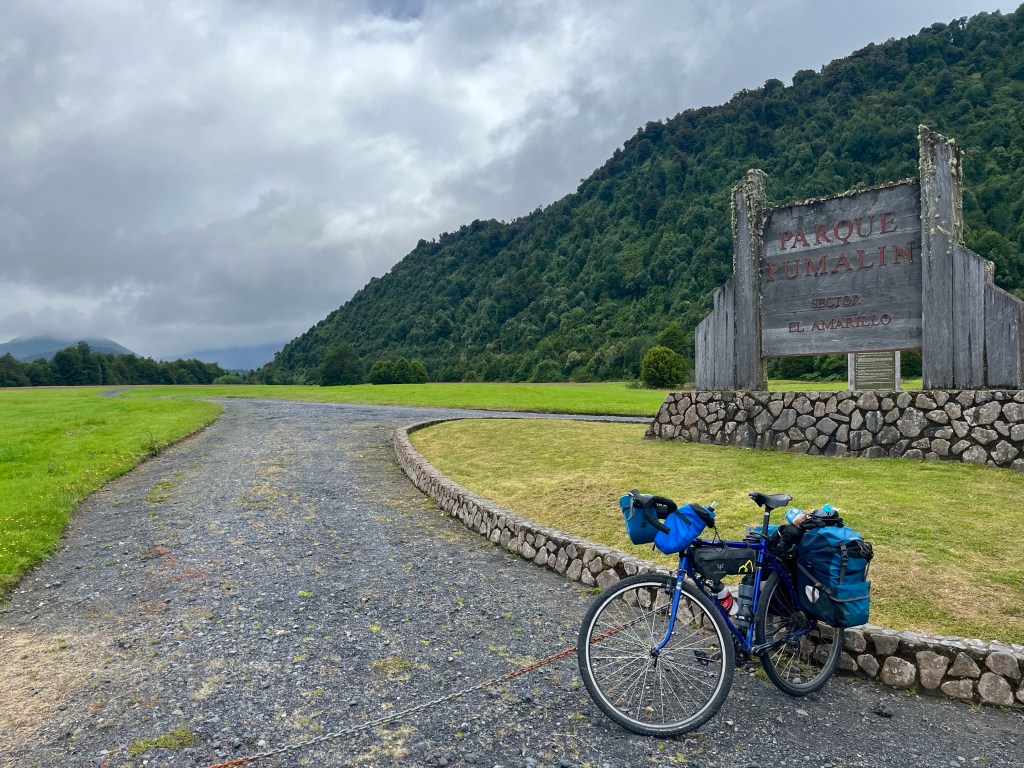
As I made my way back out of the national park in the morning, there were quite a few vehicles coming the other way, so it was a surprise to see that the wooden barricade was still across the entrance when I reached it, until I saw the inhabitants of a motor home parking up to move the barrier aside, that was.

For the first few miles, on leaving El Amarillo, the going was good: bright skies, flat roads, minimal traffic, and a bit of a tailwind.

My notes suggested that this stretch should be poor gravel, so I was wondering when the bubble would burst. But 10 miles in, as I crossed an impressive looking bridge over the Río Yelcho, the wind had threatened to turn against me, and droplets of rain had hinted at showers to come, but the tarmac didn’t look like it would be ending any time soon.

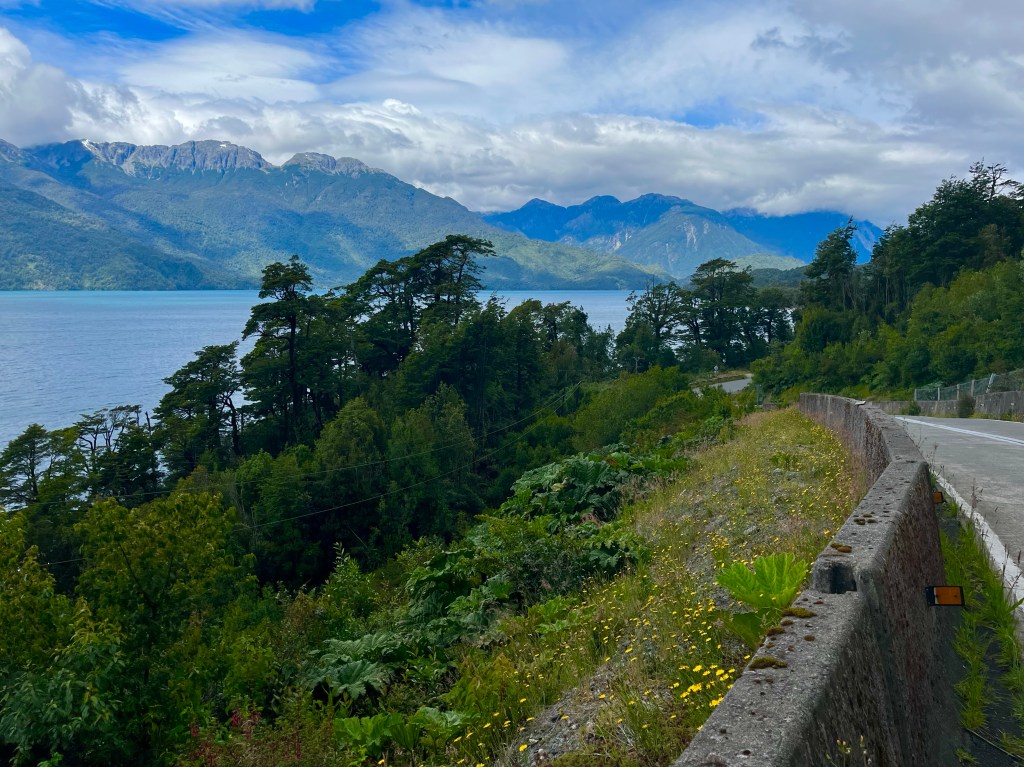
The road undulated along the side of Lago Yelcho, a fine range of mountains towering over the far shore providing a majestic backdrop to the scene.

Beyond the lake, I climbed up to a bridge over a heavily swollen river, reminding me of the previous evening’s downpour, before a brief shower caused me to pause in a roadside shelter, donning my waterproofs for a short spell.

Still the tarmac endured, so when I reached the last ten miles, I wondered what the catch was, before quickly finding out, when I started to climb at an alarming rate, the road ramping up steeply, before turning into an unrelenting grind. My legs had little more to give and I wondered why this seemed so tough when climbs had been feeling relatively good up until now. Then I remembered I’d let some air out of the tyres for the gravel roads, that could be it.

Eventually I summited the pass at over 2000 feet, and quickly I was descending on fantastic roads into the valley on the other side, pleasant running all the way to Villa Santa Lucía where I hoped to find accommodation for the night.

Making in the direction of Campsite El Mañio, my eye was drawn to a food stall offering Empanadas across the street, so I opted to sort dinner first, and deal with where to sleep, after. My empanada arrived quickly, but the papas fritas took a little longer to materialise, by which time a fellow cyclist from Australia, named Andrew, had turned up.

He had started in Bariloche on the day that I’d arrived in Chile, but had been suffering with illness so had been staying in Villa Santa Lucía for three nights, now. He was hoping to make it all the way down to Ushuaia right at the south of Argentina, and had no real time constraints.

He recommended the place he was staying, Hostal El Mate, and at 25,000 (£20) Chilean Pesos for bed and breakfast, with a private bathroom, and bikes locked in a shed, that would do for me. Would I like for him to show me where it was and communicate with the owner on my behalf? Well, yes, that would be ideal.

Day 2: Manihueico – Hornopirén

Distance: 32.18 miles

Time: 3:59

Elevation Gain: 2,644 feet

After a good sleep in the ‘Glamping’ pod, I heated water to have with some quite pleasant granola with cranberries that I’d picked up at the supermarket, before packing up to leave.

The entire stay including the evening meal and a local craft beer, had cost around £20, which definitely seemed like good value, especially when combined with our host’s good humour.

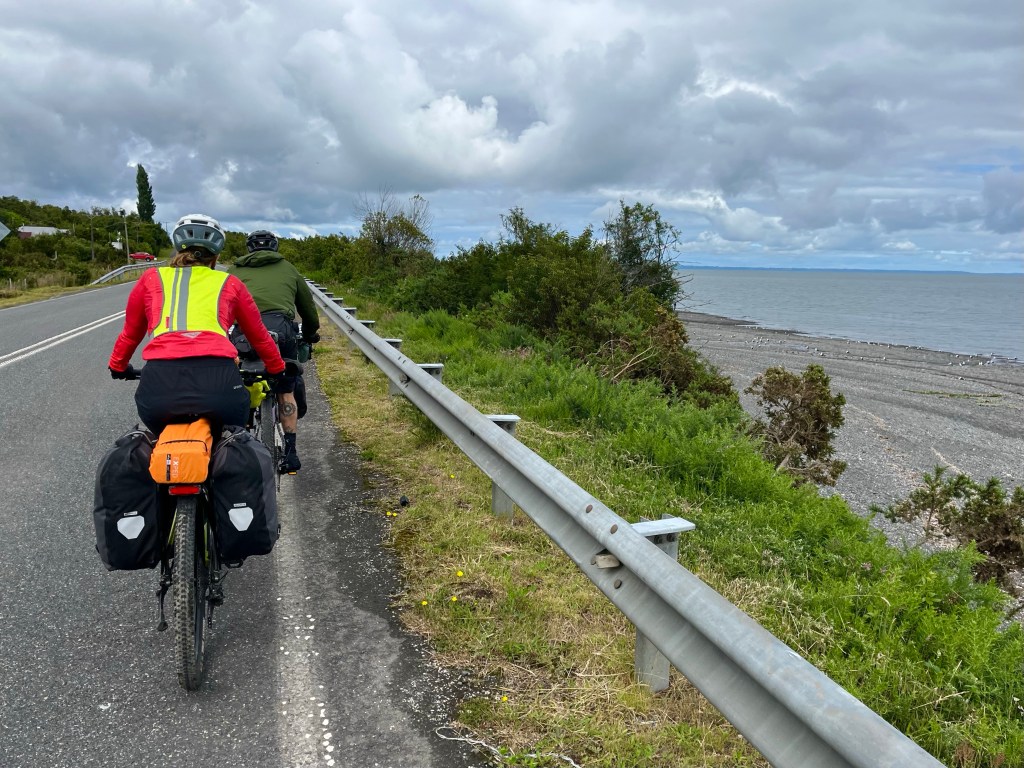
Setting off, with Marlen and Pablo again, we enjoyed a short stretch along the coast, the weather was fair, but there was a stiff breeze in our faces as we headed in the direction of Contao.

Soon, however, the road turned inland and started to climb, and we struggled up steepening gradients, working our way through the trees, into ever strengthening sunshine.

The windchill took the edge off as we crested an undulating plateau at 800 feet elevation, and views back out towards the sea emerged.

A lengthy downhill followed with Pablo and Marlen rocketing into the distance, confidence inspired by their background in mountain biking, and also their far superior hydraulic disc brakes.

Shortly afterwards, we stopped at a local minimarket for some snacks, the sign suggested that it was open, but there was no one inside, not until the shopkeeper emerged from the house nearby to open it up for us.

Pickings were slim, but I ended up with a packet of small scones, the hardness of which gave the impression that they’d been in the shop for a considerable amount of time.

Surprisingly, though, they did taste quite good, especially after Pablo produced a squeezable pouch of Manjar Tradicional as an accompaniment. It’s a type of Dulche de Leche also common in his home country of Argentina.

Another climb led to an attractive and fertile open valley, with horses stretching their legs in the fields that lay either side of the road.

The last descent, down into Hornopirén, was joyous, with a great road surface, and fantastic views of the happily situated bay starting to unfold.

First port of call was, in fact, the ferry terminal, as we strove to source the elusive tickets for the next part of the route, the Bi-modal ferry to Caleta Gonzalo. Elusive, in that we had spent the entirety of the previous ferry crossing – the day before – attempting to buy tickets online, before realising that the system would not be working any time soon.

And in case you’re wondering what a Bi-modal ferry is, it’s a ferry journey, in which we’d have to get out and cycle in the middle. I’m sure it’ll catch on…