Tag: Villa O’Higgins

Day 6: Villa Santa Lucía – La Junta

Distance: 42.52 miles

Time: 4:19:33

Elevation Gain: 2,717 feet

On leaving the hostel, I made my way over to the shop at the campsite, buying a few items before being told that they didn’t have any bread and to try the Empanadas stall across the road. So back I went to the scene of last night’s dinner, picking up a few bread rolls and 2 empanadas de manzana (apple pastries).

Just as I was about to head out of town, I spotted Andrew sitting outside a cafe on the main road, so stopped to thank him for his hostel recommendation. We got talking about all things cycle-touring, something he was new to after many years of hiking, most notably completing the Pacific Crest trail in the United States.

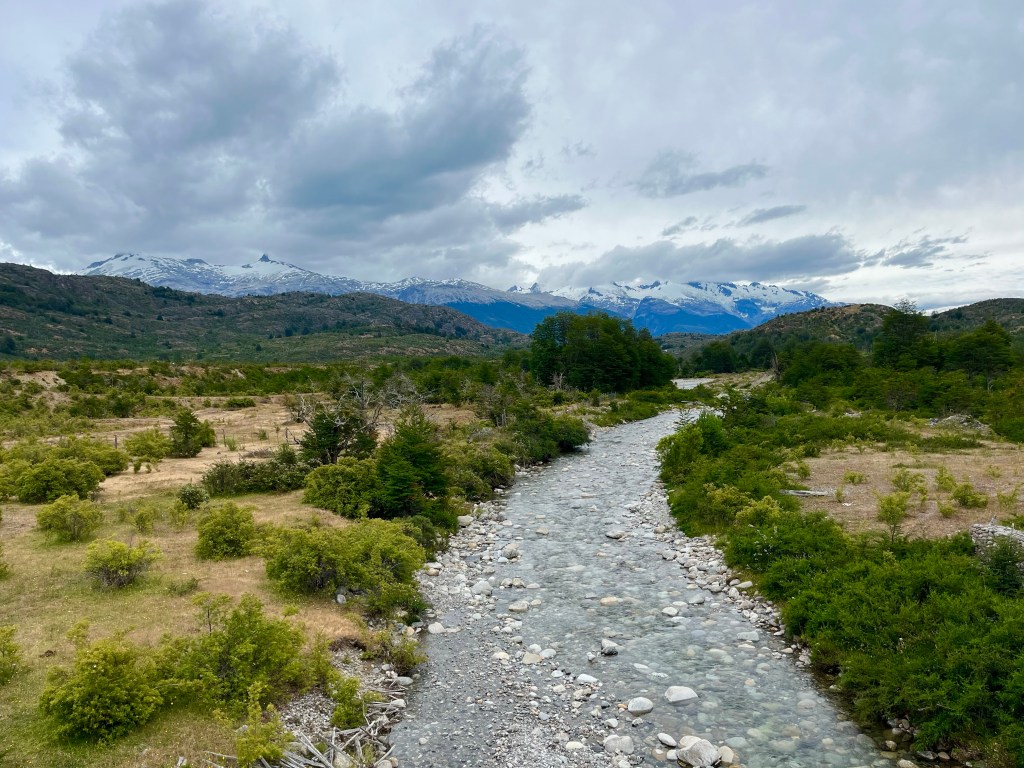
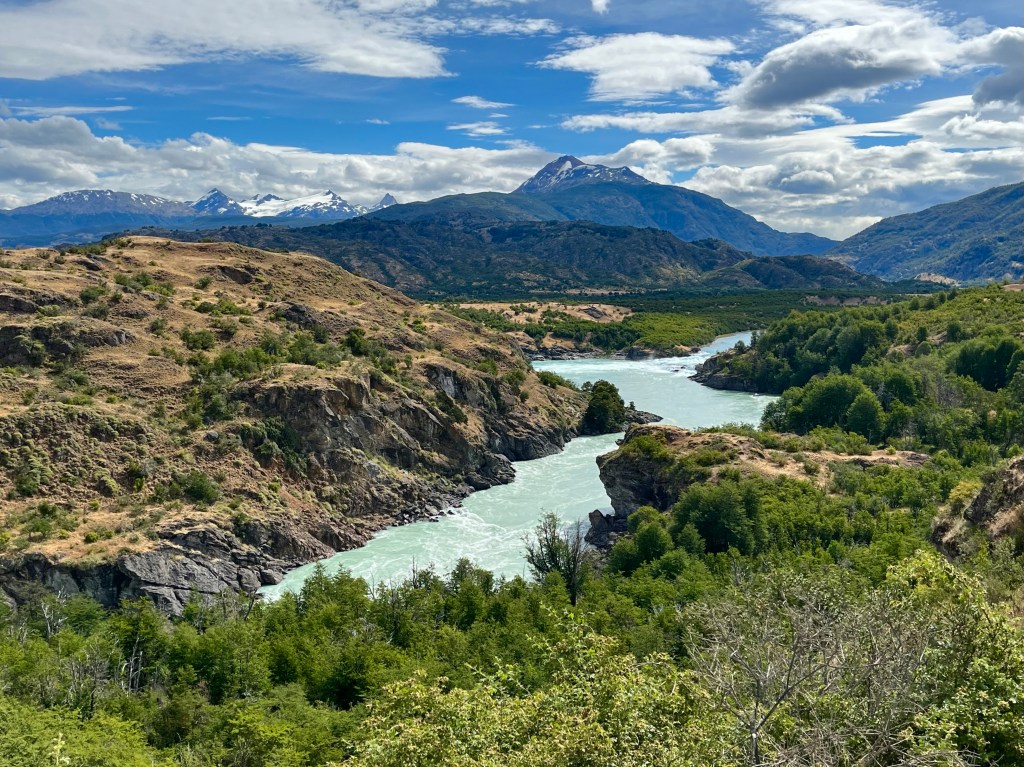
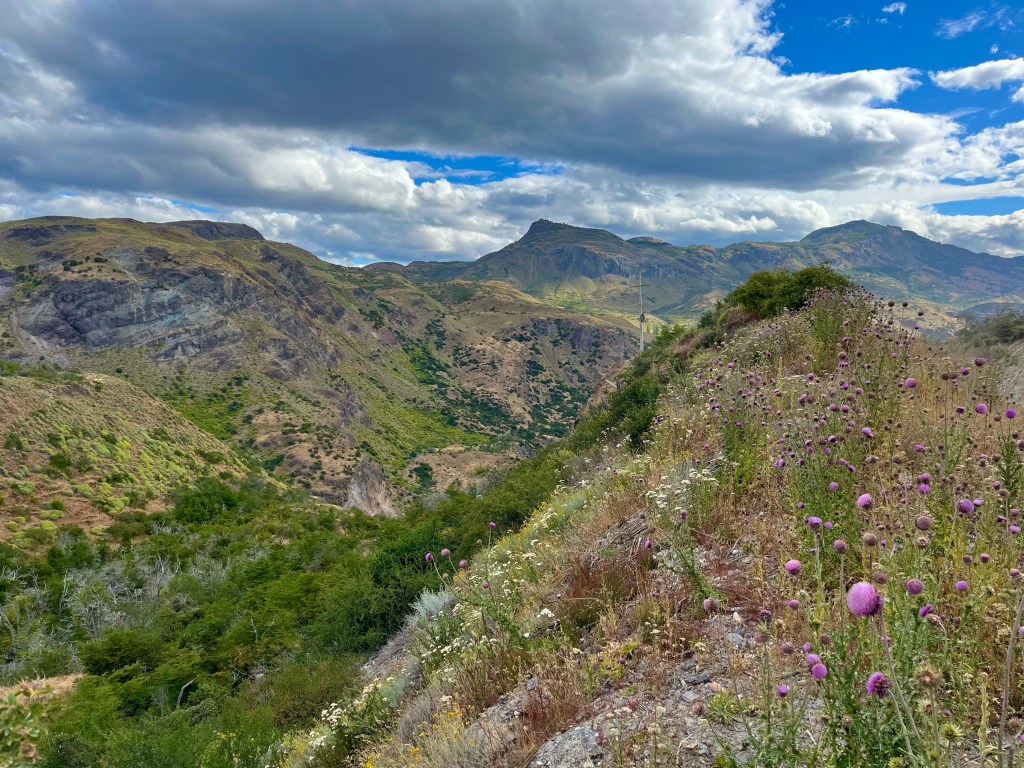
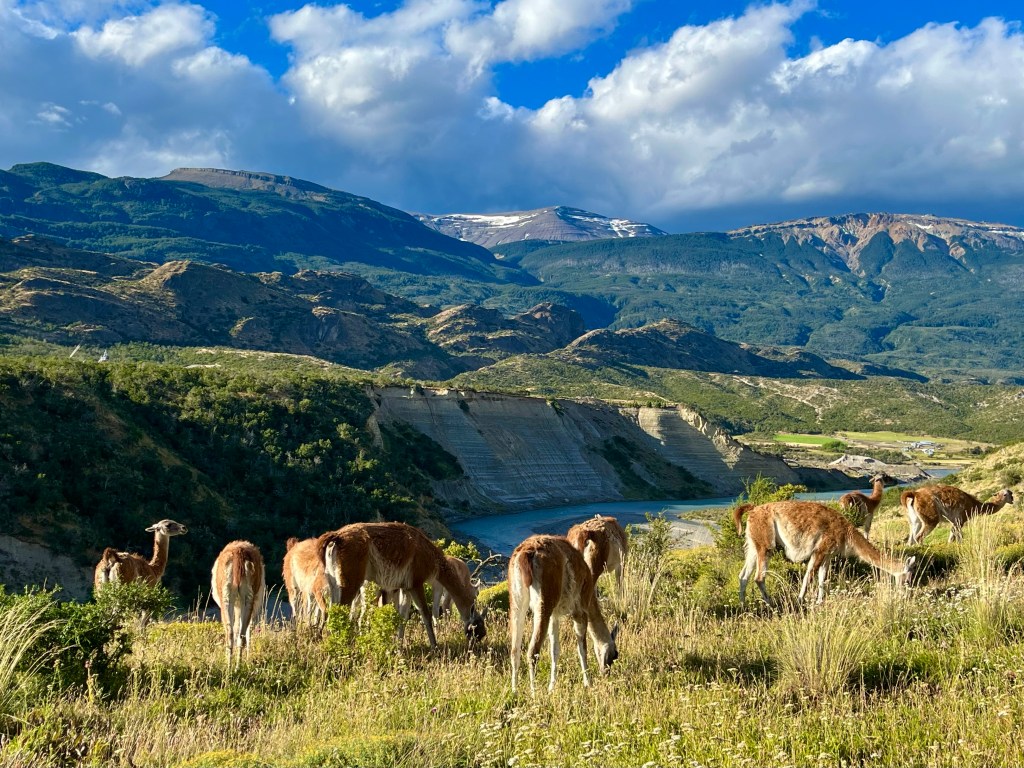
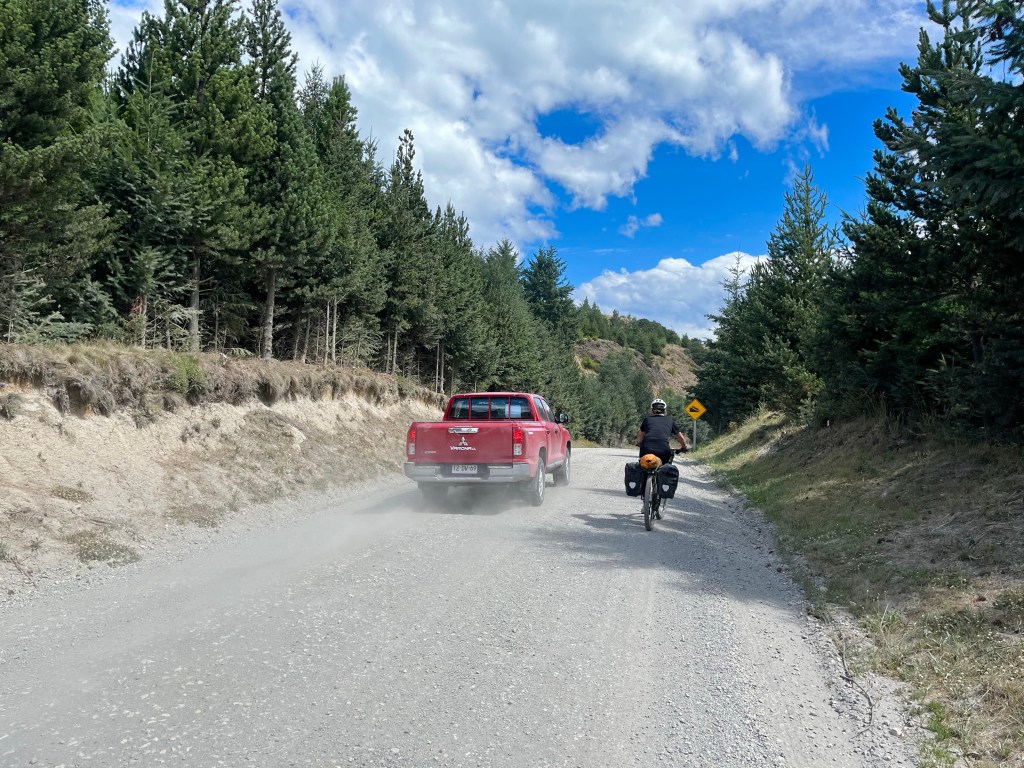
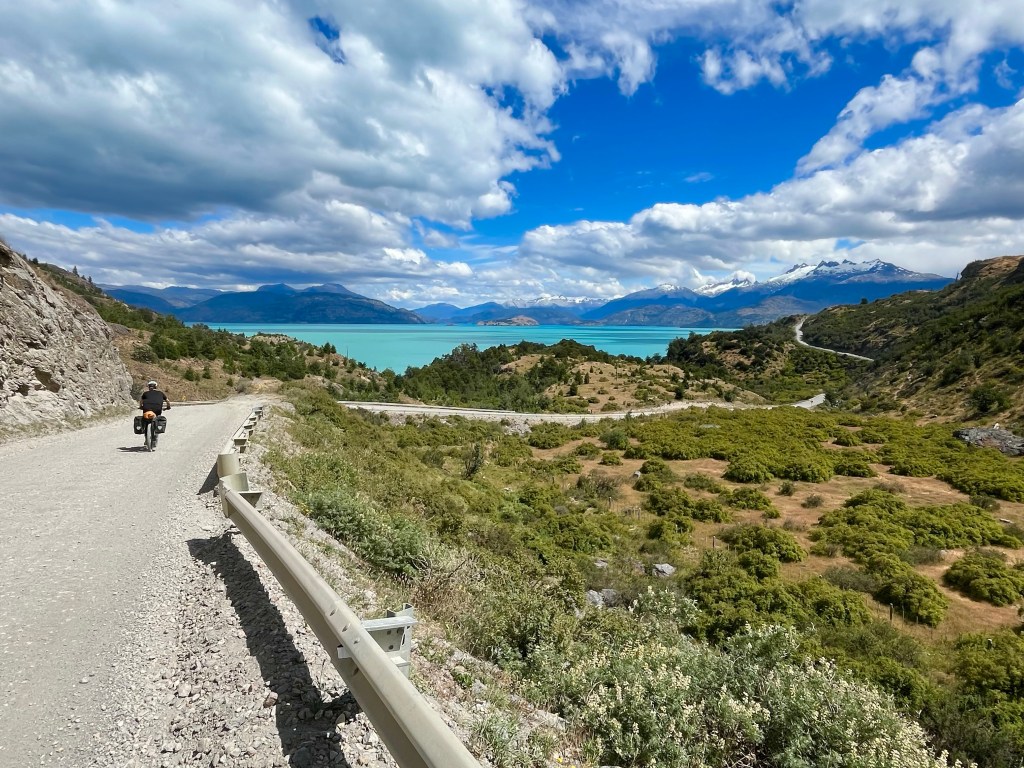
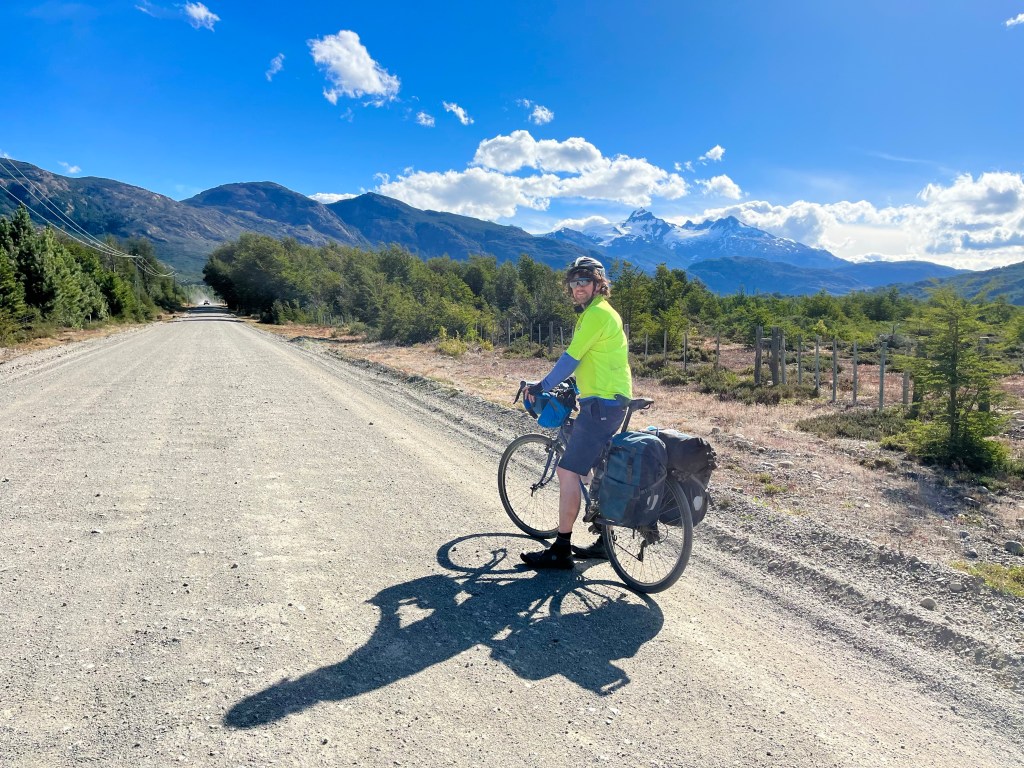
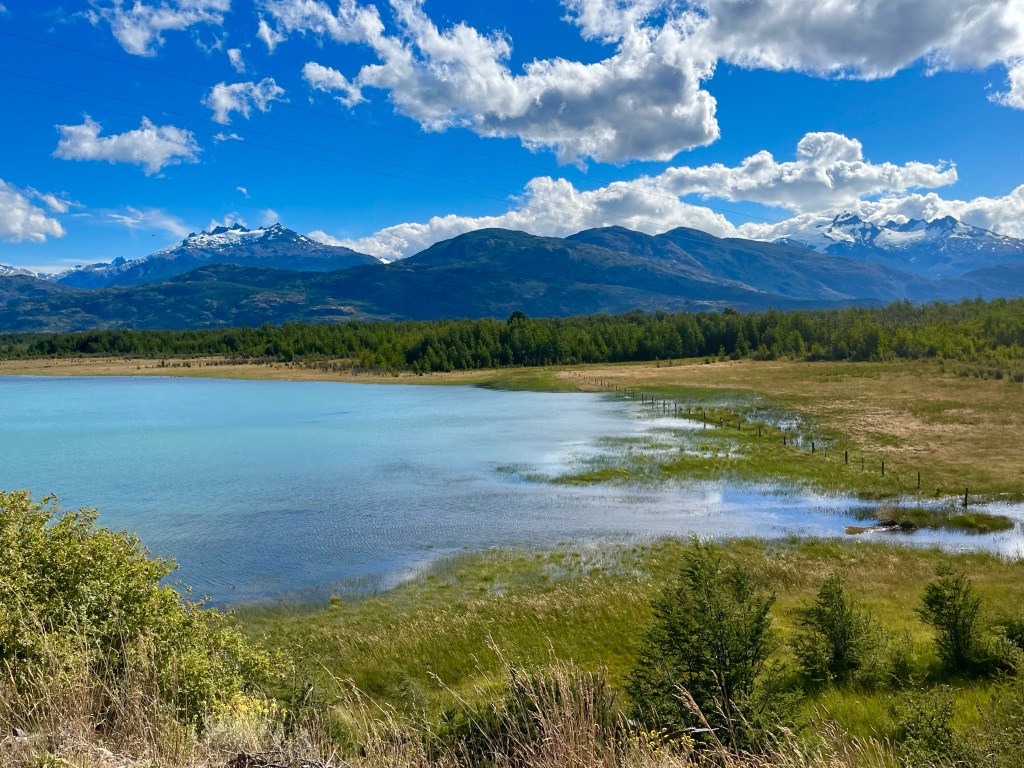
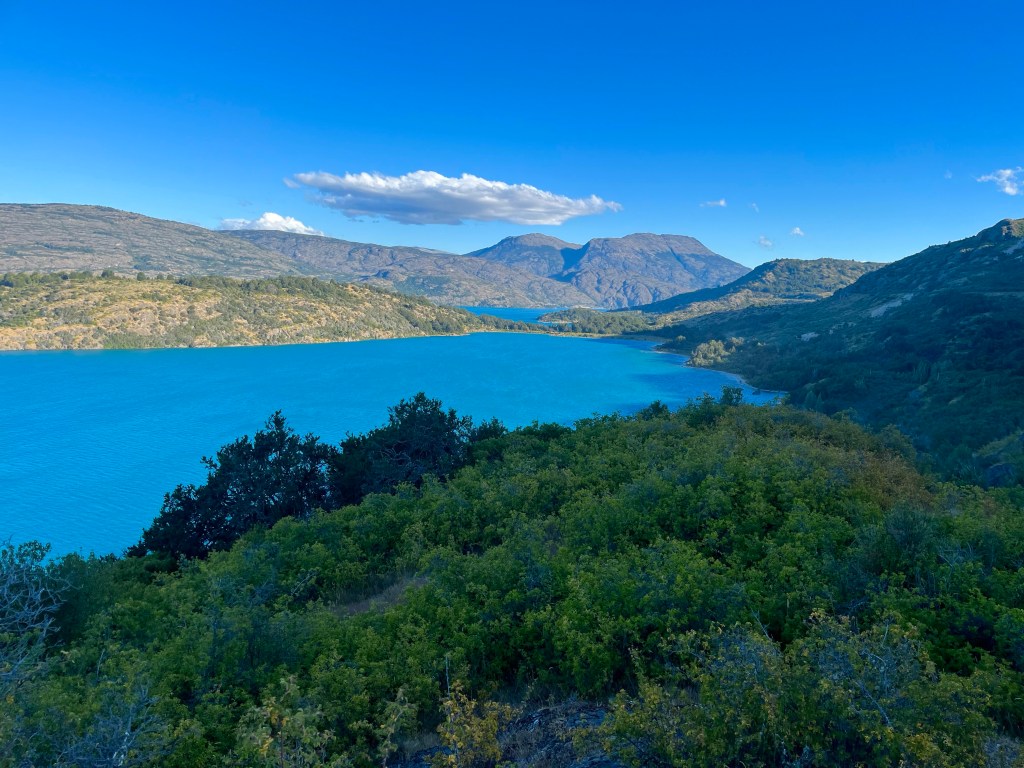
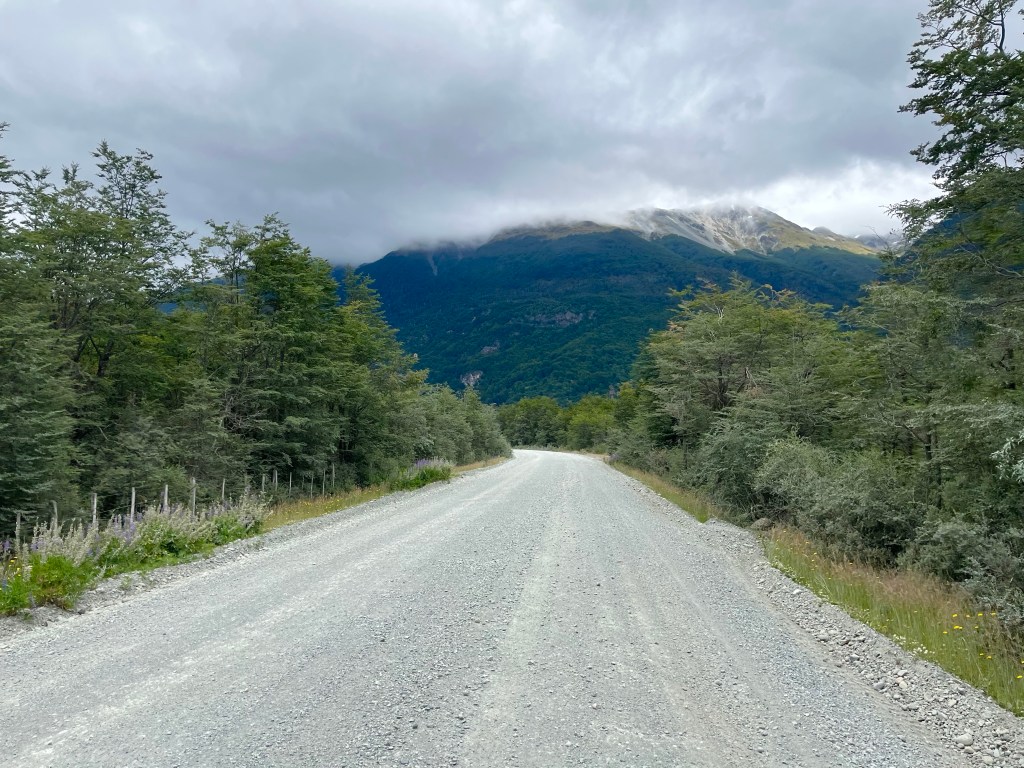
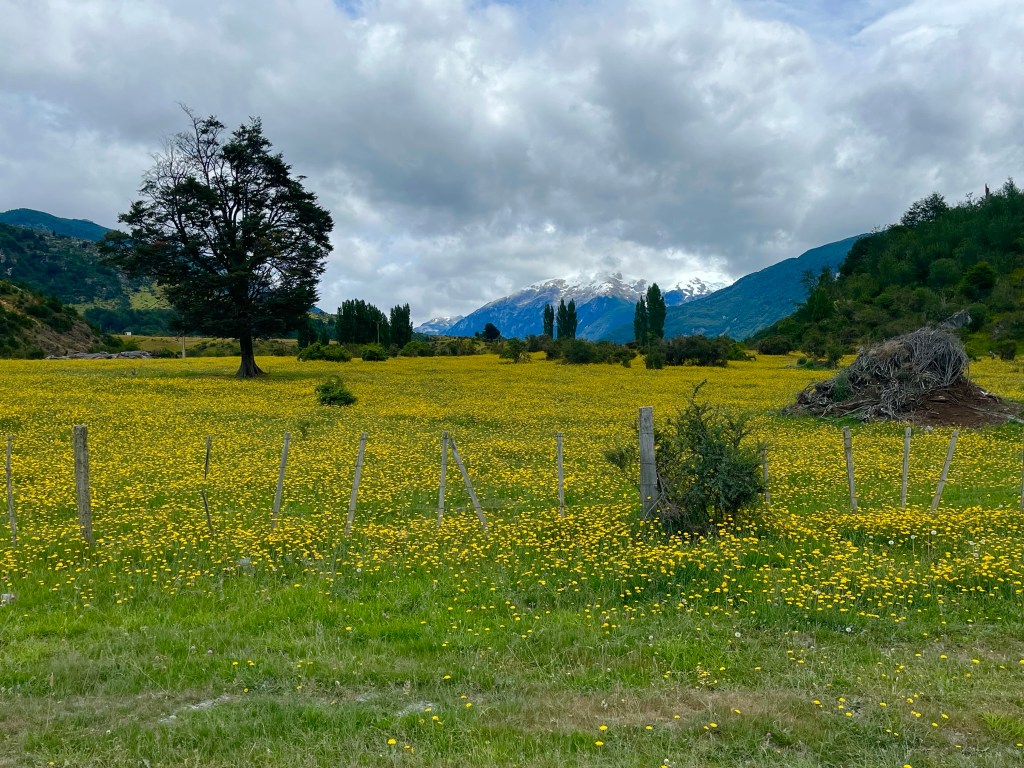
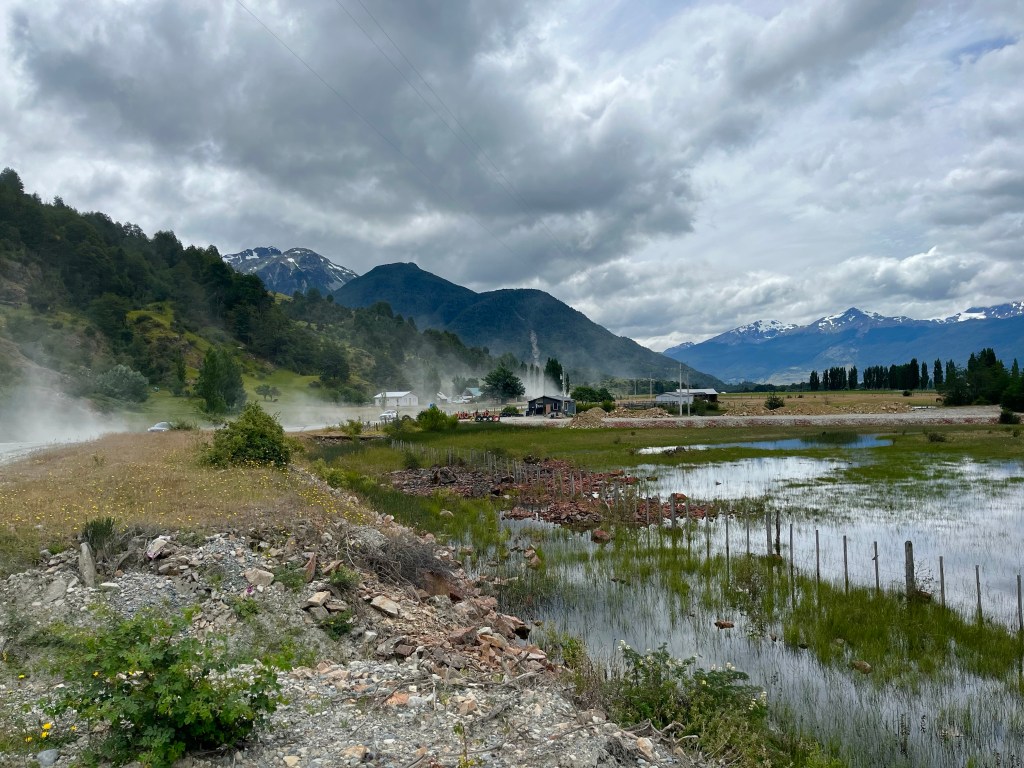
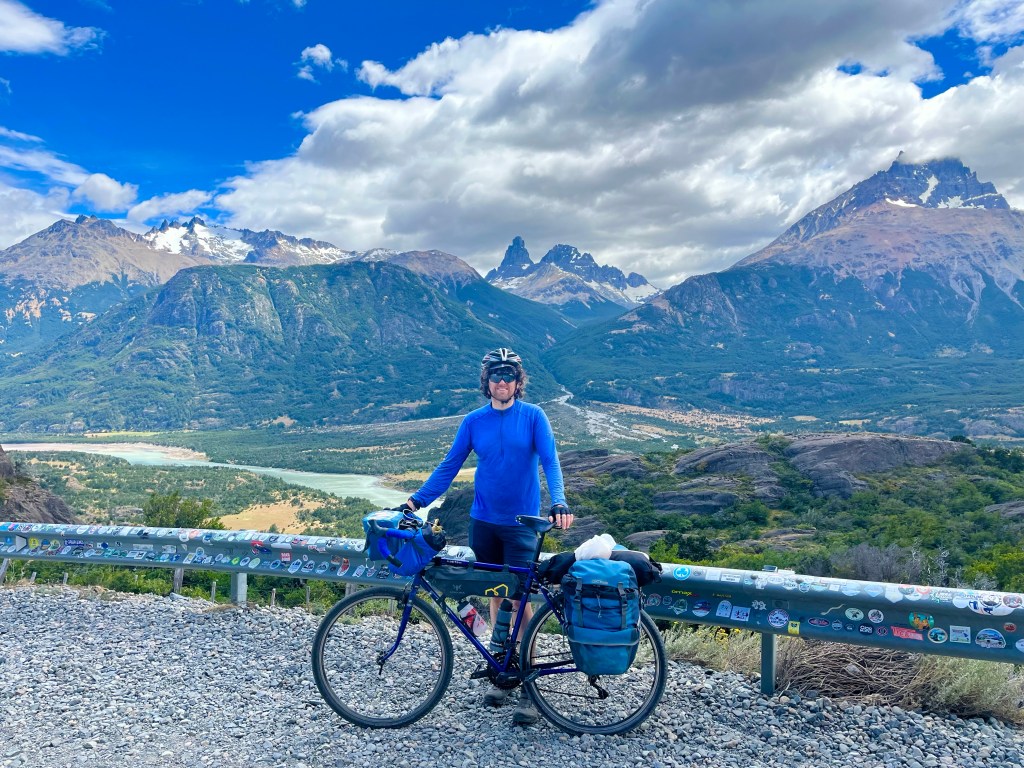
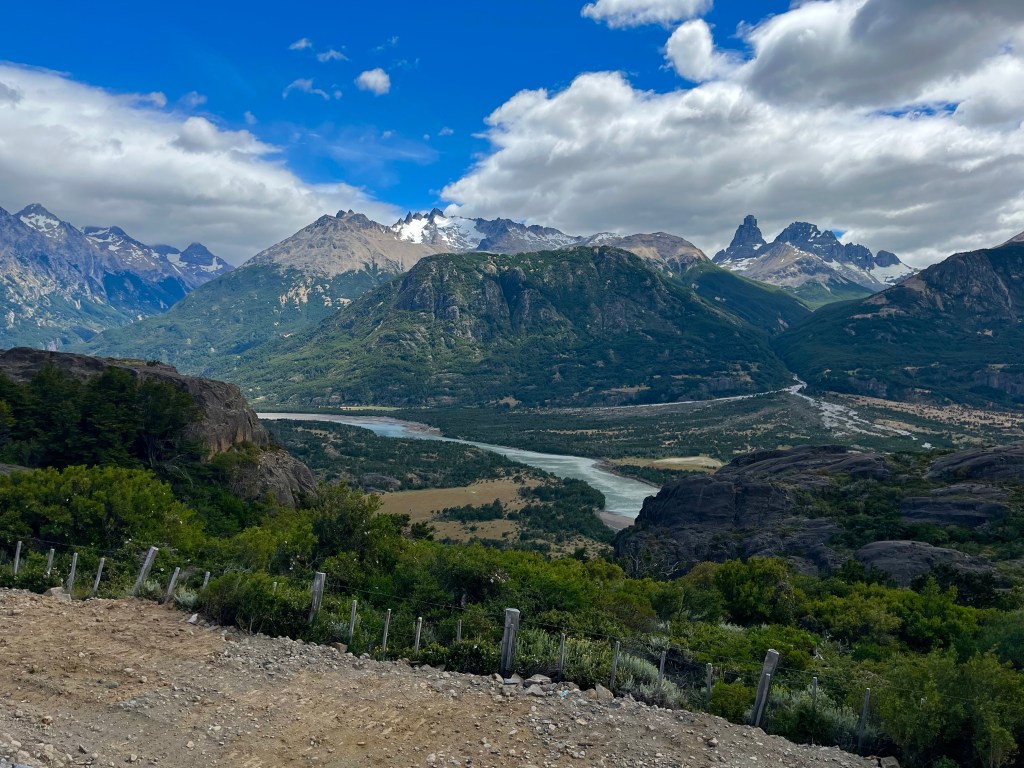
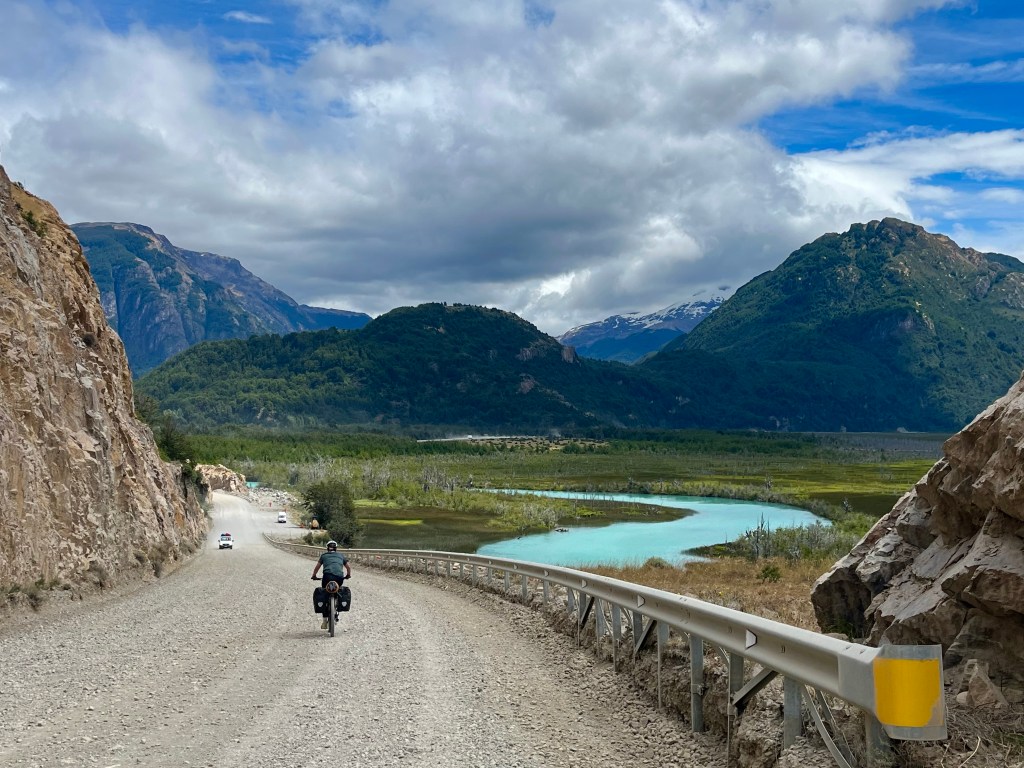
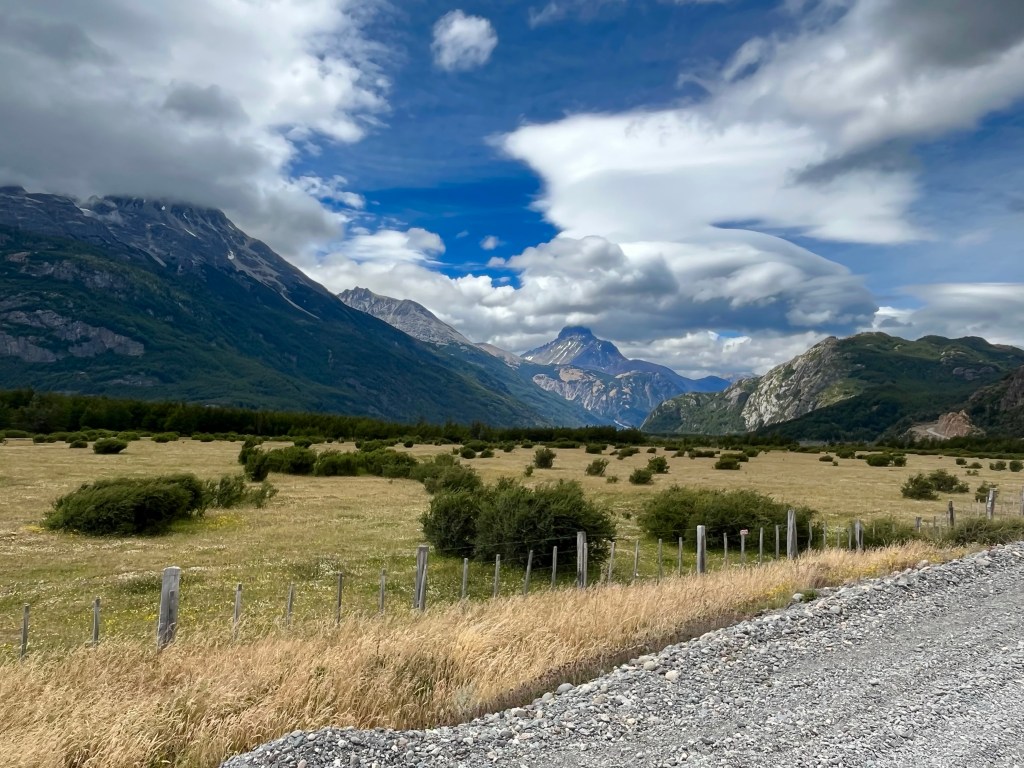
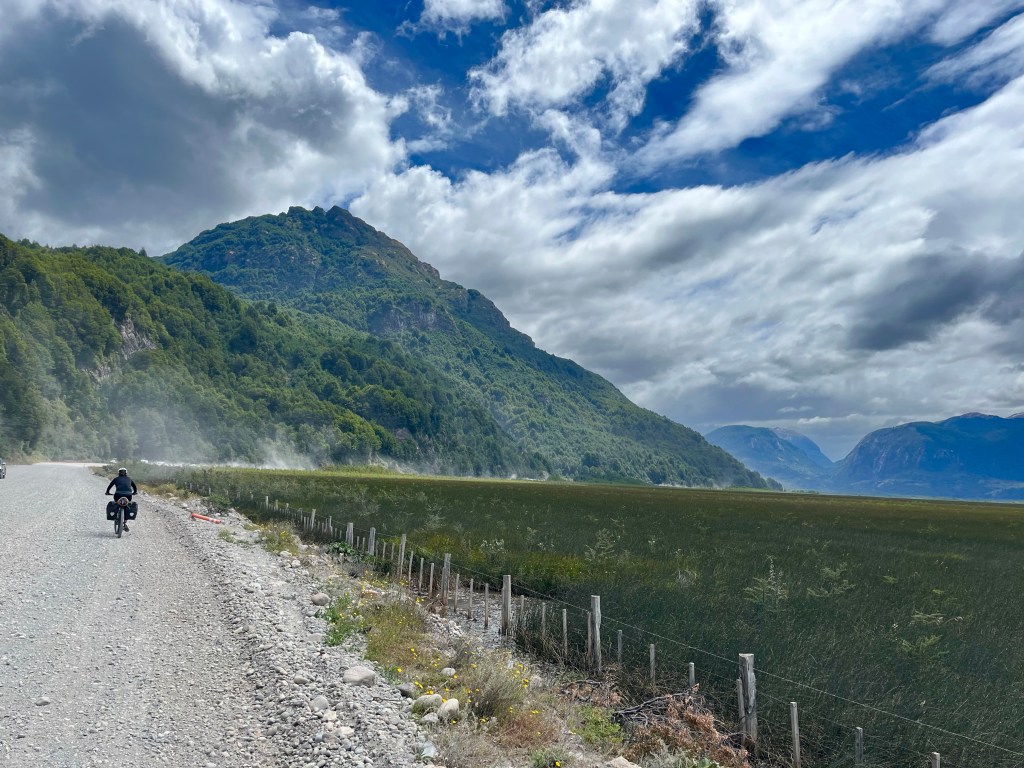
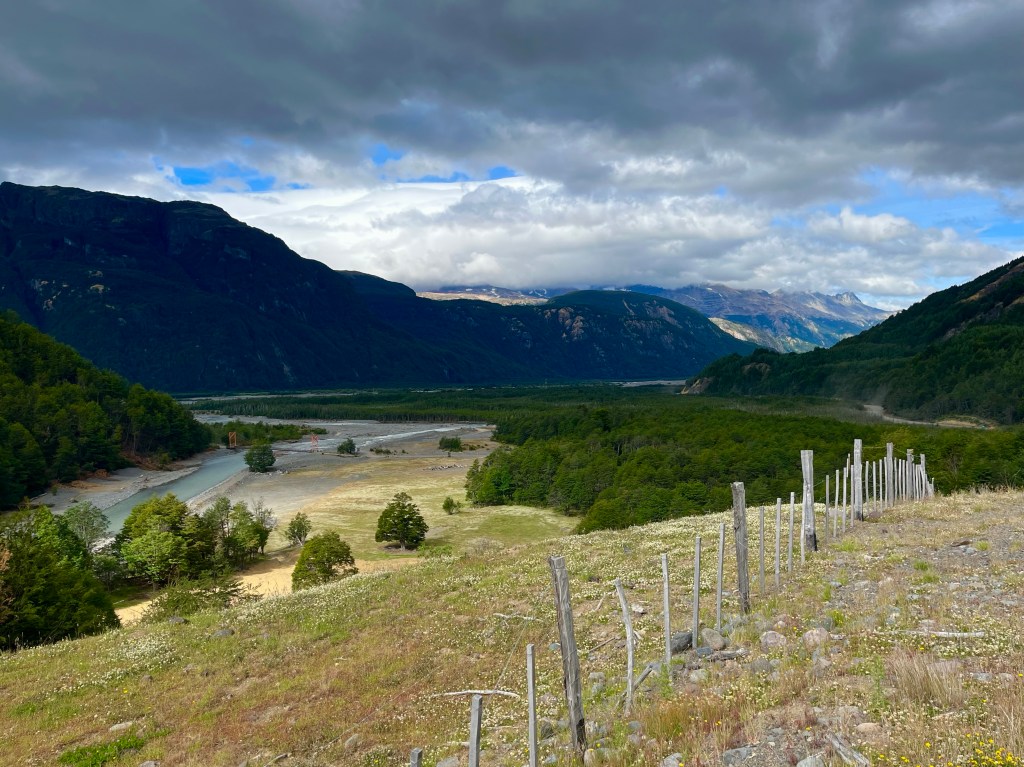
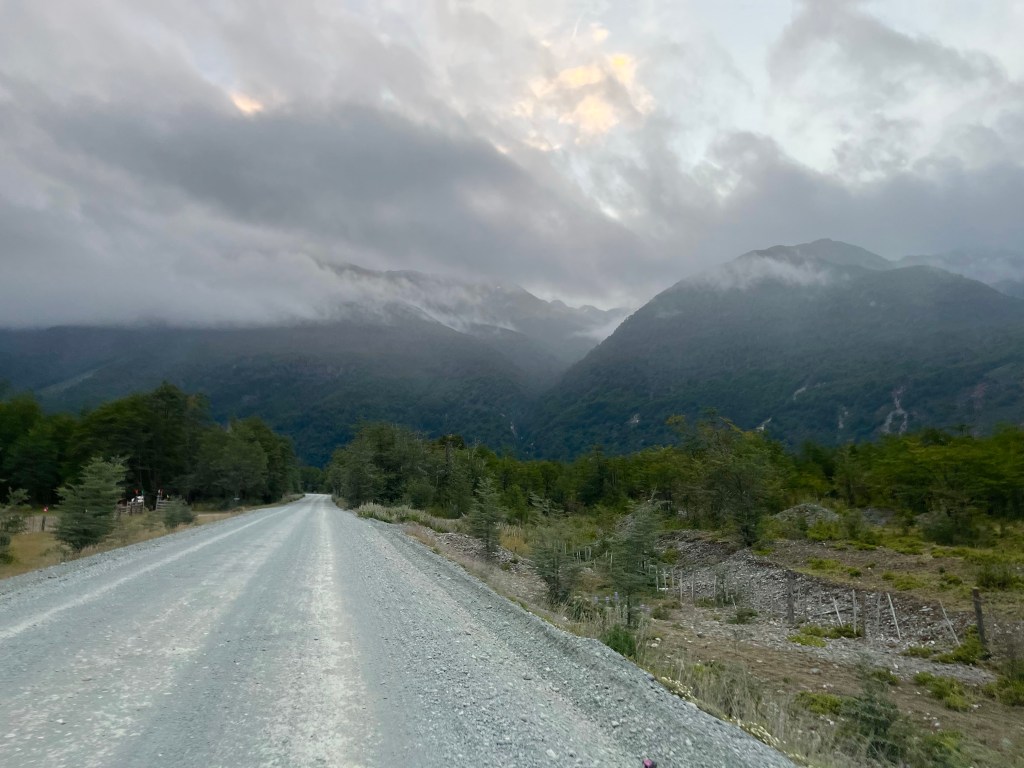
It was a stunning day, around 20°, with a stiff breeze, and I was surrounded by highly-vegetated mountains with snowcaps, it reminded me strongly of Norway.
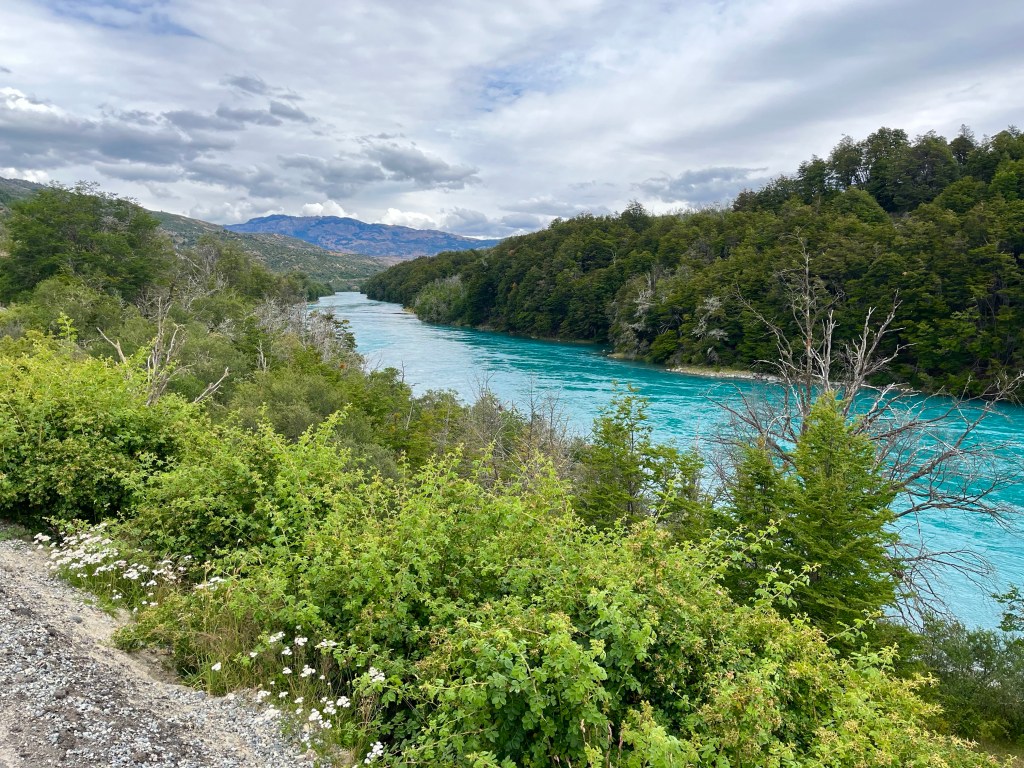
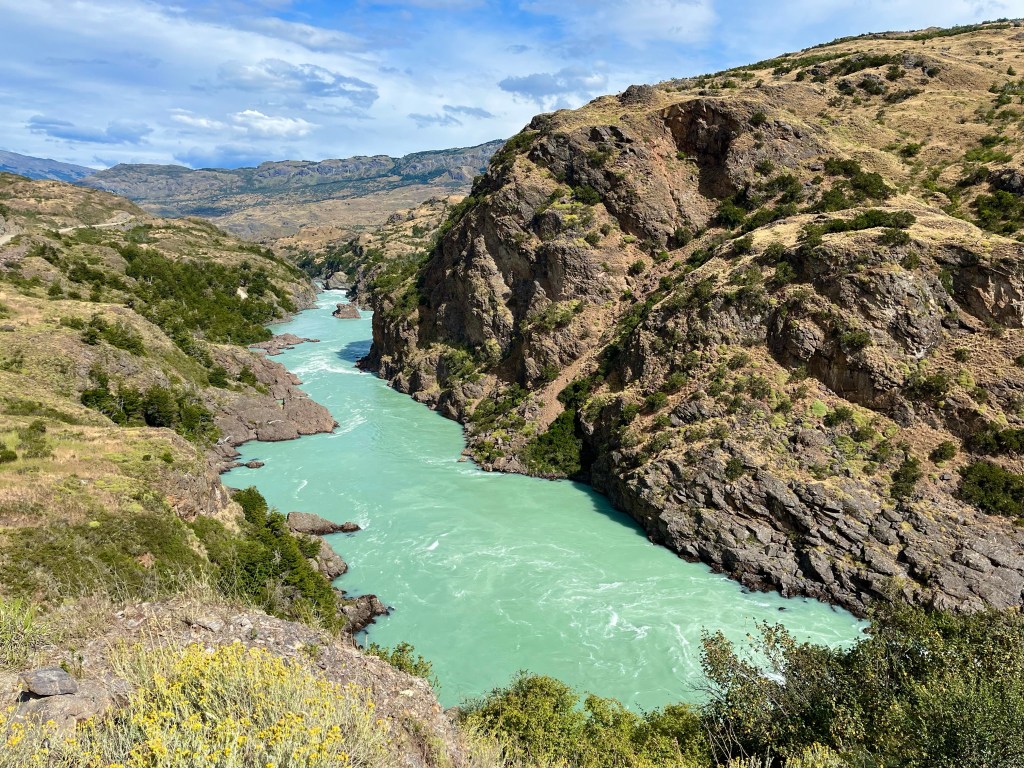
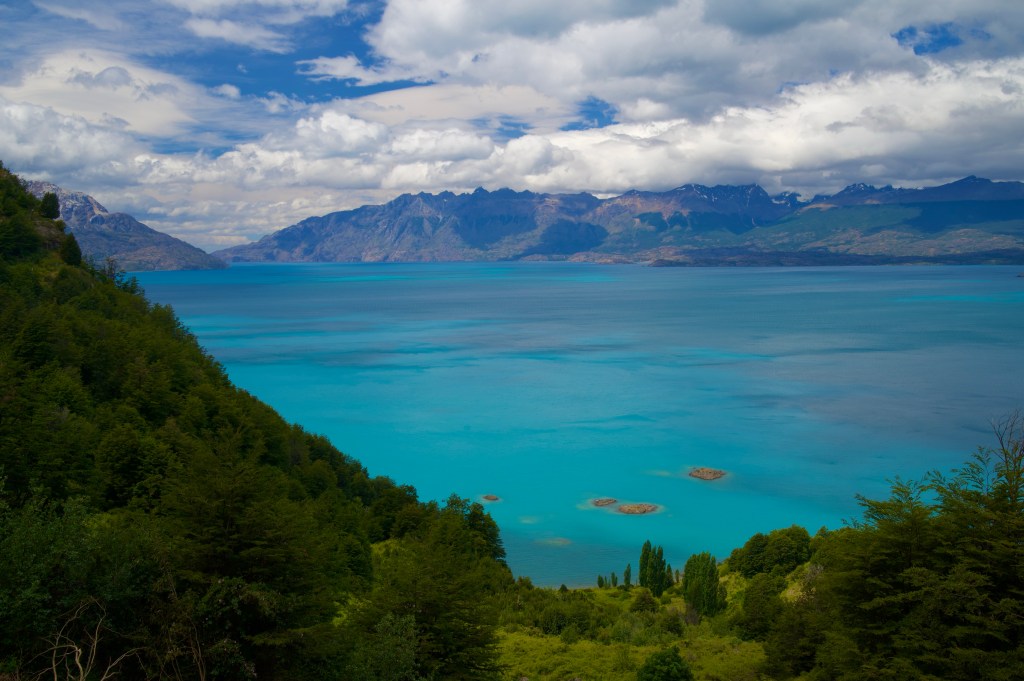
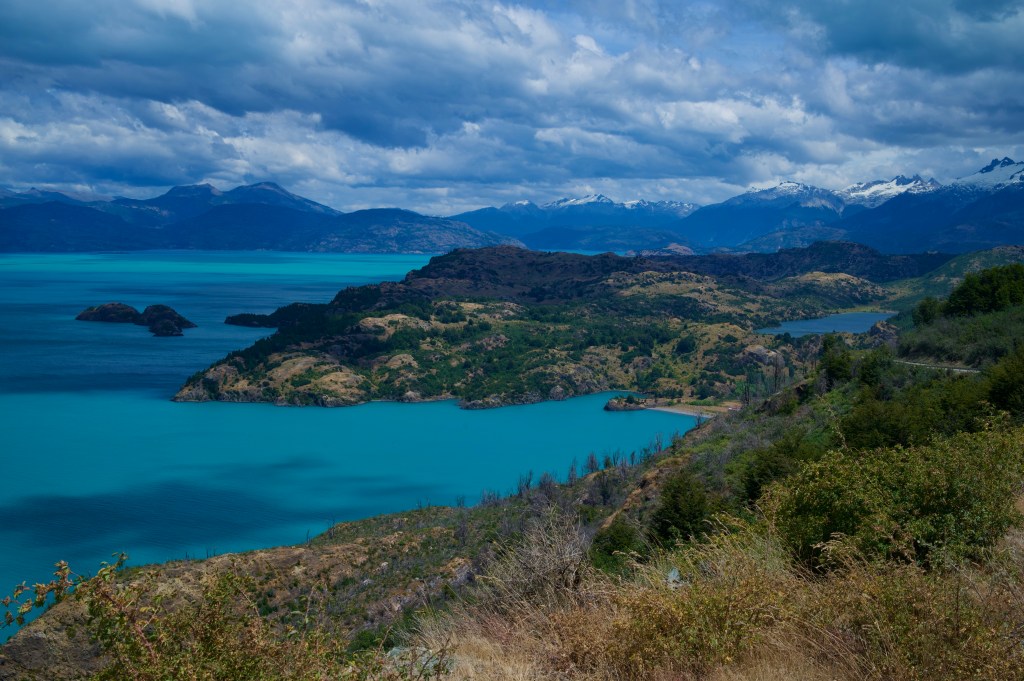
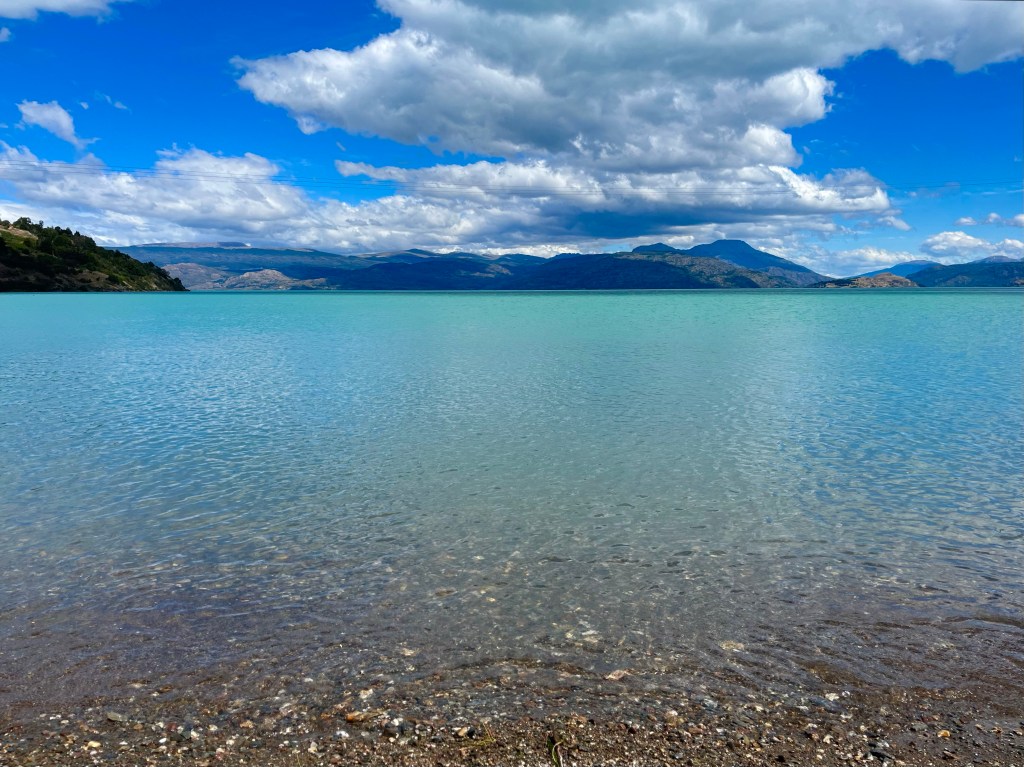
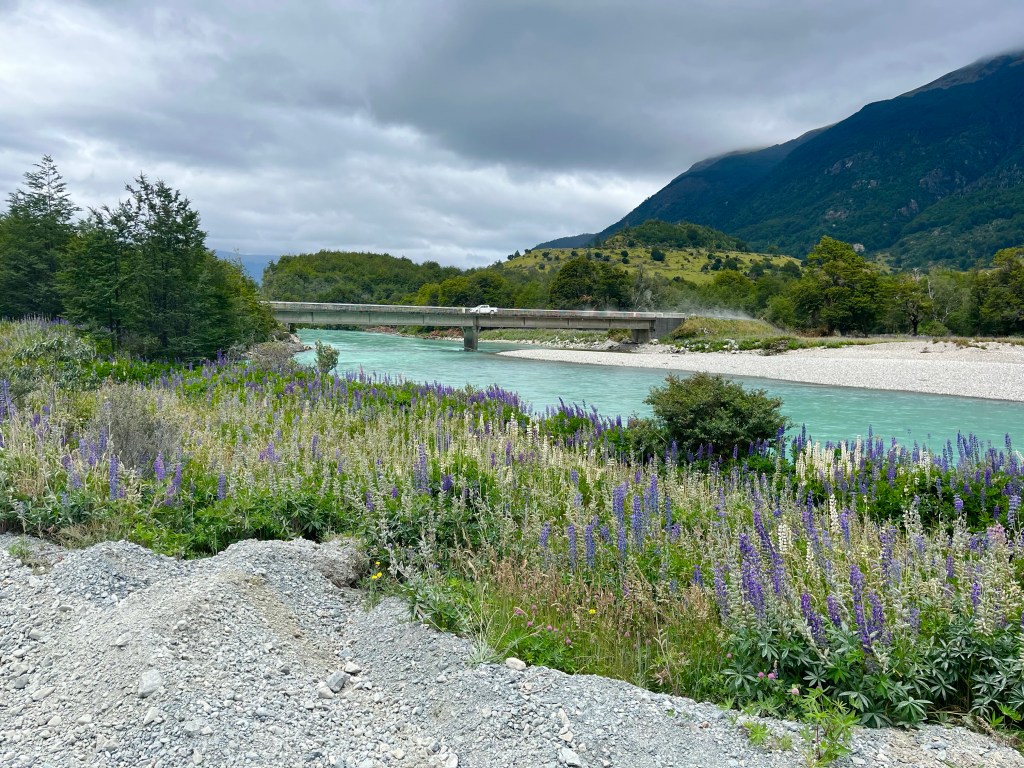
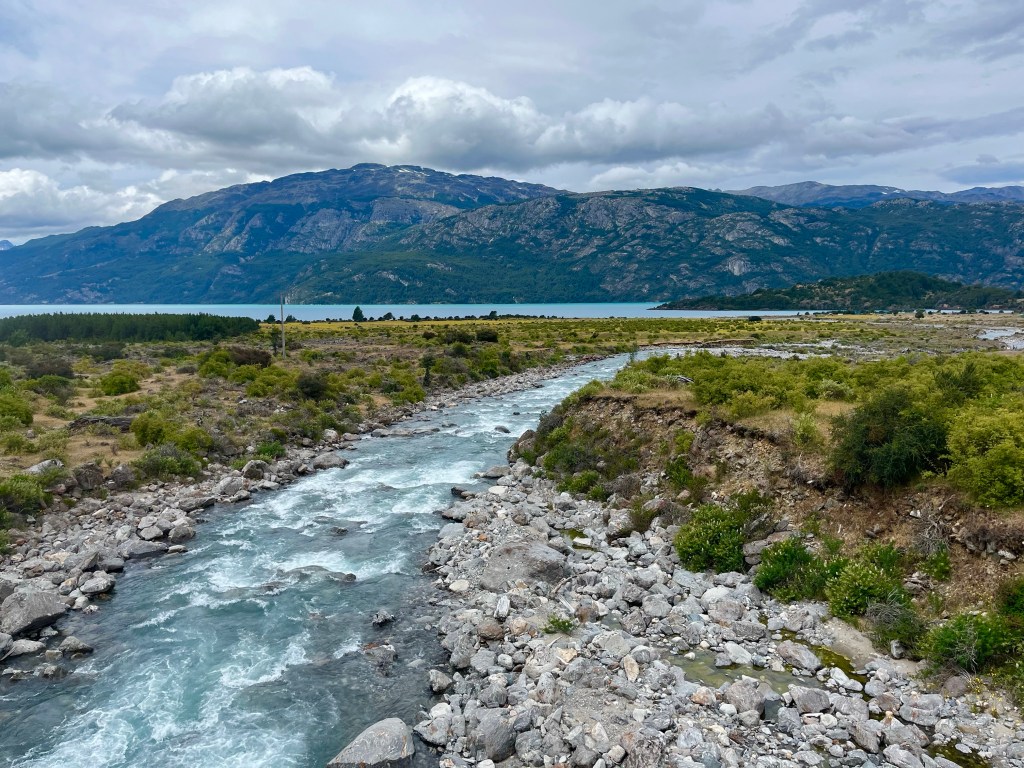
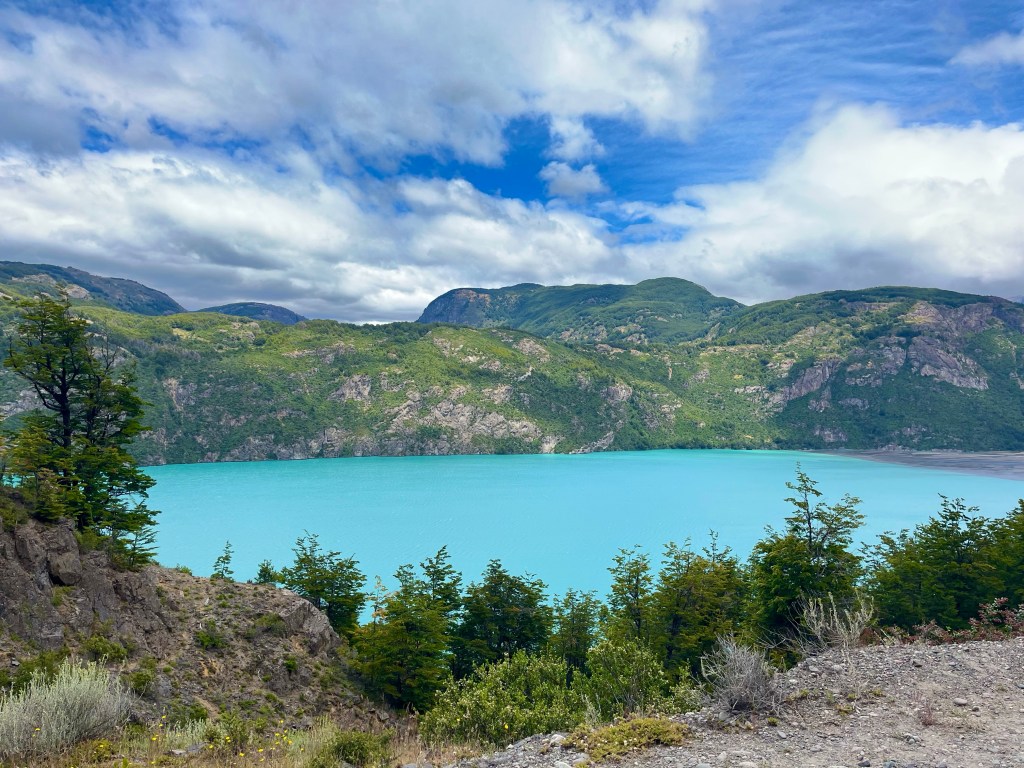
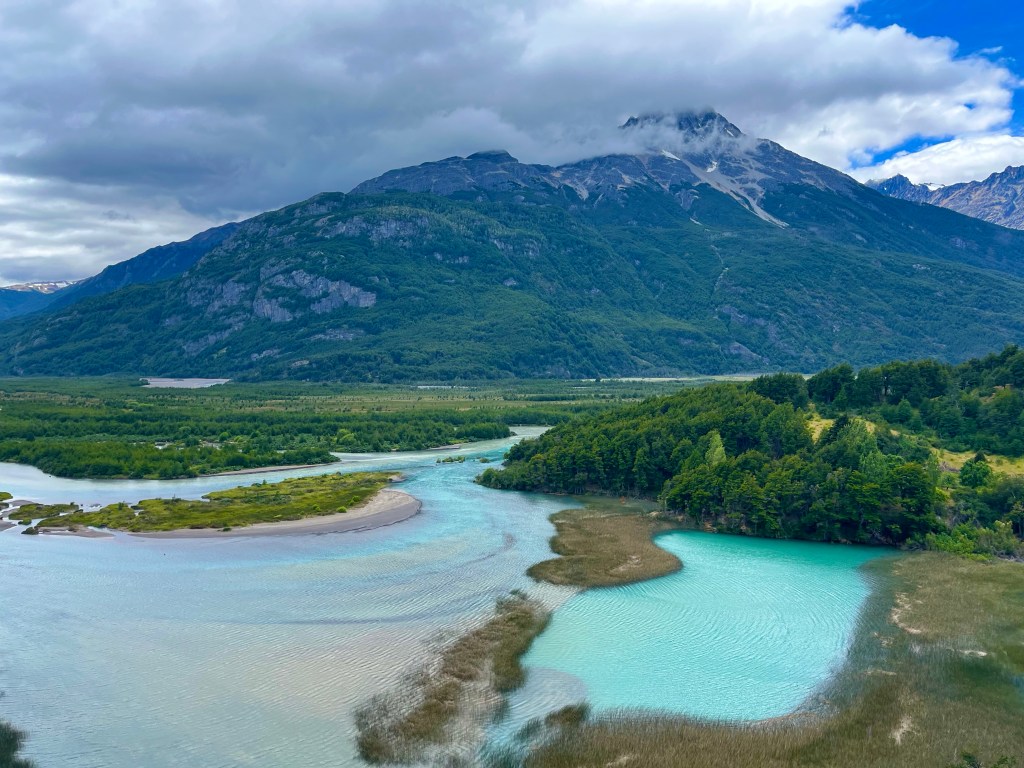
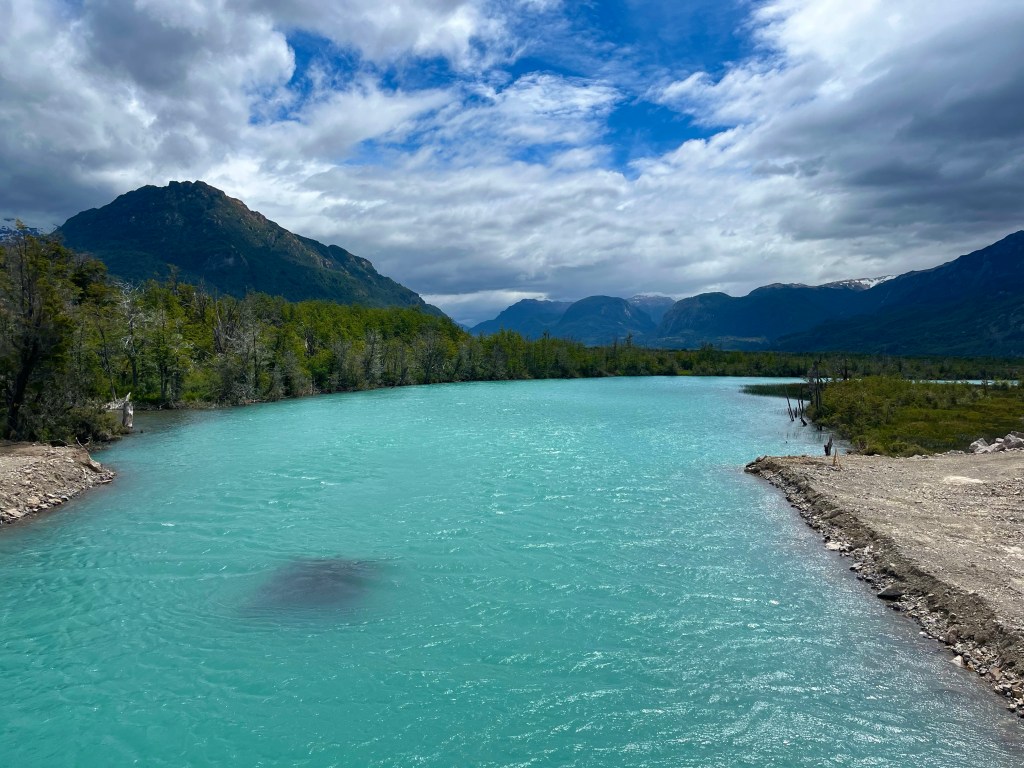
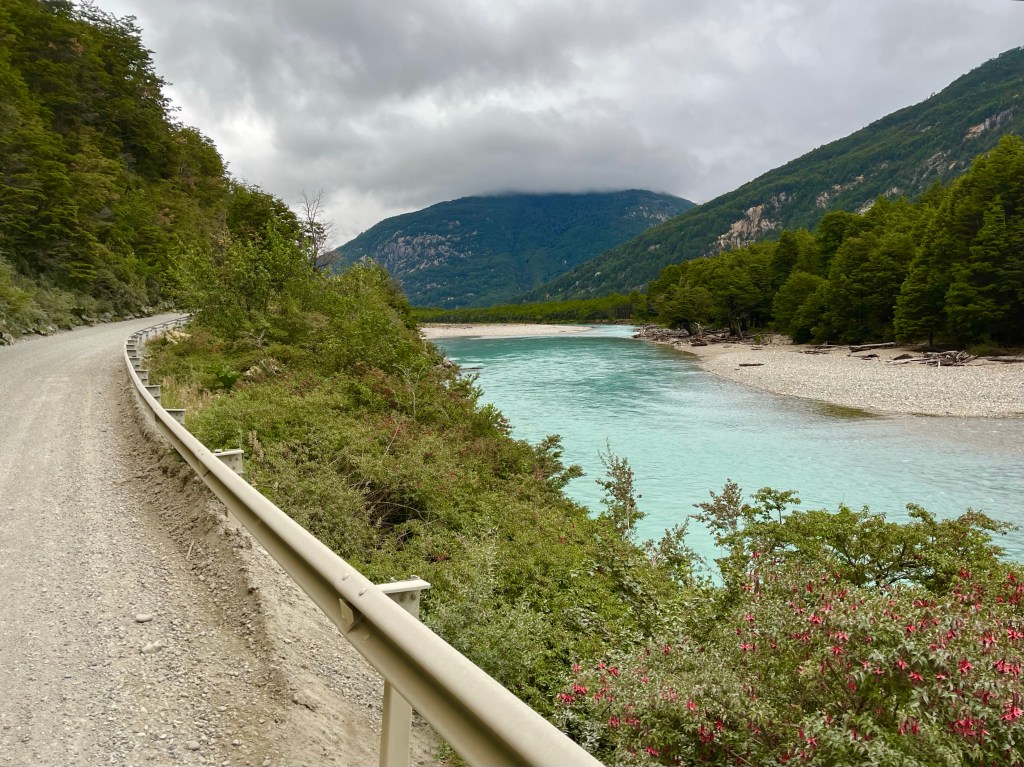
I set off into the wind, and soon began to closely track the river, captivated by its startling turquoise hue.

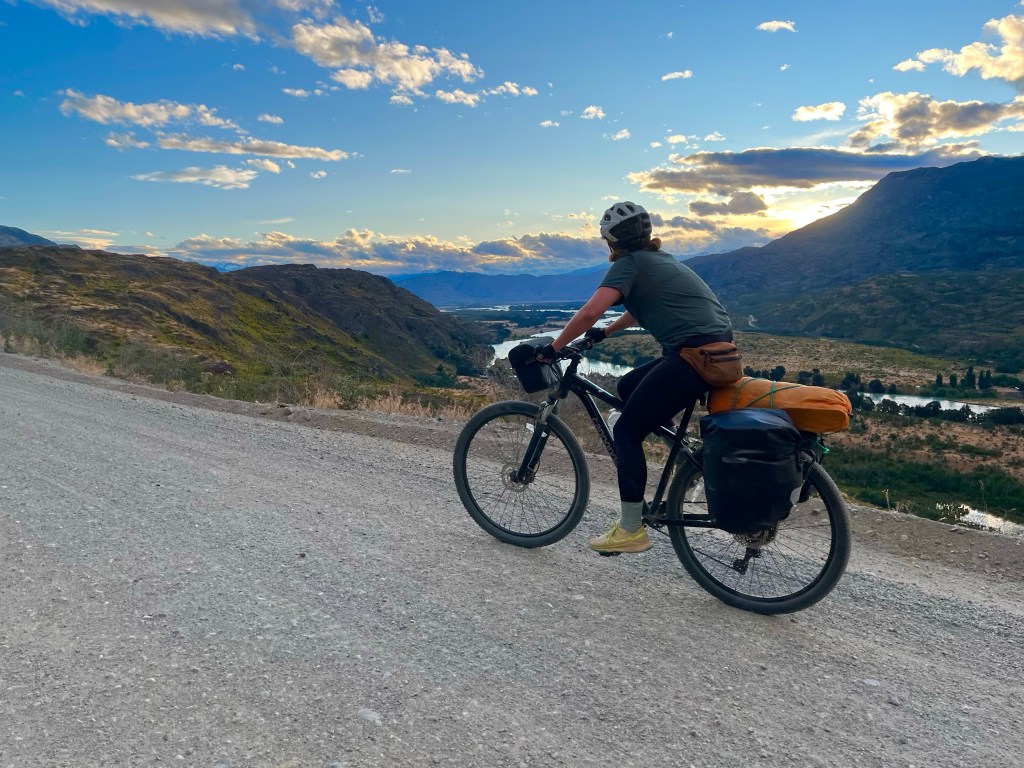
After 10 miles, I lowered myself down to the drops on the handlebars, to combat the effects of the wind, and felt a swift change of mindset as the motivation for the trip switched from sightseeing and travel, to a desire to push through the miles on the bike.

Spotting a bus stop up ahead, I took the opportunity to escape the wind and restore some energy, and not long afterwards, another cyclist stopped to do the same. His name was Steve, and he was a school teacher from Melbourne, who had previously completed an end to end of Japan. He was originally from Manchester, which might explain why we were able to understand each other much more easily than with some of the other conversations I’d had on the road.

He was travelling fast and light, on a carbon gravel bike, with an aerodynamic set up of bikepacking bags, and rather neatly a 3 litre triangular water vessel that fitted within the triangle of the bike frame. He was pushing some big miles, hoping for 200 km a day, but there was obvious wear and tear on himself and the bike, which wasn’t helped when the bike toppled from its perch onto the road while we were talking. It seemed sturdy enough, maybe there was something to be said for a light carbon set up for this kind of ride, instead of the bombproof steel frame that I was lugging up the climbs?

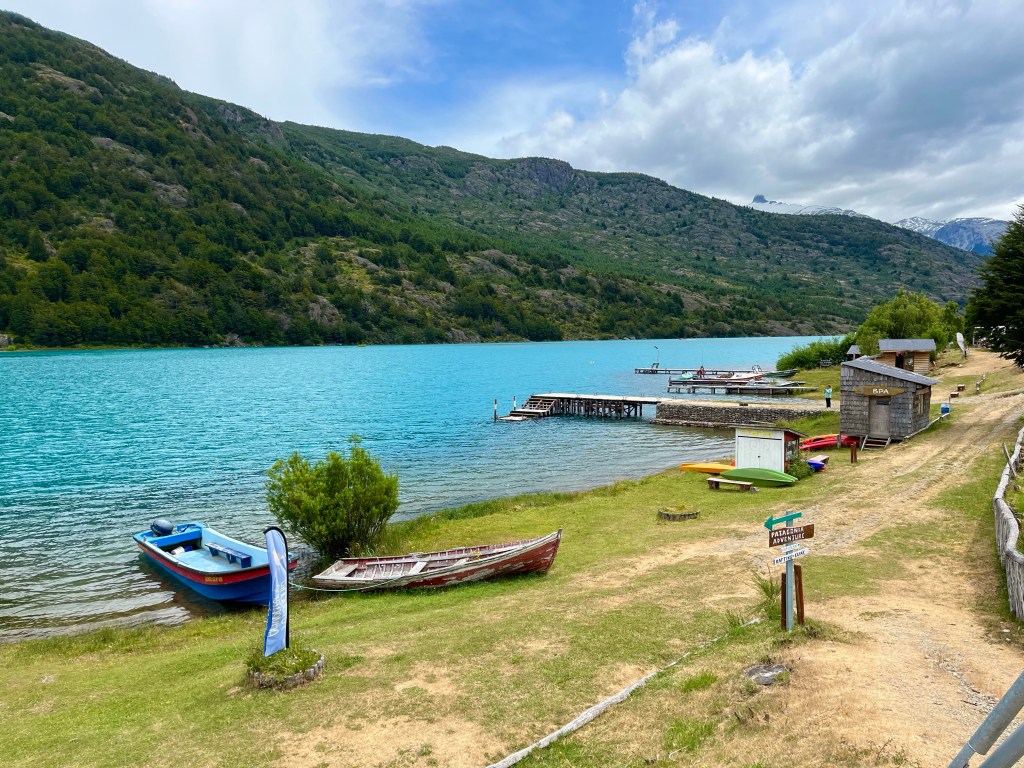
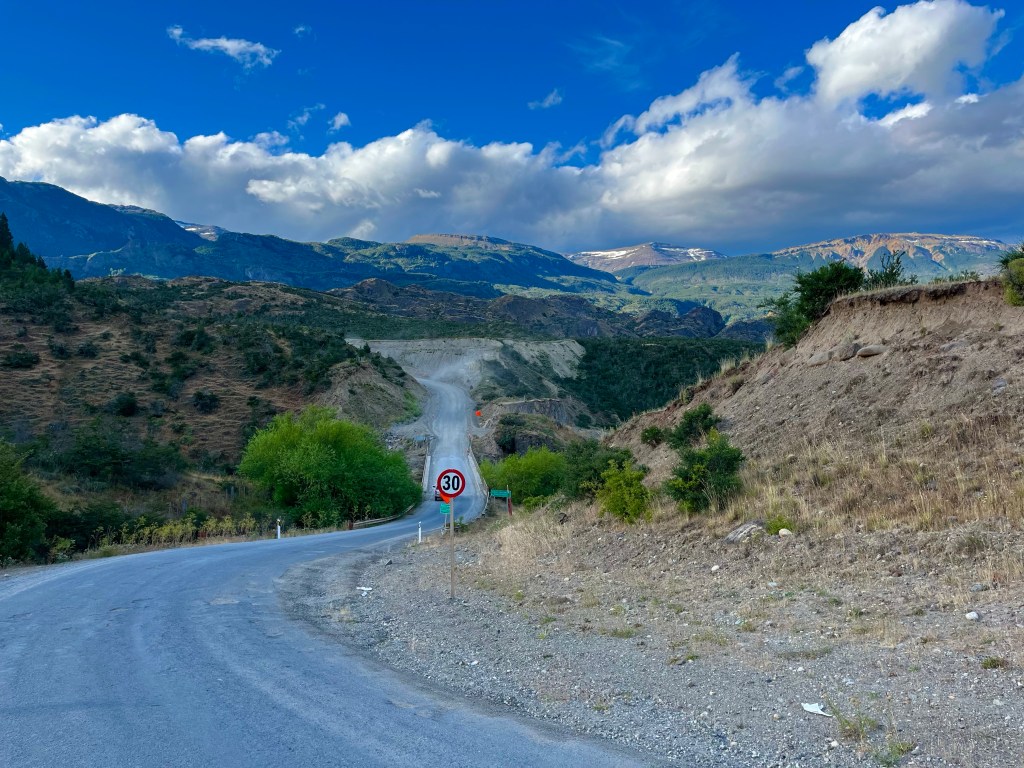
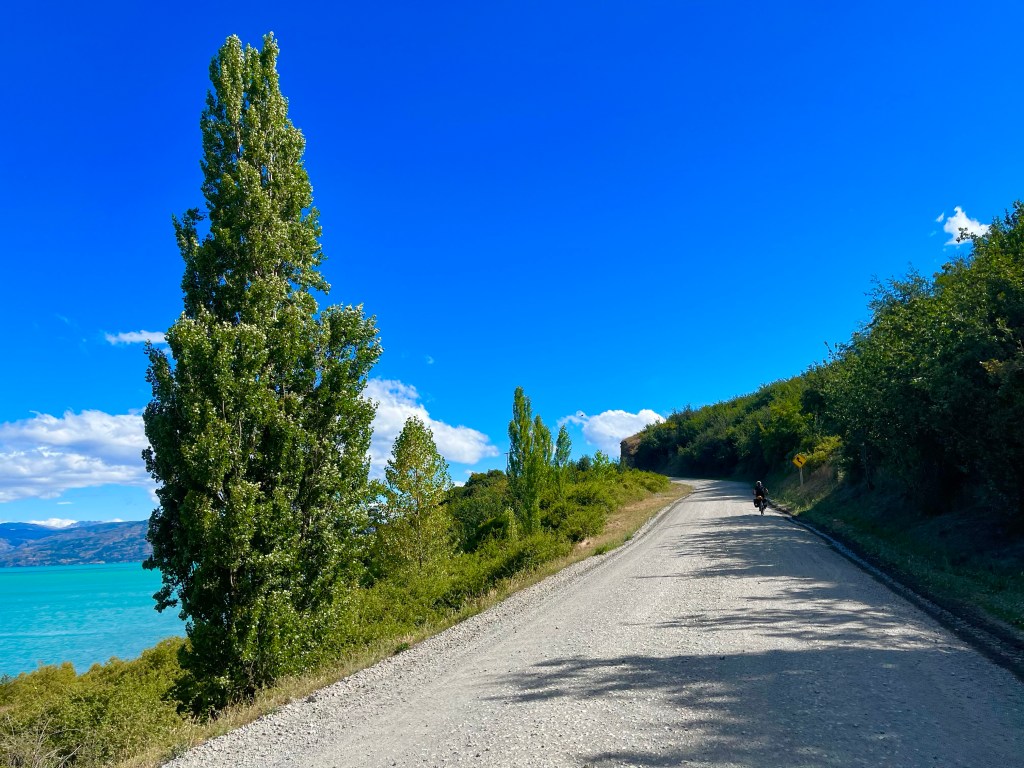
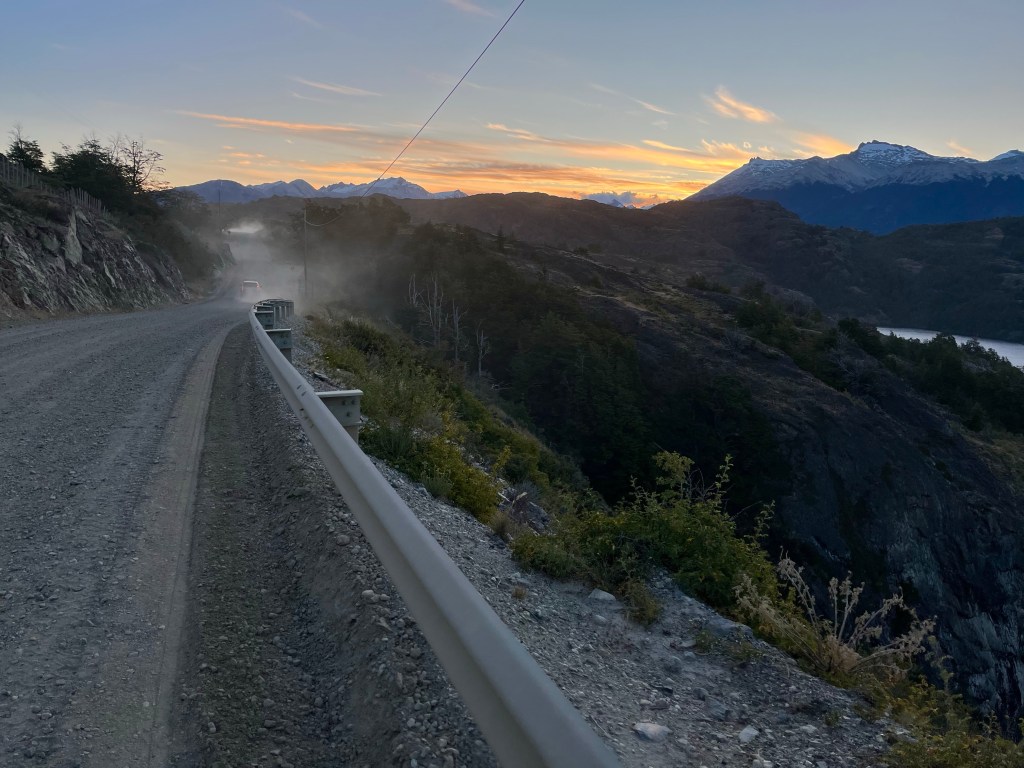
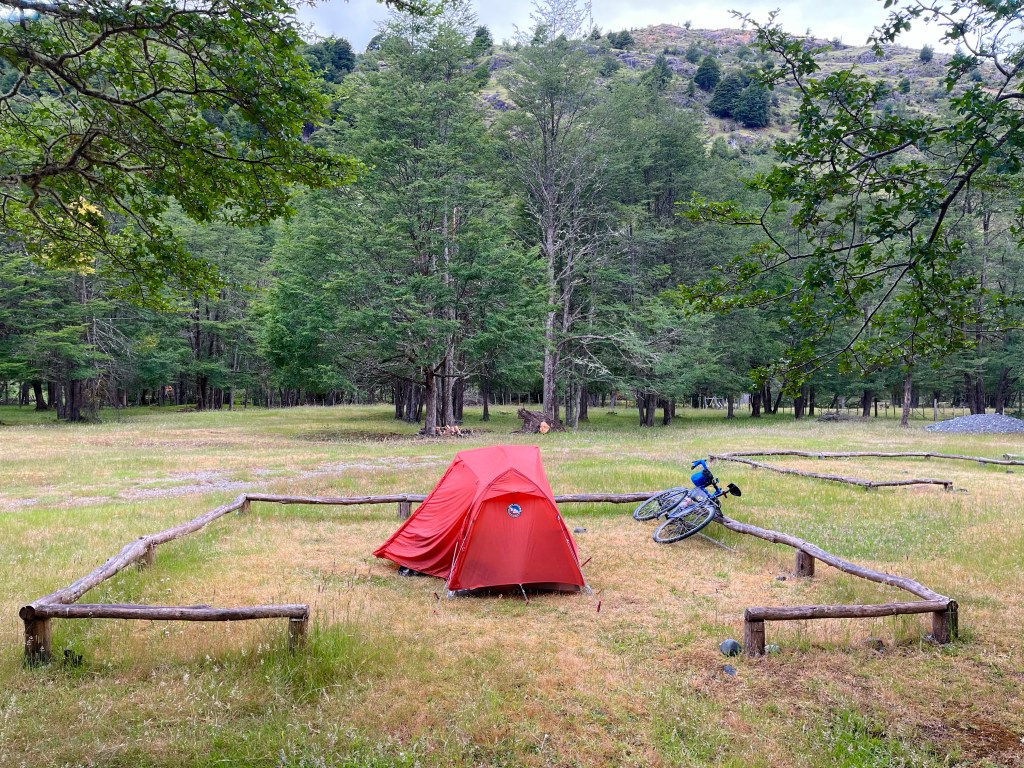
Speaking of climbs, the rode undulated a few more times, climbing high above the river, before I dropped down to a bridge just outside La Junta, my eyes drawn to the sign for Camping Agua Vida. Reviews suggested it was the best around, so I rolled through the gate.

As I looked for a camping spot in the pleasant looking site, I passed a man with a flowing white beard stoking the fire underneath two large sheep carcasses. ‘Carne?’ It seemed like the man was offering me meat, but I wasn’t quite sure how to respond.

Later in the evening, as I was sitting at the picnic bench beside my tent, having just consumed a large pan of pasta, the man came over and repeated his question, at which point I turned and realised that everyone in the site was in the midst of a huge feast, with the meat the focal point and large bowls of salad and potatoes being passed around. Cutlery was thrust in my hand, and I soon realised that the man with the flowing beard was the owner of the site, and they were hosting the party.

Fortuitously, I was sat beside an Italian, Daniele, who happened to speak English. He came from the Dolomites, but now worked here most of the year round, largely at one of the thermal baths along the road in Raúl Marín Balmaceda, but also as a rafting guide up river in Futaleufú.

During the summer he went back to Italy and worked there for two months as a rafting guide too. His long term plan was to build a house and cabañas here, which he already had the land for, with one hectare in the area costing as little as €12,000.
The party was tradition at Christmas and New Year. Clearly the owner was in his element and fortunately Daniele was able to translate some of the amusing things he was saying. One quote being, ‘in the summer we drink fine wine with rich people, and in the winter, we drink’, and also, while pouring me a large tumbler of wine, he had implied that it was so that I would stay for another 2 nights. He spent the evening calling me ‘Escocia’, that much I understood.

It was a late night, and certainly a much better New Year’s Eve than I was expecting, I could see why Daniele might want to live here!

Day 5: El Amarillo – Villa Santa Lucía


Distance: 36.27 miles

Time: 4:06

Elevation Gain: 2,920 feet

As I made my way back out of the national park in the morning, there were quite a few vehicles coming the other way, so it was a surprise to see that the wooden barricade was still across the entrance when I reached it, until I saw the inhabitants of a motor home parking up to move the barrier aside, that was.

For the first few miles, on leaving El Amarillo, the going was good: bright skies, flat roads, minimal traffic, and a bit of a tailwind.

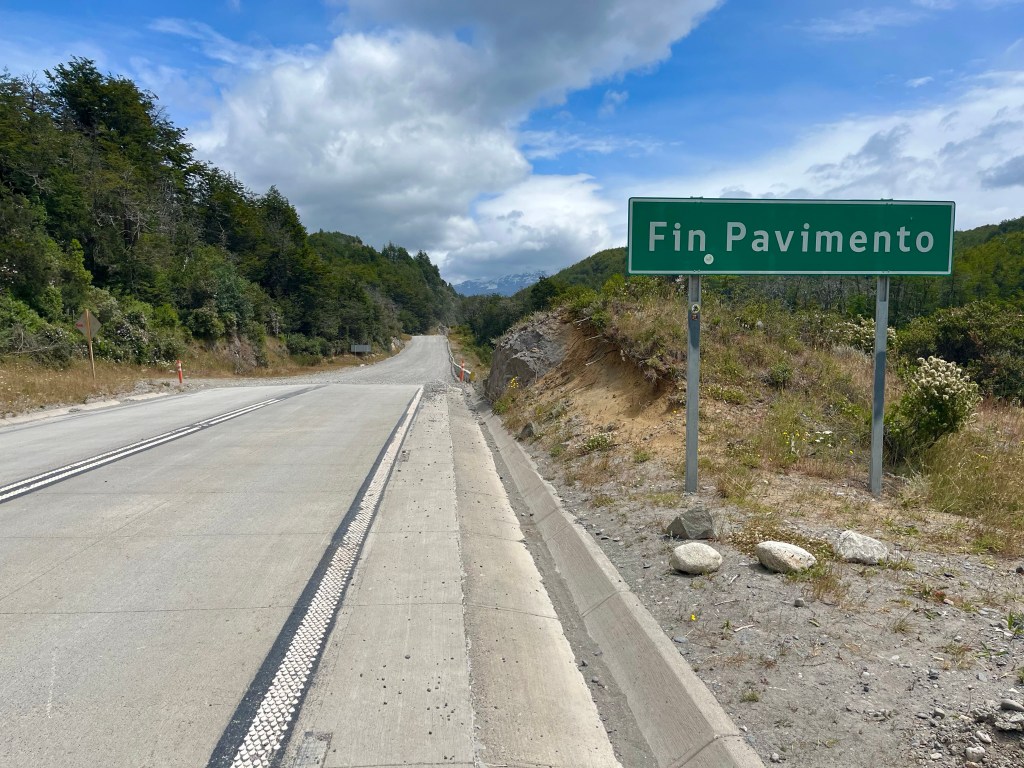
My notes suggested that this stretch should be poor gravel, so I was wondering when the bubble would burst. But 10 miles in, as I crossed an impressive looking bridge over the Río Yelcho, the wind had threatened to turn against me, and droplets of rain had hinted at showers to come, but the tarmac didn’t look like it would be ending any time soon.

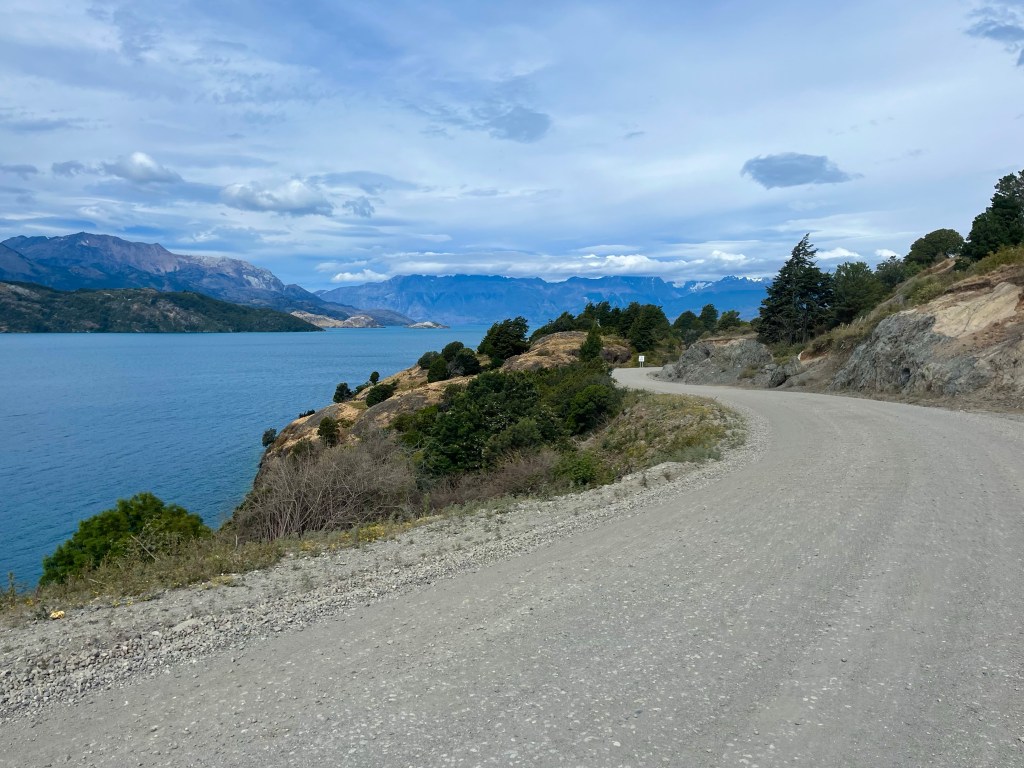
The road undulated along the side of Lago Yelcho, a fine range of mountains towering over the far shore providing a majestic backdrop to the scene.

Beyond the lake, I climbed up to a bridge over a heavily swollen river, reminding me of the previous evening’s downpour, before a brief shower caused me to pause in a roadside shelter, donning my waterproofs for a short spell.

Still the tarmac endured, so when I reached the last ten miles, I wondered what the catch was, before quickly finding out, when I started to climb at an alarming rate, the road ramping up steeply, before turning into an unrelenting grind. My legs had little more to give and I wondered why this seemed so tough when climbs had been feeling relatively good up until now. Then I remembered I’d let some air out of the tyres for the gravel roads, that could be it.

Eventually I summited the pass at over 2000 feet, and quickly I was descending on fantastic roads into the valley on the other side, pleasant running all the way to Villa Santa Lucía where I hoped to find accommodation for the night.

Making in the direction of Campsite El Mañio, my eye was drawn to a food stall offering Empanadas across the street, so I opted to sort dinner first, and deal with where to sleep, after. My empanada arrived quickly, but the papas fritas took a little longer to materialise, by which time a fellow cyclist from Australia, named Andrew, had turned up.

He had started in Bariloche on the day that I’d arrived in Chile, but had been suffering with illness so had been staying in Villa Santa Lucía for three nights, now. He was hoping to make it all the way down to Ushuaia right at the south of Argentina, and had no real time constraints.

He recommended the place he was staying, Hostal El Mate, and at 25,000 (£20) Chilean Pesos for bed and breakfast, with a private bathroom, and bikes locked in a shed, that would do for me. Would I like for him to show me where it was and communicate with the owner on my behalf? Well, yes, that would be ideal.

Day 4: Lago Río Blanco – El Amarillo

Distance: 41.38 miles

Time: 6:39

Elevation Gain: 2,293 feet

For those who read my blog about my trip to Norway in the summer, you will no doubt remember that I had a slight challenge with regards some tent poles being damaged in a storm. Well, after many months without contact, I received an email from Big Agnes to say that they would like to send me some poles so that I could get my tent back in action!

Thankfully, they arrived at the end of November, so I was able to bring the Copper Spur on this trip, along with a lot of duct tape, just in case…

After a reasonable night in the tent, despite the hard, stony, terrain it was pitched on, I slowly roused and took my stove and cooking kit down to one of the lakeside shelters that had now been vacated by some early leaving campers. Pablo joined me and started boiling some water for some of the many packs of freeze dried semolina that they had been gifted for the trip. A thoughtful gift until you consider the extra weight of carrying 50 food pouches around on your bike.

Marlen had a bit of a fever and had been in the tent for around 12 hours at this point, but she did manage to take on a little food before promptly dropping back off to sleep. I was a little concerned that she wouldn’t be feeling fit enough to ride, today, but Pablo still seemed to be readying to go, so I followed suit.

It sounded like Pablo and Marlen’s plan was to try to get to Chaiten, 20 miles away, and find a hotel or Cabaña to try and get some recovery. Seeing as the typical mileages I’d been planning around were double that, I realised that I should really push on to El Amarillo, 15 miles farther on, having first made sure that Pablo and Marlen got to Chaiten without a hitch.

Eventually, back on the road, at 12:30, the rough track along the lake continued, before climbing up steeply to a bridge over the Ríos Rayas, in what felt like a fabulously remote area.

First one cyclist, and then a pair of cyclists, passed going the other way, before a trio of large trucks threw up a massive dust cloud that took some time to settle, forcing us to stop.

At long last, the tarmac returned, and it felt magical, smooth and fast, and shortly afterwards, I had phone signal for the first time since Hornopirén.

Soon, the sea came into view, as we dropped towards the coast at Santa Barbara, before instantly turning back inland and grinding up a severe climb onto a plateau backed by stunning views of Volcan Chaiten, before we enjoyed one last descent to Chaiten.

The small town seemed deserted, and many places were closed, but then we found a small restaurant open, and it was excellent, with friendly staff and huge portions, for what would be our first proper meal since the pasta we’d had in Hornopirén two days prior.

It had been very enjoyable riding with Pablo and Marlen, but Marlen’s trip was to finish in Balmaceda, near Coyhaique, in about the same timeframe as I was hoping to reach El Chaltén, which was double the distance. Pablo would be continuing south afterwards, with some friends.

As we stepped outside, it started to rain, which didn’t make parting ways any easier as Pablo and Marlen pedalled the short distance to, what looked like, a very appealing cabaña, whereas I looked at the grey skies and made for the supermarket, before crossing the bridge over the Río Blanco – which signified the edge of Chaitén – and started off in the direction of El Amarillo, quickly stopping to put on my waterproofs. It was a pleasant cycle along flat tarmac roads, through fields backed by mountains, the only issue, in fact, was the rain.

Until a team of dogs in high spirits departed a farm up ahead, that was, with two racing away up the road to get in front of me, and the rest chasing me from behind, easily covering the short distance. I veered all the way over to the far shoulder and pedalled as fast as I could, but the dogs that had pushed ahead now came rushing across the road and were in a direct collision course with my bike, until I feinted in their direction, which caused the lead dog to pause just long enough for me to get by, and with a change up of the gears, I was gone.

After covering the 15 miles to El Amarillo, I was thoroughly damp, and with the rain not abating, I was very keen to avoid camping, so I checked out all of the locations where Cabañas were marked on the map, but they were all either closed or full. So I made for the campsite at the end of the road, in Parque Pumalin, crestfallen to see that the campsite areas all appeared to be many kilometres upriver, and beyond a road closed barrier which could fortunately easily be circumvented on a bike.

So, passing many large grassy areas en route, I struggled up the rough track to El Grande camping area, with the signposted 5 km, actually 6, and feeling like much more. On arriving at the large open grassy area, I was pleased to see an open toilet block and a scattering of other campsite users, as I readied myself to set up camp in the now torrential downpour.

It was nearly ten o’clock by the time I was ready to hide myself away inside the tent, cooking up a large pan of lentils and tuna in the vestibule, the tent mercifully doing a good job of keeping out the deluge from above.

Day 3: Hornopirén – Lago Río Blanco


Distance: 22:26 miles

Time: 4.11

Elevation Gain: 2,536 feet

Just along the road from the ferry port, there was a sign for a cabaña – or cabin – and Pablo quickly entered into a dialogue with the owner. It was quite large, on two levels and had 4 bedrooms, certainly plenty of space for the three of us, and relatively inexpensive. It looked like we’d evaded setting up our tents for another evening.

Being 100 yards along the road from the ferry port certainly came in handy in the morning, too, when we had to be packed up and at the ferry terminal at 9:00 to get our ticket dates amended from whatever they had been set to when we booked for this ferry the day before.

It was a glorious day, so I was not complaining at the prospect of a lengthy ferry journey in such a picturesque location. The fact that cyclists had to board first, a full hour before departure, did seem a tad excessive, though.
After 3 and a half hours of cruising down a stunning sea lake in bright sunshine, the curve ball of the bi-modal ferry was about to come into play. All we knew was that, shortly, we’d be alighting at Leptepú in the Douglas Tomkins National Park and we’d have 10 km to cover before the next ferry, potentially half an hour later.

As Pablo was a little worried about pushing hard with a sore knee, a plan was hatched with one of the drivers on the boat, that he could take our panniers between the ports in his pick up truck. The only issue with this was that the driver wanted to rush to make the first ferry, so a new plan was hatched where Marlen would go with the bags – and her bike – in the back of the pick up truck, and get out at the port to wait for us.

The first ferry? So there was a second ferry, then? That was the thought that played on my mind as we raced across the island, arriving at the port to find a long line of cars and the other cyclists who had been on our ferry, but no Marlen. We had to assume that the man with the pick up truck had made the first ferry, then, but without time to let Marlen out, perhaps she’d be waiting on the other side?…

While we waited, I spoke to a father and daughter from near Gold Coast, in Australia. The daughter had been backpacking in Chile, when the father had said he would come and visit, but only if it involved a cycle tour, so this was day two.

Eventually the ferry returned, and we were pleased to find Marlen waiting with all of our possessions on the other side.

The plan had been to carry on for 27 miles to Chaiten, but having had to wait for the second ferry, it was now nearly 4 o’clock, and we could see that the road ahead looked like it would be fairly rough gravel, so it was decided that we should aim for a campsite at Lago Río Blanco, some 16 miles away.

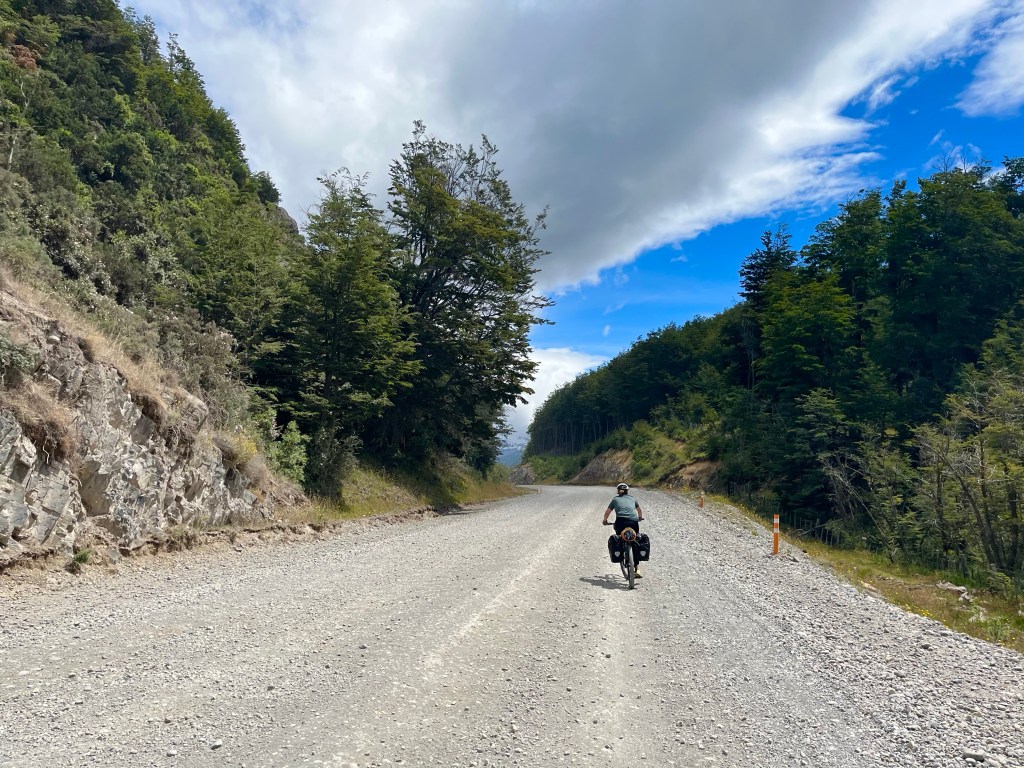
The road was rough and rocky, at times a challenge to keep going on a loaded touring bike, and I considered a new barometer for whether my 45 mm tyres were sufficient. If they made it to the end of the route in one piece, they were.

After Pablo had told us, on several occasions, that it was downhill for the next stretch, just before the track rose again, we arrived at a stunning viewpoint overlooking the Lago Río Negro, not long to Lago Río Blanco now, and still the road climbed and perhaps the steepest slope yet.

Eventually we plummeted down to the lakeside and turned into the campsite, which was in a beautiful spot, but unfortunately only had a very few camping spots, mainly on decking beside the water’s edge. Luckily one of the other campsite inhabitants offered us part use of their parking space, to set up our tents, and another couple brought us over a table and chairs to use, turning it into quite an acceptable ad-hoc campsite.