
At the Town Season Hotel, breakfast was served in a pleasant dining room on the 4th floor, offering good views over the valley below. They had my new favourite foodstuff so I ensured to ask what it was. I still couldn’t make it out clearly, but I believe it to be pistachio halva, the crumbly consistency of Wensleydale cheese, but made with tahini (a sesame seed paste), and pistachio. ‘It’s good with honey’ the waiter continued.

I had finally made the decision to stay in Wadi Musa for another day, that would allow me a full day to see Petra and I knew I’d probably regret it if I didn’t. It would also give me the time to repair some punctures before I started moving again.

Access to Petra was through the 1.2 km long gorge called the Siq, just long enough to build the anticipation fully for the dramatic reveal of Petra’s most famous monument, Al Khazneh, the Treasury.
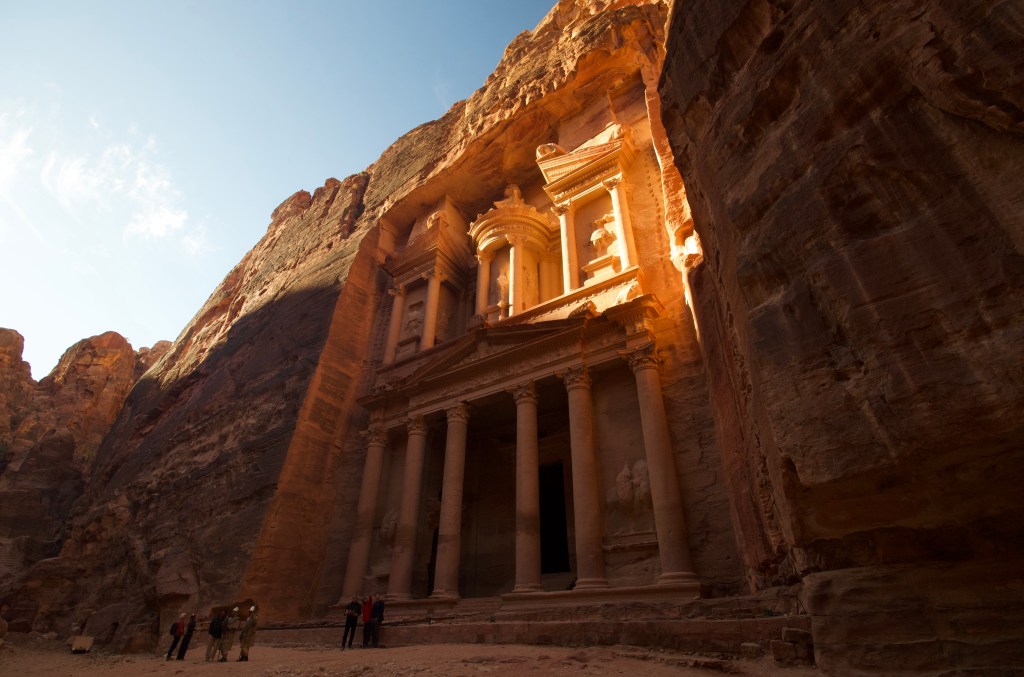
The area around it was a riot of noise and colour as the local Bedouin people tried to make their cut. If you were keen you could pay them for: a seat on a camel, a donkey ride, photo taking, or to ‘guide’ you up a few steps to a viewing platform. I don’t know what the price for this guiding was at sunrise, but I was later offered the ‘good price’ of 7 JD, a good price that I managed to resist.
Keen to find a more relaxing part of the site, I carried on towards the Street of Facades, an impressive assemblage of Nabataean tombs hewn into the rock. Apparently, to deter grave robbing, the bodies were sometimes hidden in attic spaces, a fact betrayed by tiny skylights cut into the area above the main entrances.


Stopping briefly at the theatre, believed to be the only one in the world cut directly into the rock, I started to climb up to the High Place of Sacrifice, a sacrificial platform dedicated to the Nabataean gods Dushara and Al ‘Uzza, located atop Jebel Madbah. It also made an excellent viewing platform to appreciate the enormity of the area that Petra covered.

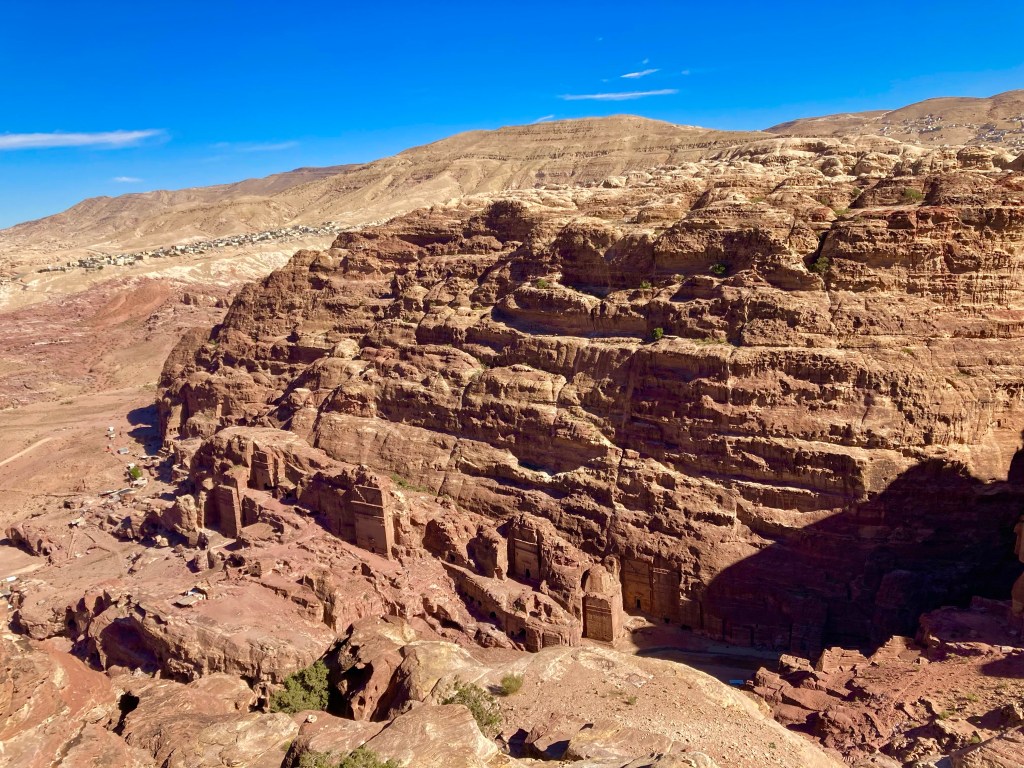
Descending down the back of Jebel Madbah, I found myself in the most remote part of the route, the sprawling Wadi Farasa, the path meandering down the valley, passing the Garden Triclinium, Renaissance Tomb and some Stepped tombs en route.
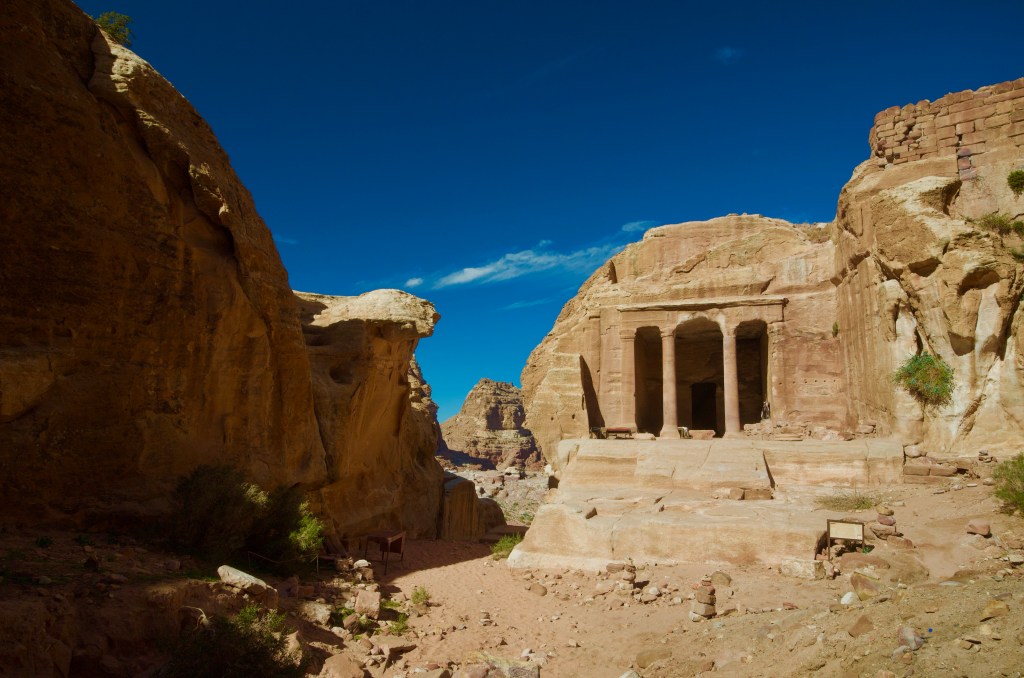
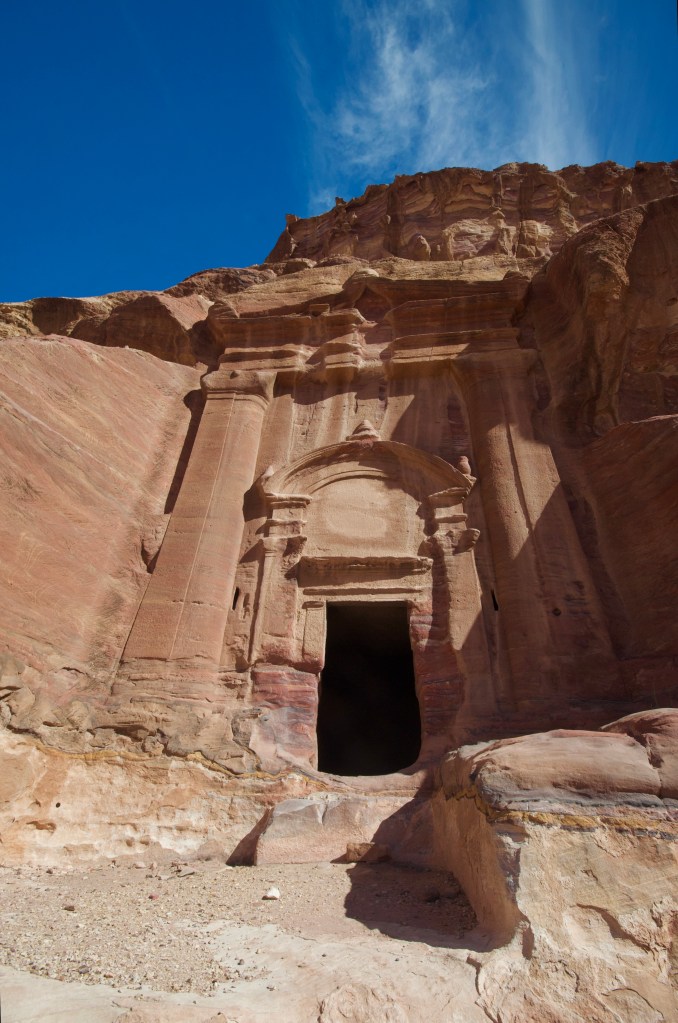


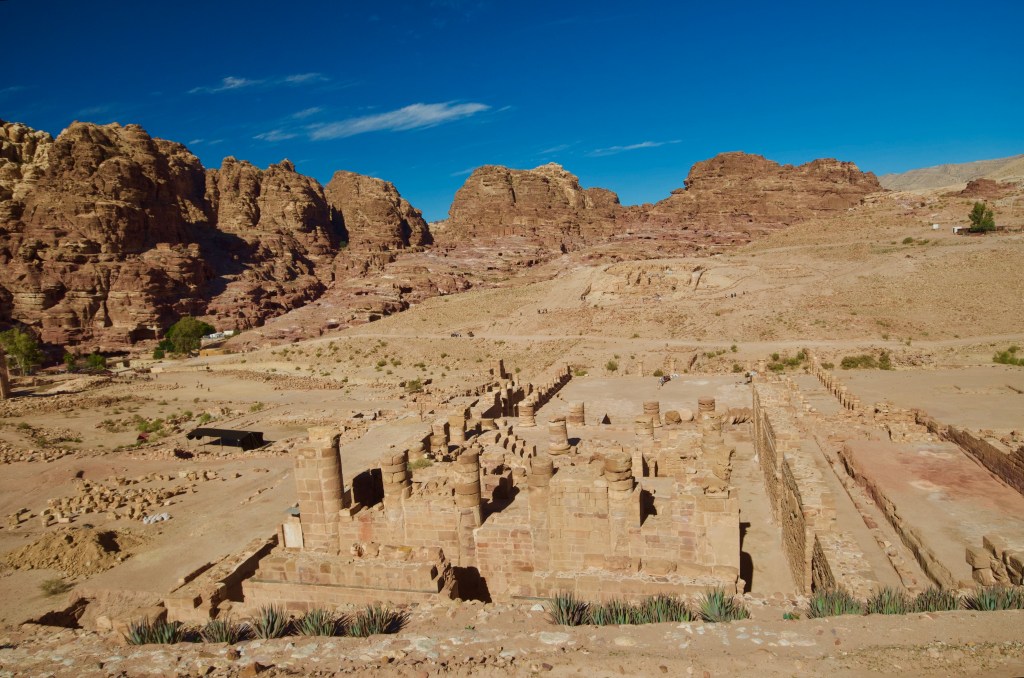
Finally back on the main trail, I arrived at the great temple, remnants of one of the few remaining freestanding buildings.
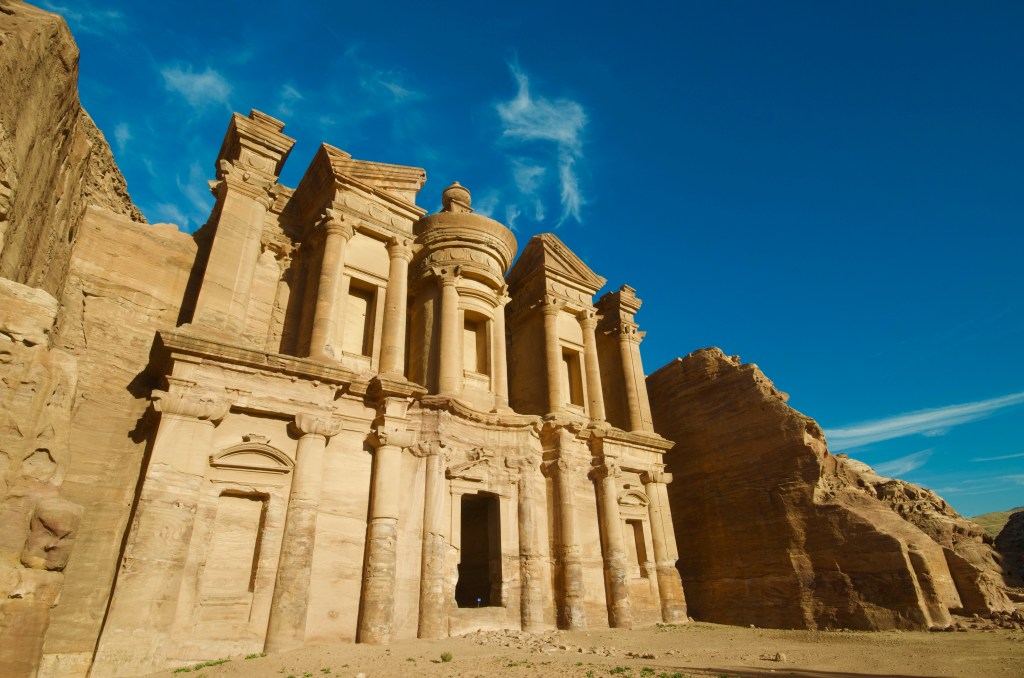
After lunch, at The Nabatean Restaurant, I started the long climb, up 800 steps, to Ad Deir, or the Monastery. It was worth the effort, even bigger than the Treasury, and the demanding walk keeping the crowds at bay.


Lingering with a coke at a sleepy Bedouin cafe with a great view of the slowly-changing late-afternoon light filtering across the vast facade, I started to think about what I’d seen today. Caves with locked iron doors, mesh-wired fences and solar panels, camp beds in tombs, opportunistic jewellery sellers at every turn, old ladies offering tea from very permanent looking tents, and errant flocks of sheep. It was slowly dawning on me that when the tourists all went home for the evening, the Bedouin wouldn’t be following suit.
When Petra had been designated a world heritage site in 1985, the Bedouin people who had been living in the caves around Petra for hundreds of years had been forcibly relocated to Umm Sayhoun, a small village a few kilometres away. But, many of the tribe soon came back, illegally staying in the caves they’d long called home and making money from the large number of tourists to the site. I’m sure that it is not what either the government or the Bedouin would have wanted, but maybe it’s a compromise that just about works both ways.
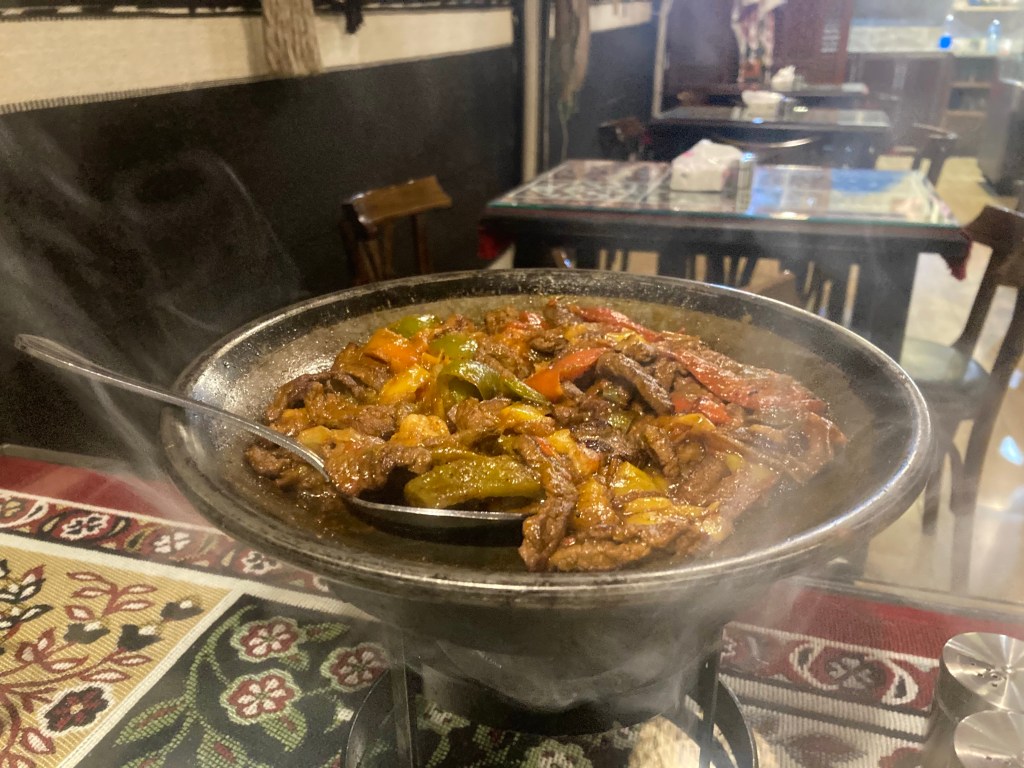
After a long day of walking I was happy to take on the hotel manager’s recommendation for somewhere to eat, especially as Sajiat Al Janoob, was close by. It was quite an unassuming place, but the food was excellent. As the sizzling hot plate arrived at my table, my choice of Sajiah had a distinct Fajita vibe to it, especially when I scooped up some of the spiced lamb, pepper and onion mix and piled it onto a flatbread with some hummus…
 PedalTheGlobeBlog
Very glad you managed to fit in a day at Petra. It would have been a pity to pass it by. Great pictures, and another great blog!
LikeLike
Thanks Mum, yes it was worth the extra time.
LikeLike
Great to get your next post today. I missed getting one yesterday but since you parents were here, they updated me. Thanks for all the photos of Petra. They give you a much better view of the scale of the place. I loved the photo of the Siq – a brilliant photo – thanks. It reminded me of our walk up the river in Nerja but on a much grander scale.
Have a good last day in Amman
Jimmy
James A Simpson jasimpson.149@virgin.net
>
LikeLike
Thanks Jimmy, yes the Siq was quite similar to the Rio Chillar walk, but without the river! It is enormous I’m sure there were large sections I didn’t go anywhere near!
LikeLike
Petra, sounds like a fascinating place. And well done in managing to take photos without too many people appearing in them.
I guess it’s true of so many iconic sites, that they become tourist traps where local entrepreneurs aim to make money from the many visitors. Thankfully you managed to explore a bit further afield to get away from the crowds.
Hope you’ve given yourself enough time to carry out the tyre repairs.
LikeLike
Thanks Elaine, the treasury only had about half an hour of sunlight on it the whole day and all that time there were people on the wall in front of it looking the other way! 🤦♂️So yes, sadly this was the best I could do. Luckily the monastery was too far away for those people! Yes the Bedouin are certainly excellent entrepreneurs, and they start them very young!
LikeLike